
Updated · Published
Interview Body Language Tips: 7 Things to Get Right
Interview body language tips: eye contact, posture, hand gestures, facial expressions, vocal delivery, personal space and mirroring, plus virtual advice.
Good interview body language comes down to seven things: eye contact, upright posture, open gestures, warm expressions, calm pacing, comfortable distance and light mirroring. On video, look into the lens and keep your hands in the frame.
You've perfected your resume, rehearsed your answers, and researched the organization. But in the high-stakes environment of a professional interview, especially in fields like healthcare, what you don't say often speaks louder than what you do. Nonverbal cues matter in an interview alongside your words, so your posture, eye contact, and gestures can make or break a first impression long before you've finished your first answer. Acing the interview isn't just about having the right responses; it's about conveying confidence, empathy, and professionalism through every subtle cue.
This guide provides a comprehensive breakdown of essential, evidence-backed interview body language tips designed to help you master that silent conversation. We will move beyond generic advice and focus on actionable strategies you can implement immediately. From managing nervous habits like fidgeting to projecting authentic confidence, these techniques will ensure your nonverbal signals align with your professional ambitions. Whether you're facing a traditional panel, a fast-paced Multiple Mini Interview (MMI) circuit, or a virtual screen, the practical insights here will prepare you to communicate effectively on every level. Let’s dive into the specifics.
1. Maintaining Eye Contact and Gaze Direction
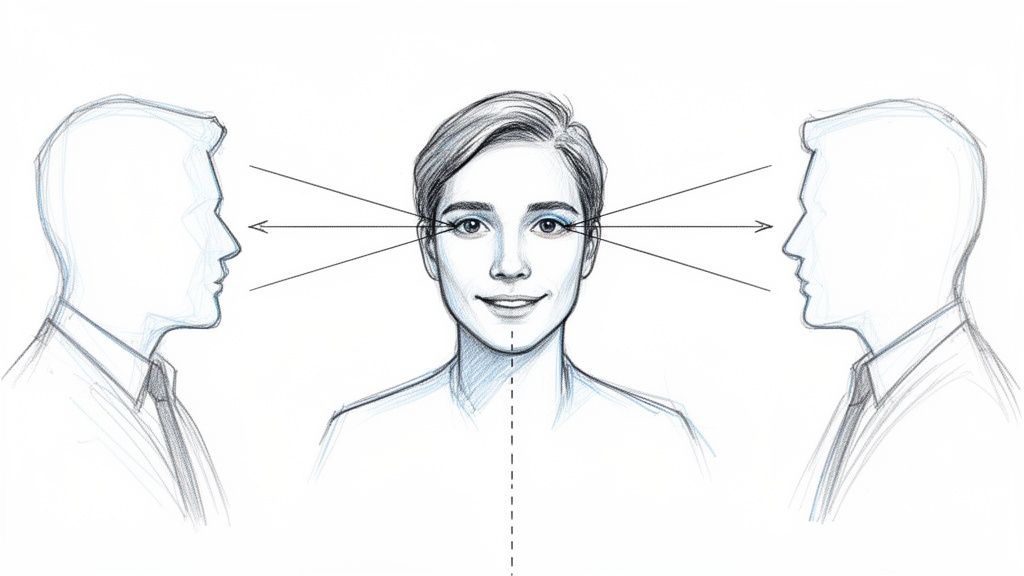
Effective eye contact is a cornerstone of powerful interview body language, signaling confidence, honesty, and active engagement. It's not about an unbroken, intimidating stare; it's about creating a connection that tells the interviewer you are present, listening, and trustworthy. Many interview-prep and communication resources highlight nonverbal cues like eye contact as helpful for building rapport, a vital skill for any healthcare professional who must establish trust with patients.
Why It Works and How to Implement It
Proper eye contact conveys that you are not just reciting memorized answers but are thoughtfully considering the question and formulating a genuine response. It shows respect for the interviewers and the process. For example, a dental school applicant discussing patient communication appears far more credible when maintaining steady eye contact, reinforcing their message of empathy and confidence.
In panel or MMI formats, this skill becomes even more crucial. A common mistake is focusing only on the person who asked the question. Instead, a successful physician assistant candidate will start their answer by looking at the questioner, then thoughtfully shift their gaze to include each panel member as they speak. This inclusive gesture shows you value everyone's presence and are addressing the entire committee. If you need a moment to think, it's natural to briefly glance down or away, but re-establish eye contact before you begin speaking to project poise.
Actionable Tips for Mastering Eye Contact
- Panel and MMI Strategy: When responding to a question from one person in a group, begin your answer by making eye contact with them. Then, slowly and naturally, move your gaze to other interviewers in the room, making a connection with each one before returning to the original questioner as you conclude your point. This strategy is especially important in team-based scenarios, and you can learn more about how to prepare for MMI interviews with this approach in mind.
- Virtual Interview Focus: Look directly into the camera lens, not at the image of the interviewer on your screen. This simulates direct eye contact for the person on the other side. Position your camera at eye level to create a natural and engaging angle.
- Managing Anxiety: If direct eye contact feels overwhelming, try focusing on the bridge of the interviewer's nose or their forehead. This gives the appearance of direct eye contact without the intensity.
- Practice and Feedback: Record yourself answering practice questions. Review the footage to spot any nervous habits, like looking down too often or darting your eyes around the room. AI-driven platforms like Confetto provide instant feedback on your eye contact patterns, helping you refine this essential skill.
2. Posture and Sitting Position (Upright vs. Slouching)
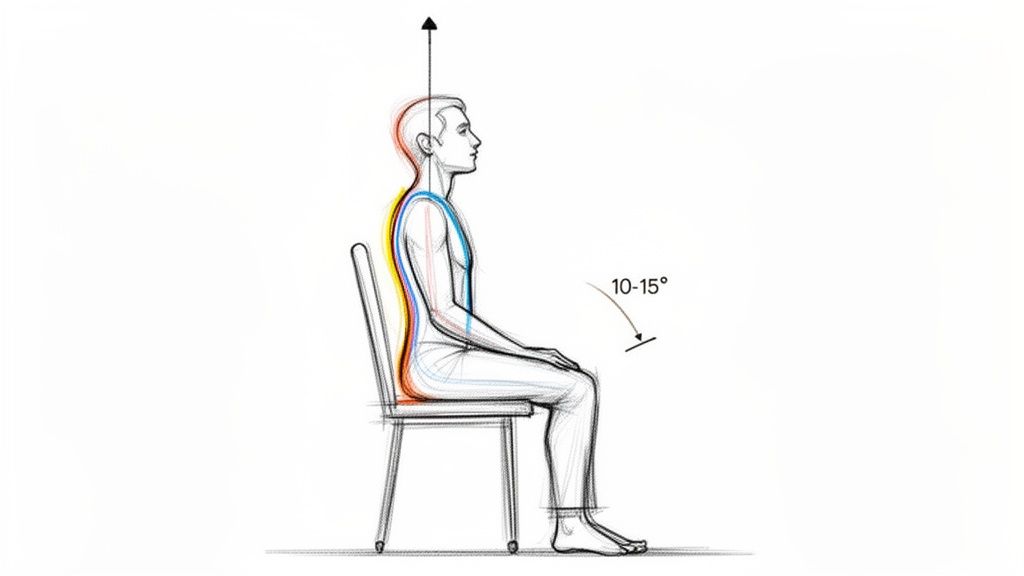
Your posture communicates authority, confidence, and professionalism before you speak a single word. In high-stakes interviews, poor posture like slouching can suggest a lack of engagement or confidence, qualities that could be detrimental in healthcare settings where presence and assurance are key. Sitting upright with your shoulders back and spine aligned demonstrates respect, readiness, and mental focus, signaling to interviewers that you are prepared and taking the process seriously.
Why It Works and How to Implement It
An upright and engaged posture can help you feel steadier and can influence how attentive you appear. (Claims that "power poses" change hormones or behavior have not held up in replication studies, so treat posture as a comfort and presence tool, not a performance hack.) It projects an image of a candidate who is in control and attentive. For example, a medical school applicant sitting upright while discussing a complex ethical dilemma in an MMI station appears more professional and capable of handling pressure.
This nonverbal cue is vital in panel interviews where multiple evaluators observe your entire demeanor. A nursing candidate who leans slightly forward when an interviewer describes a clinical scenario shows active interest and engagement. Similarly, a physician assistant candidate maintaining a neutral, aligned posture appears equally attentive to every panelist, reinforcing their ability to function as part of a collaborative team.
Actionable Tips for Mastering Posture
- Practice for Endurance: Many interview formats, like MMIs, require you to sit for extended periods. Practice sitting with good posture for 8-10 minute intervals to build muscle memory and endurance. For a deeper dive, you might find valuable insights in an anatomical guide to realigning your spine and improving posture.
- Create Alignment: Imagine a string gently pulling the crown of your head toward the ceiling. This mental cue helps naturally lengthen your spine and prevent slouching without appearing rigid.
- Plant Your Feet: Keep both feet flat on the floor to create a stable, grounded base. This helps prevent nervous fidgeting or leg-crossing, which can sometimes be interpreted as a defensive or closed-off attitude.
- Lean with Purpose: A slight forward lean can be a useful way to show you are highly engaged, especially when an interviewer is speaking. Use it strategically to punctuate your interest.
- Analyze and Refine: Use a tool like Confetto to record your mock interviews. Its posture analysis can identify patterns of slouching or tension, giving you specific feedback to improve your physical presence, which is just one of many essential medical school interview tips.
3. Hand Gestures and Arm Positioning
Hand gestures are powerful communicators that either enhance your message or distract from it. In a high-stakes setting like a healthcare admissions interview, purposeful gestures demonstrate enthusiasm, clarity, and confidence. The goal is to find a balance where your hands naturally supplement your words, making complex ideas more accessible and showcasing your engagement, as highlighted by nonverbal communication experts like Vanessa Van Edwards.
Why It Works and How to Implement It
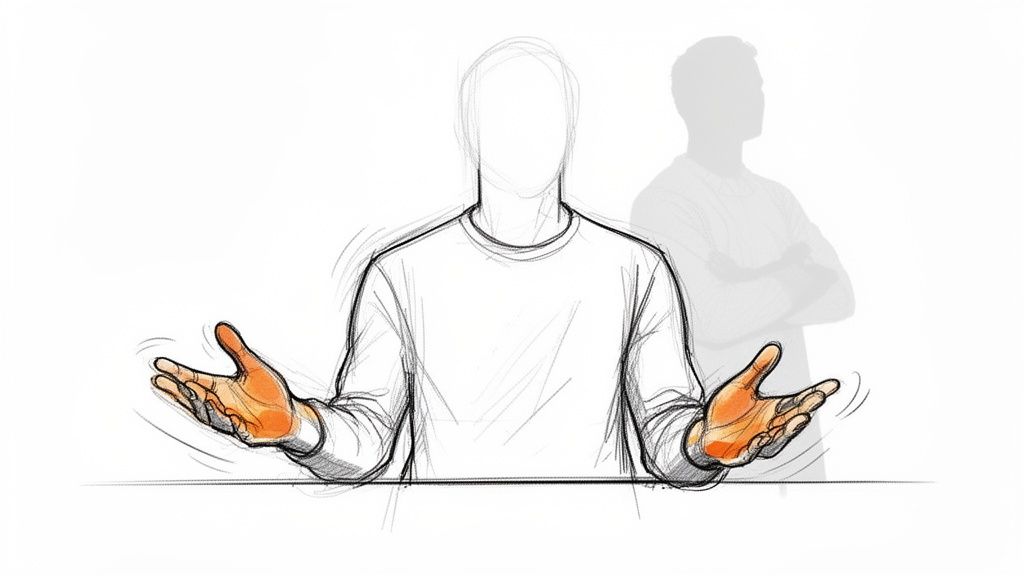
Appropriate hand gestures reinforce your credibility and make you appear more authentic and trustworthy. When your hands are visible and relaxed, it signals openness and honesty. For example, a pharmacy school applicant using calm hand movements to explain a medication interaction makes the clinical concept more understandable and appears more competent. Similarly, a dental school candidate who keeps their hands visible on the table during a patient communication MMI station seems more approachable and trustworthy.
Conversely, fidgeting with a pen, tapping fingers, or hiding hands under the table can signal nervousness and undermine your message. The key is to let gestures emerge naturally from what you're saying, rather than forcing or planning them. They should be a subconscious extension of your spoken words, adding emphasis and structure to your answers without becoming the main focus.
Actionable Tips for Mastering Hand Gestures
- Keep Hands Visible: Always keep your hands in sight, preferably resting lightly on the table or your lap. Avoid putting them in your pockets or behind your back, as this can be perceived as hiding something or disinterest.
- Use Open-Palm Gestures: When gesturing, try to keep your palms open and facing upward. This is a universally recognized sign of honesty and openness, contrasting with pointed fingers, which can feel aggressive or accusatory.
- Virtual Interview Adjustments: In a video interview, gestures need to be more controlled. Keep your movements closer to your body and within the camera frame to avoid looking chaotic or having your hands disappear off-screen.
- Practice and Eliminate Nervous Habits: Record yourself answering practice questions to spot nervous habits like pen clicking, hair twirling, or adjusting clothes. Using a platform like Confetto, you can get specific feedback on your gestures, helping you identify and eliminate distracting movements to appear more polished and confident.
4. Facial Expressions and Microexpressions
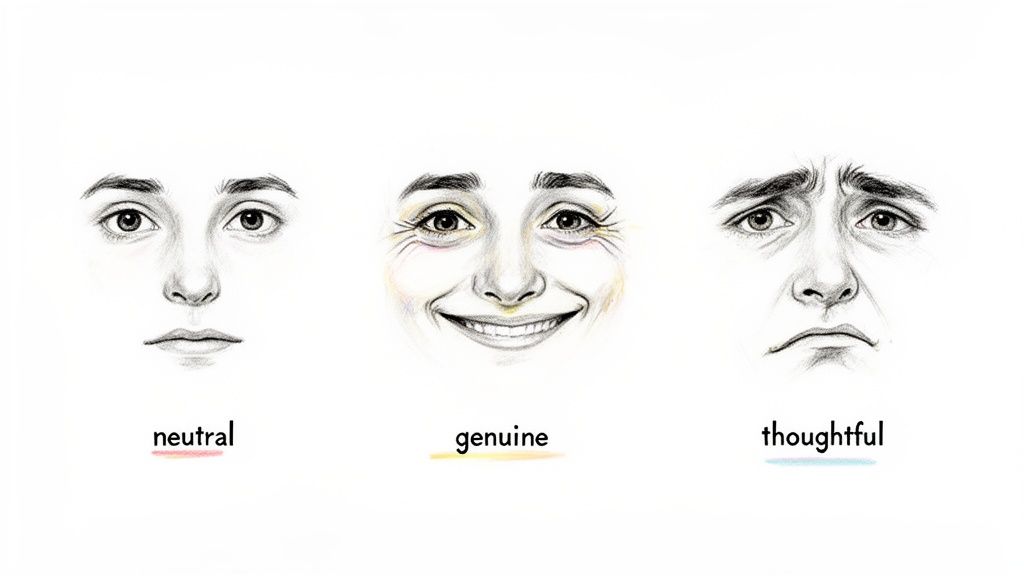
Your facial expressions are a powerful channel for communicating emotion, empathy, and genuine interest. In high-stakes interviews, especially for healthcare roles, they offer interviewers a window into your emotional authenticity. Researchers such as Dr. Paul Ekman have studied brief facial expressions of emotion, though how reliably they can be read in everyday conversation is debated. In an interview, matching your expressions to your words demonstrates genuine engagement and emotional intelligence.
Why It Works and How to Implement It
Appropriate facial expressions validate your verbal message. A blank, overly controlled face can appear cold or disengaged, while exaggerated expressions may seem insincere. The key is authenticity. For example, a medical school applicant discussing a patient safety scenario conveys genuine empathy with a slight frown and raised eyebrows, reinforcing their commitment to compassionate care. Similarly, a nursing candidate sharing a story about helping a patient appears warmer and more patient-centered when they offer a natural smile that reaches their eyes.
When tackling serious topics like ethical dilemmas, a thoughtful and slightly serious expression shows you understand the gravity of the situation. This nonverbal cue demonstrates maturity and respect for the complexity of the issue. A subtle, well-timed head nod can also signal active listening and understanding without appearing robotic. The goal is to let your face reflect the genuine emotions connected to the experiences and values you share.
Actionable Tips for Mastering Facial Expressions
- Practice the Duchenne Smile: A genuine smile, known as a Duchenne smile, involves the muscles around your eyes (orbicularis oculi), causing crinkling at the corners. Practice this in a mirror; it looks and feels more authentic than a smile that only uses the mouth.
- Match Expression to Content: When discussing a difficult topic like patient suffering or an ethical conflict, allow your expression to show appropriate concern and seriousness. Avoid a forced smile or a neutral, detached look, which can undermine your message of empathy.
- Know Your Resting Face: If your natural expression appears serious or concerned, make a conscious effort to start the interview with a slight, warm smile to appear approachable and open from the outset.
- Record and Review: Use a platform like Confetto to record your mock interview answers. Pay close attention to the playback, noting any moments where your facial expression seems disconnected from your words or the emotional tone of the question. This feedback helps identify and correct microexpressions of anxiety or skepticism.
5. Breathing, Pacing, and Vocal Delivery
Your body language extends beyond what is seen; it includes what is heard. How you breathe, pace your speech, and deliver your words carries immense weight in an interview. Uncontrolled, shallow breathing often leads to a rushed pace, a higher-pitched voice, and an increase in filler words like 'um' or 'like'. This vocal presentation can unintentionally signal anxiety and a lack of confidence, undermining even the strongest answers.
Why It Works and How to Implement It
Mastering your breathing and vocal delivery demonstrates composure and thoughtfulness, qualities essential for high-stress clinical environments. A medical school applicant who takes a deliberate breath before answering a complex ethical dilemma appears more measured and in control. Their calm, steady pace allows the interviewer to fully absorb the nuances of their reasoning, projecting authority and presence.
This skill is a cornerstone of effective communication, as emphasized in TED Talk coaching and executive training programs. For example, a pharmacy school candidate might use strategic pauses after being asked a question. This 2-3 second gap isn't awkward silence; it’s a powerful nonverbal cue that says, "I am considering your question carefully." This technique prevents rushed, rambling answers and allows for the formulation of a more coherent and impactful response, showcasing a mature and reflective communication style.
Actionable Tips for Mastering Vocal Delivery
- Practice Diaphragmatic Breathing: Before your interview, practice breathing deeply into your belly rather than your chest. This calms the nervous system, supports a stronger voice, and reduces shakiness. The 4-7-8 technique (inhale for 4 counts, hold for 7, exhale for 8) is especially effective for managing pre-interview jitters.
- Aim for a Measured Pace: A clear, understandable speaking rate is often described as a conversational pace of roughly 120 to 160 words per minute. Record yourself answering common interview questions to analyze your natural pace and consciously practice slowing down if you tend to speak too quickly when nervous.
- Use Strategic Pauses: Instead of immediately answering, pause for a moment to gather your thoughts. This makes you appear more thoughtful and confident, and it helps prevent the use of filler words.
- Vary Your Vocal Inflection: A monotone delivery can sound disengaged. Vary your tone and volume to match the content of your answer. Speak with enthusiasm when discussing your passion for medicine and adopt a more serious, empathetic tone when tackling ethical scenarios.
- Analyze and Refine: Use practice platforms that offer feedback on pacing and filler word usage. Awareness is the first step; seeing a transcript with all your "ums" and "ahs" highlighted is a powerful motivator to eliminate them from your speech. You can practice this by rehearsing answers to common healthcare interview questions and recording yourself.
6. Physical Distance and Personal Space (Proxemics)
How you navigate physical space, a concept known as proxemics, is a subtle yet powerful form of nonverbal communication that signals respect, confidence, and social awareness. Managing distance appropriately shows you can balance professionalism with engagement, a critical skill in healthcare where patient interactions constantly involve navigating personal space. This is one of the most important interview body language tips because it reflects your intuitive understanding of professional boundaries before you even say a word.
Why It Works and How to Implement It
The right amount of space creates a comfortable environment for genuine conversation. Sitting too far away can make you appear distant or disinterested, while sitting too close can feel intrusive and overly familiar. Leaning forward slightly when listening or speaking demonstrates active engagement and interest in the conversation. This shows the interviewer you are not just physically present but also mentally invested in the interaction.
For example, a medical school applicant who sits at a comfortable 2.5-foot distance, leaning in to listen intently, appears engaged and respectful of the interviewer’s boundaries. In a virtual setting, a pharmacy candidate who frames their camera from the shoulders up with a professional background effectively manages digital proxemics, appearing polished and intentional. Your ability to manage space naturally suggests you can handle the close proximity required in clinical settings with professionalism and empathy.
Actionable Tips for Mastering Proxemics
- Optimal In-Person Distance: Aim to sit about two to three feet from your interviewer. Sit fully back in your chair, not perched on the edge, to project calm and confidence.
- Lean In to Engage: Lean forward slightly when the interviewer is speaking or when you are making a key point. This nonverbally communicates, "I am listening carefully and what you are saying is important."
- Virtual Interview Framing: For video interviews, position your camera at eye level using a stand or stack of books. Frame yourself so you appear from the shoulders up, with just a small amount of headroom. This simulates a natural and professional in-person distance.
- Check Your Background: Your virtual background is part of your digital space. Ensure it is uncluttered and professional, as a distracting background can make your presence feel chaotic and unprofessional.
- Avoid Creating Barriers: Keep your posture open. Crossing your arms or placing a large bag on your lap creates a physical barrier that increases perceived distance, even if you are seated closely.
7. Mirroring and Nonverbal Synchrony
Mirroring is the subtle, often subconscious, act of matching another person's body language, speech patterns, or attitude. In an interview, this form of nonverbal synchrony is a powerful tool for building rapport and creating a sense of connection. When you naturally adapt your energy and communication style to align with the interviewer's, you appear more trustworthy, empathetic, and likable. Communication coaches often point to this alignment as a way to foster a feeling of similarity and mutual understanding.
Why It Works and How to Implement It
Effective mirroring signals emotional intelligence and adaptability, key traits for any collaborative professional. It shows you can read social cues and adjust your approach accordingly, a skill vital in team-based clinical environments. For instance, a medical school applicant who naturally slows their speaking pace when the interviewer shifts to a serious ethical dilemma demonstrates attunement and respect for the gravity of the topic. This is not mimicry; it's a reflection of genuine engagement.
In a panel setting, you can apply this principle to each interviewer. You might adopt a more energetic and expressive style when responding to an enthusiastic panel member, then shift to a more measured and formal tone for a quieter, more serious one. A successful pharmacy candidate demonstrates this by connecting with each person on their own terms, showing they can build rapport with diverse personalities. The key is to remain authentic while being responsive to the conversational dynamics.
Actionable Tips for Mastering Mirroring
- Focus on Energy and Pace: Instead of directly copying gestures, which can seem mocking, try to match the interviewer’s general energy level, speaking tempo, and vocal tone. If they are calm and deliberate, avoid rushing your answers.
- Adapt to Shifts in Formality: Pay attention to how the interviewer's style changes. If they move from casual small talk to a more formal questioning style, adjust your own demeanor to match the new professional tone.
- Panel Interview Strategy: Observe the individual communication styles of each panel member. Subtly adapt your engagement level when addressing them, being more direct with a formal interviewer and more collaborative with a friendly one.
- Mirror Positive Cues Only: Be selective in what you mirror. If an interviewer displays closed-off or anxious body language (like crossed arms), do not copy it. Instead, maintain an open, positive posture to encourage a more open dynamic.
- Prioritize Authenticity: True rapport comes from genuine listening and interest. When you are truly engaged in the conversation, a degree of natural mirroring will occur without conscious effort. Focus on the connection, and the nonverbal synchrony will follow.
7-Point Interview Body Language Comparison
| Item | 🔄 Implementation complexity | ⚡ Resource requirements | 📊 Expected outcomes | 💡 Ideal use cases | ⭐ Key advantages |
|---|---|---|---|---|---|
| Maintaining Eye Contact and Gaze Direction | 🔄 Moderate, practice balancing gaze across panel and virtual camera | ⚡ Low, mock interviews, camera, feedback tools | 📊 ⭐⭐⭐⭐, stronger rapport, perceived confidence and engagement | 💡 MMI & panel interviews; patient‑communication stations; virtual video calls | ⭐ Builds trust, demonstrates active listening, aligns with professional expectations |
| Posture and Sitting Position (Upright vs. Slouching) | 🔄 Low–Moderate, muscle‑memory and endurance training | ⚡ Low, chair practice, posture feedback | 📊 ⭐⭐⭐⭐, projects authority, improves breathing and vocal delivery | 💡 Long MMI stations; panel interviews; clinical interview stations | ⭐ Conveys confidence, improves vocal presence, signals respect |
| Hand Gestures and Arm Positioning | 🔄 Moderate, control fidgeting and use purposeful gestures | ⚡ Low, self‑practice, recordings, gesture analysis | 📊 ⭐⭐⭐, clearer explanations, more engaging delivery when controlled | 💡 Explaining clinical concepts; patient education; virtual interviews | ⭐ Emphasizes key points, shows enthusiasm, reduces perceived nervousness |
| Facial Expressions and Microexpressions | 🔄 High, requires authentic control and awareness of microexpressions | ⚡ Moderate, video review, coaching, facial analysis tools | 📊 ⭐⭐⭐⭐, conveys empathy, authenticity, and emotional intelligence | 💡 Empathy/ethical stations; behavioral interviews; patient‑centered responses | ⭐ Signals genuine concern, builds rapport, increases likability |
| Breathing, Pacing, and Vocal Delivery | 🔄 Moderate–High, integration of breathing techniques and pacing | ⚡ Moderate, coaching, recordings, transcript/filler analysis | 📊 ⭐⭐⭐⭐, clearer speech, fewer fillers, composed presence | 💡 Difficult questions; long answers; virtual interviews with audio delays | ⭐ Improves clarity, reduces anxiety, controls tempo and emphasis |
| Physical Distance and Personal Space (Proxemics) | 🔄 Low, situational awareness and setup adjustments | ⚡ Low, camera positioning, seating practice | 📊 ⭐⭐⭐, appropriate rapport, professional framing and boundaries | 💡 In‑person interviews; virtual framing; clinical proximity practice | ⭐ Demonstrates respect for boundaries, cultural awareness, professional presence |
| Mirroring and Nonverbal Synchrony | 🔄 High, subtle, authentic adaptation without obvious mimicry | ⚡ Moderate, varied practice with different interviewer styles | 📊 ⭐⭐⭐⭐, increases rapport, likability, perceived adaptability | 💡 Rapport building; panel interviews; team‑interaction or patient rapport scenarios | ⭐ Fosters connection, shows emotional intelligence and adaptability |
From Practice to Performance: Integrating Your Body Language Skills
Mastering the powerful, unspoken elements of communication is the final step in elevating your interview performance from good to exceptional. We've explored a comprehensive toolkit of interview body language tips, moving from foundational elements like posture and eye contact to more nuanced skills such as mirroring and managing personal space. The goal isn't to create a robotic, rehearsed performance but to internalize these principles so they become a natural, authentic extension of your professional identity.
Think of it as building a new language. At first, you translate each word, consciously constructing sentences. With practice, you begin to think and express yourself fluently. Similarly, your nonverbal communication should become second nature, a seamless reflection of your confidence, empathy, and competence.
Key Takeaways and Actionable Next Steps
To transition from knowledge to skill, focus on deliberate integration rather than memorization. The most impactful takeaway is that authenticity is the cornerstone of effective body language. Your nonverbal cues must align with your verbal message to build trust and rapport.
Here are your actionable next steps:
- Focus on One Skill at a Time: Don't try to perfect your posture, gestures, and vocal pacing all at once. Dedicate a week to focusing solely on maintaining an open, upright posture in all your interactions. The next week, concentrate on using purposeful hand gestures to complement your speech. This incremental approach prevents overwhelm and builds lasting habits.
- Record and Review: The single most effective practice method is recording yourself. Use your phone or a platform like Confetto to answer practice questions. Watching the playback provides invaluable, objective insight into your unconscious habits. Do you fidget when nervous? Does your gaze wander when you're thinking? You cannot fix what you cannot see.
- Simulate Realistic Conditions: Practice in the same attire you'll wear on interview day. Sit in a similar chair, at a similar desk. If you have a virtual interview, test your lighting and camera angle repeatedly. This dress rehearsal minimizes variables and reduces anxiety, allowing your carefully honed body language skills to shine through.
The True Value of Nonverbal Mastery
Ultimately, mastering these interview body language tips is about more than just acing a single interview. It’s about building a foundation for a successful career in healthcare, a field where clear, empathetic communication is paramount. Your ability to connect nonverbally will be critical in patient interactions, interprofessional collaborations, and leadership roles. An interviewer isn't just assessing your qualifications; they are envisioning you as a future colleague and caregiver. Your body language provides powerful evidence that you possess the composure, empathy, and confidence to excel in that role.
For those seeking to deeply refine these skills with personalized guidance, a structured approach can be invaluable. For a highly personalized approach to integrating and refining your nonverbal communication, consider the benefits of professional executive coaching. This kind of targeted feedback can accelerate your progress significantly.
By deliberately practicing and integrating these skills, you arm yourself with a powerful competitive advantage. You walk into your interview not just with prepared answers, but with the quiet, unshakeable confidence that your entire presence reinforces your message. This holistic authenticity is what truly captivates an admissions committee and solidifies your position as a standout candidate.
Ready to transform theory into practice? Confetto provides instant, AI-driven feedback on your posture, eye contact, facial expressions, and more, helping you identify and correct nonverbal habits. Stop guessing and start improving with objective, data-backed insights at Confetto.