Practice PharmD interviews with an AI interviewer that asks real follow-ups. Get feedback on what pharmacy programs look for: a specific reason for pharmacy, how you'd counsel patients, and how you'd work with prescribers.

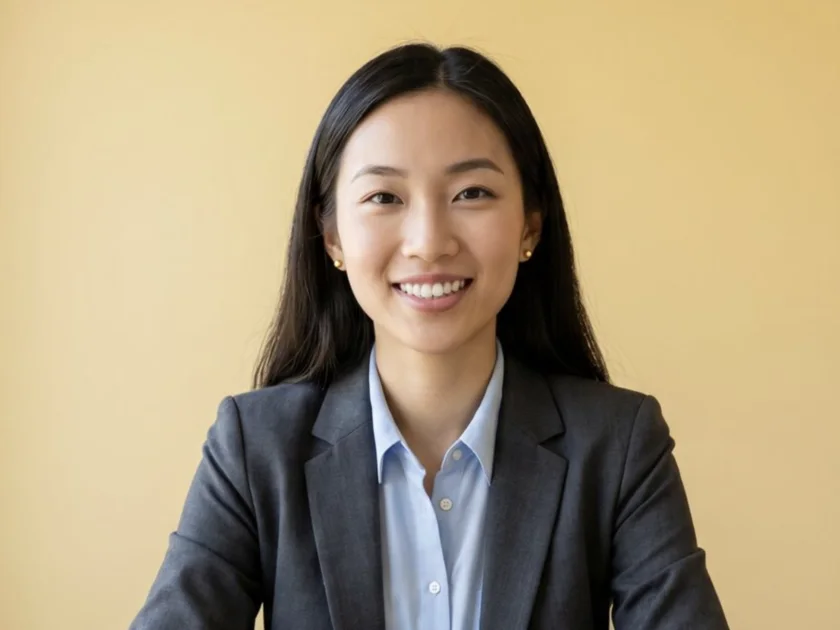 You
You

“Confetto showed me the exact answer moments that sounded rushed, vague, or missing empathy. The rewrite suggestions made my next mock feel completely different.”
Interviewers want to know why pharmacy and not medicine or nursing, and what you've actually seen pharmacists do.
How would you explain an interaction to a worried patient? What do you ask before recommending something over the counter?
Politely questioning a physician's prescription is a real skill, and interviewers test it.
From a Confetto session with a pharmacy school applicant, trimmed for length. The interviewer's follow-up is built from what the applicant actually said.
Question
What does a pharmacist contribute to a patient's care team beyond dispensing medications?
When I worked as a pharmacy technician, I saw a pharmacist review a patient's medications and notice a potential drug interaction that could have caused serious side effects. They counseled the patient and called the doctor to adjust the prescription…
Thinking back to that interaction where the pharmacist contacted the physician to adjust the prescription, how did the pharmacist manage that conversation with the doctor? What was their approach to ensuring the suggestion was well received?
Follow-up picked up on the applicant's own example
Strength
“They even suggested alternative medications that could be safer.”
Shows the pharmacist contributes actionable recommendations, not just identifying a problem, and keeps the focus on a safer outcome for the patient.
To improve
“The patient initially seemed worried but appreciated the pharmacist's thorough explanation.”
You noticed the patient's anxiety but didn't say how you'd address it. Name concrete steps: acknowledge the concern, invite questions, explain the plan, and use teach-back.
Choose your interview format, complete a realistic mock, and leave with a score report that tells you exactly what to fix before interview day.
Pick MMI, panel, or traditional prep, then train on scenarios matched to your programs, regions, and admissions competencies.
Join a browser-based mock with live timing, natural follow-ups, and admissions-style pressure that mirrors the real interview room.
Review rubric scores, transcripts, delivery coaching, and targeted practice steps so every mock turns into a clearer next rep.
A few of the questions you'll practice, written for your program, not borrowed from med school.
“What does a pharmacist contribute to a patient's care team beyond dispensing medications?”
“A customer asks you to recommend something for a headache while buying several other medications. What would you want to know first, and why?”
“A physician is irritated when you call to question a prescription. How do you handle the call?”
“The opioid crisis has put pharmacists in a difficult position. How do you see the pharmacist's role in it?”
“A pharmacist has a personal objection to dispensing a legal medication. How should that be handled so the patient still gets care?”
“Which pharmacy career path interests you, such as community, hospital, ambulatory care, or industry, and why?”
Pick your format and programs
Choose one-on-one, panel or MMI, then add the PharmD programs you're interviewing with so questions and follow-ups match them.
Sit the interview on video
Join a browser-based call with the AI interviewer. The default is 3 minutes of prep and an 8-minute interview, and you can change both in settings. It asks follow-ups on what you actually said.
Get a scored report
Answers are scored out of 100 on content, structure and professional communication, with notes on tone, pacing, eye contact and posture from your video.
Fix one thing and go again
Read the transcript, see your strongest and weakest moments, then retry the same question or take a new one. Mocks are unlimited on every paid plan.
Why pharmacy, not medicine or nursing
Motivation questions that follow up until your reason is specific to pharmacy.
The pharmacist's role
What a pharmacist adds to the care team beyond dispensing.
Patient counseling
What you would ask before recommending something over the counter, and how you would explain it.
Calls with prescribers
Questioning a prescription with a physician who is irritated by the call.
Ethics
A personal objection to dispensing a legal medication, and how the patient still gets care.
Policy and career
The pharmacist's part in the opioid crisis, and which career path you want.
Your programs' own questions
Add any question a pharmacy school is known for and practice it with the same follow-ups.
Hearing what others like the most about prepping with Confetto!
Start with 3 free interviews, get a score report, and see exactly what to improve before interview day.
A real reason for pharmacy, not medicine or nursing, grounded in something you saw or did.
Do you understand what pharmacists do on the care team beyond dispensing?
Clear explanations for patients, attention to detail, and catching problems before they cause harm.
Fair, safe decisions, and respectful teamwork with prescribers. No pharmacotherapy knowledge expected.
Practice every question type, run pressure-tested mocks, then get video, tone, and phrase-level feedback ChatGPT simply can't give you.
500+ MMI, traditional, and ethical questions. Filter by competency or school and rehearse against model answers.
Browser mocks that match admissions pacing and tone, with live follow-ups in MMI, panel, or traditional format.

Eye contact, pacing, filler words, body language, and vocal warmth — the non-verbal signals ChatGPT can't see or hear.
You jumped to treatment before affirming the patient's autonomy — ground recommendations in ethical principles first.
"Let me summarize what I've heard, acknowledge your values, then explore options that respect those wishes."
"I would explain why surgery is necessary..."
Patient autonomy
Rubric scores across empathy, ethics, structure, and delivery — with transcripts and the exact phrasing to use next.
Confetto replaces courses, coaches, and buddies with one tool. Realistic medical interviews, tailored questions, and instant feedback, together in one place.
Features | Confetto | Coach | Course | Buddy |
|---|---|---|---|---|
24/7 availability | Varies | |||
Unlimited practice sessions | Limited | Varies | ||
Role‑specific prep | Generic | Generic | ||
Video recording & playback | ||||
Instant AI feedback | ||||
Track your progress | Manual | |||
Never cancels on you | ||||
Judge‑free practice | Varies | Varies | Sometimes | |
Curated interview questions | Outdated | |||
Price | Unlimited from $149 | $200+/hr | $2k–$5k | Free |
Full access to Confetto's AI interviewer. Start with 3 free mock interviews before choosing a plan—cancel anytime.
Focused reps before an upcoming interview—about $21 a day.
Includes 3 free mock interviews first.
Best for applicants juggling multiple invites, schools, and formats.
Includes 3 free mock interviews first.
The lowest monthly cost for applicants preparing across programs or cycles.
Includes 3 free mock interviews first.
Comparing options? See what interview prep costs, from free to $600+ per coached mock.
Applicants across the U.S. and Canada use Confetto to stay sharp between interviews, get targeted feedback, and walk into the room confident.
Confetto let me practice MMIs on my own schedule and still get detailed feedback within minutes. I swapped expensive coaching for daily AI mocks and walked into interviews calm and prepared.
The platform nudged me to deepen my ethical answers and gave sample language I used on interview day.
I was nervous about situational judgement questions. Confetto's AI interviewer challenged me with realistic follow ups and kept the timing authentic.
Seeing the score breakdown by communication, empathy, and reasoning made it obvious where to focus before my next station.
Confetto mirrored the pressure of my panel interviews. Transcripts with timestamps made it easy to review tone, filler words, and pacing.
My interviewer even commented on how structured my answers were—exactly what Confetto drilled into me every session.
I had only a few weeks between secondaries and interviews. Confetto let me get three or four reps a day without coordinating schedules.
The AI flagged when I skipped reflective pauses and coached me on slowing down—completely changed how I interviewed.
I used Confetto to stay sharp while on multiple waitlists. The school-specific questions matched the re-interview questions I saw.
It helped me keep the patient, confident tone admissions kept mentioning. I couldn’t have done it without those constant reps.
Three free mocks are enough to see your score, review your delivery, and understand your highest-impact improvements.
Everything you need to know about Confetto, answered in one place.
Ten common questions with what a strong answer covers.
Think time, one recorded take and feedback on each answer.
The questions most health programs ask and how to answer them.
A virtual MMI with six seven-minute stations.
An MMI with a writing station.
Two 25-minute one-on-one interviews.
A five-station MMI.
Start practicing today with 3 free mock interviews.
Try Confetto free