
Updated · 9 min read
Preparing for the MMI at the University of Saskatchewan College of Medicine
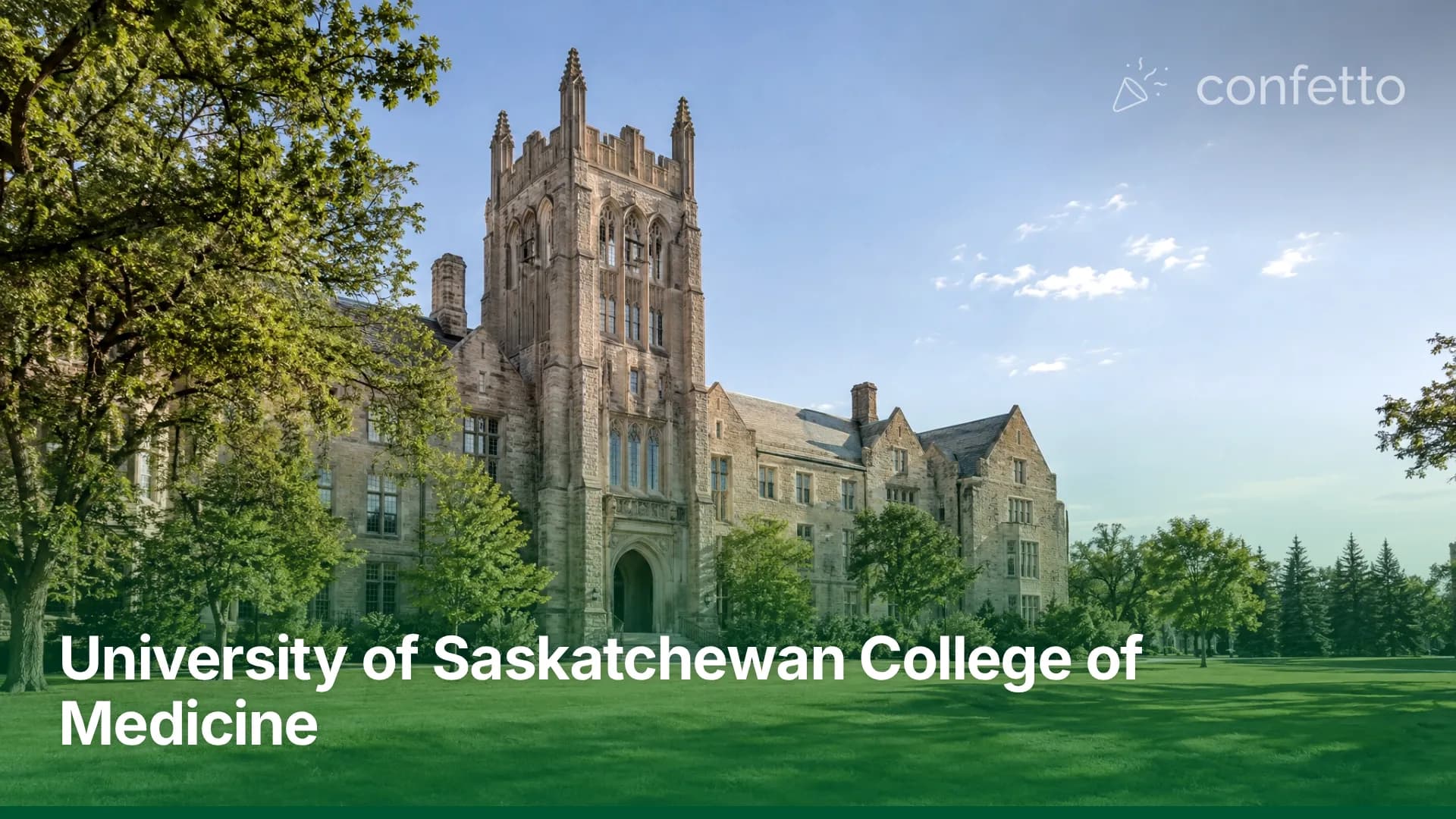
Key facts (2026-27)
Every invited applicant does a virtual MMI and either a panel interview or, through the Indigenous Admissions Circle, a conversation circle, in February 2027.
- Format
- Virtual MMI plus a panel or conversation circle
- Where
- Virtual
- Stations
- MMI stations, then a panel interview (or a conversation circle for Indigenous Admissions Circle applicants)
- Also required
- Casper
- Interview dates
- February 2027
Checked October 2026 against USask College of Medicine: Applicant Information Document (2027 incoming class) and AAMC MSAR 2027 interview report. Confirm details in your invitation.
Succeeding in the Multiple Mini Interview (MMI) at the University of Saskatchewan College of Medicine takes more than polished delivery.
It requires you to speak fluently about Saskatchewan’s healthcare landscape, policy history, current events, social issues, and the province’s unique rural and Indigenous health context, then connect those insights to your values and decisions as a future physician.
By weaving local knowledge into your answers, you show genuine commitment to the community and readiness to contribute meaningfully.
This guide distills key policies, programs, and issues that frequently surface in MMI-style scenarios, and offers practical ways to anchor your responses beyond the generic.
A powerful approach is to reference specific provincial initiatives in real time: “This [answer] relates to [X policy] that was implemented just [Y] months ago. I thought this was an interesting initiative in the province of Saskatchewan, although it would have been nice to see them do [your suggestion on the policy].”
Be informed, offer opinions grounded in evidence and research, and communicate with clarity. There is no single right answer, but there is always an opportunity to demonstrate thoughtful, community-aware deliberation.
The MMI and Panel Interview at the University of Saskatchewan College of Medicine: Format and Experience
For the 2027 incoming class, the University of Saskatchewan’s Applicant Information Document describes virtual interviews held in February.
- Two parts. All invited applicants complete a combined MMI and panel interview or conversation circle.
- What each assesses. The MMI assesses your responses to station prompts covering a broad range of categories; the panel interview or conversation circle lets you share personal stories and lets interviewers assess communication and emotional intelligence.
- Panel or circle. Applicants through the Indigenous Admissions Circle have a conversation circle, while other applicants have a panel interview.
- Stations and timing. The school says it will share more detail on the format, such as station counts and timings, closer to the interviews, so rely on your invitation for those.
Saskatchewan connections
The school also says Saskatchewan and rural connectedness is considered in selection, so it is worth reflecting honestly on your own connections to the province.
Linking your reasoning to Saskatchewan context can help, as long as you don’t lose sight of patient-centered care.
The school does not publish its station questions. Practice a range of scenario types, such as ethical reasoning, communication with diverse populations, resource allocation, and team-based care, and keep Saskatchewan context in mind.
In your responses, go beyond abstract principles. Show you understand how provincial policies and programs shape access, equity, and outcomes, and how you would contribute within that system as a physician.
Mission & Culture Fit
The University of Saskatchewan College of Medicine emphasizes social accountability and service to the province.
Its stated vision is to be leaders in improving the health and well-being of the people of Saskatchewan and the world, and its social accountability pages say it directs education, research and service towards the priority health concerns of Saskatchewan communities.
Admissions looks for applicants who can translate that mission into action, especially in underserved, rural, and Indigenous communities.
Community engagement
Community engagement is not theoretical here. Student-led efforts like the Student Wellness Initiative Toward Community Health (SWITCH) provide care to underserved populations and model the kind of team-based, culturally responsive service Saskatchewan needs.
Research with community impact
Research and innovation are tightly tied to community impact. VIDO (Vaccine and Infectious Disease Organization), based at the University of Saskatchewan, conducts vaccine and infectious disease research, including work on COVID-19.
Framing your interests through this social accountability lens (care delivery and research that directly improve outcomes) signals a strong culture fit.
Local Healthcare Landscape & Policy Signals
Understanding Saskatchewan’s healthcare history and policy framework will elevate your MMI performance and help you articulate a clear, mission-aligned narrative.
The birthplace of medicare
Saskatchewan is the birthplace of Canada’s universal healthcare system. In 1947, under Premier Tommy Douglas, the province introduced a universal public hospital insurance plan, and in 1962 it introduced public medical care insurance (under Premier Woodrow Lloyd), which became a model for national medicare.
This legacy underscores a strong provincial commitment to accessible, equitable care for all residents and sets expectations for physicians to champion that access.
The Saskatchewan Health Authority
In 2017, the province amalgamated its regional health authorities into the Saskatchewan Health Authority (SHA) to streamline services and improve patient care. Be ready to discuss the benefits and trade-offs of integrated, team-based care for patients with complex needs, such as chronic disease, across urban, rural, and remote areas.
Rural care
Rural realities shape much of Saskatchewan’s policy activity. Physician shortages in rural communities affect access to care.
The provincial Rural Physician Incentive Program (RPIP) offers financial incentives to family physicians practicing in rural Saskatchewan, and recruitment incentives are tied to return-of-service commitments in rural, northern, or regional communities.
Telehealth and virtual care are also used to bring care closer to home.
Key signals to reference:
- Birthplace of universal healthcare (1947; Premier Tommy Douglas).
- Saskatchewan Health Authority (2017 consolidation of the regional health authorities).
- Team-based care for complex needs.
- Rural Physician Incentive Program (RPIP) and return-of-service commitments.
- Telehealth and virtual care.
Current Events & Social Issues to Watch
Saskatchewan’s current priorities intersect public health, mental health, Indigenous health and reconciliation, social determinants, and chronic disease prevention. These themes often surface in MMI scenarios, either explicitly or embedded in ethical dilemmas.
Mental Health and Addictions Strategy
Opioid-related harms are a continuing concern, including in Indigenous communities. Harm reduction efforts include naloxone availability.
Suicide prevention remains a focus through the Pillars for Life Strategy, emphasizing community engagement and culturally appropriate interventions.
When discussing mental health, highlight integration into primary care and a compassionate, evidence-based approach to substance use disorders.
Indigenous Health and Reconciliation
Persistent health disparities include higher rates of diabetes, heart disease, and mental health conditions among Indigenous populations.
Access is constrained by geographical isolation, cultural differences, and systemic racism. The Truth and Reconciliation Commission (TRC) Calls to Action are central:
- Call #19: Close the gaps in health outcomes between Indigenous and non-Indigenous communities.
- Call #22: Recognize the value of Indigenous healing practices.
Demonstrate cultural humility and a commitment to culturally safe care that integrates traditional practices where appropriate.
Social Determinants of Health
Economic hardship can contribute to food insecurity, inadequate housing, and limited healthcare access, and education and employment gaps can affect health literacy and stress.
Check current figures from Statistics Canada or the province before quoting numbers. In your answers, connect clinical care to advocacy for policies that address root causes.
COVID-19 Pandemic Response
The province ran vaccination outreach and public health measures, and intensive care capacity was strained at points. Healthcare worker burnout and staffing shortages remain pressing concerns.
Reflect on interprofessional collaboration, public health measures, and resilience.
Chronic Disease Prevention
Diabetes, cancer screening, and vaccination programs are all areas where prevention and patient education matter. Cancer control is led by the Saskatchewan Cancer Agency.
Use programs you have actually researched to demonstrate your commitment to prevention and patient education.
Practice questions for the USask MMI and panel (written by us)
- Saskatchewan consolidated its regional health authorities into the Saskatchewan Health Authority (SHA) in 2017. In an MMI station, how would you explain the benefits and trade-offs of integrated, team-based care for a patient with multiple chronic conditions living in a remote community?Practice this question now
- You are caring for a patient who wishes to incorporate traditional Indigenous medicine alongside conventional treatment. How would you approach this conversation while honoring TRC Call #22 and ensuring patient safety?Practice this question now
- During a surge that strains ICU capacity, how would you think through allocating limited resources fairly between rural and urban patients? Which ethical principles guide your reasoning?Practice this question now
- A rural clinic faces physician shortages, but telemedicine and remote monitoring are available. How would you design a care plan that maintains quality and continuity, and what limits of virtual care would you anticipate?Practice this question now
- Opioid-related harms are a continuing concern in Saskatchewan, including in Indigenous communities. How would you advocate for and deliver evidence-based, culturally safe care—referencing harm reduction strategies and the Pillars for Life Strategy?Practice this question now
- A patient in a northern Saskatchewan community is due for cancer screening, but the nearest screening site is a long drive away. How would you help?Practice this question now
- On a rural rotation in Saskatchewan, you realize your patient is your friend's parent. What do you do?Practice this question now
- A farmer with chest pain at harvest time says he can't leave his fields to see a doctor. How do you respond?Practice this question now
- Saskatchewan introduced public medical care insurance in 1962. If you could add one service to public coverage today, what would it be and why?Practice this question now
- A teammate makes a racist comment about Indigenous patients during a group project. How do you respond?Practice this question now
- What connections do you have to Saskatchewan or to rural communities, and how have they shaped why you want to practice medicine?Practice this question now
- Tell us about a time you helped someone who was struggling but didn't ask for help. What did you do?Practice this question now
Preparation Checklist
Use these steps to build Saskatchewan-specific depth and get objective practice with Confetto.
- MMI simulations. Run AI-powered MMI simulations that emphasize rural health, Indigenous health, and resource allocation, then refine with analytics on clarity, empathy, and policy linkage.
- Scenario sets. Drill scenario sets on harm reduction, telehealth trade-offs, and chronic disease prevention. Practice referencing programs like RPIP and telehealth.
- TRC Calls to Action. Use Confetto’s structured frameworks to practice integrating TRC Calls to Action (Call #19 and Call #22) and culturally safe communication into your answers.
- Benchmarking. Benchmark your responses with performance dashboards that highlight missed opportunities to cite Saskatchewan-specific initiatives (e.g., SHA consolidation, RPIP).
- Policy anchors. Build concise “policy anchor” phrases and rehearse them aloud so you can reference programs naturally under time pressure.
FAQ
Does the University of Saskatchewan’s MMI emphasize local health context?
The school says Saskatchewan and rural connectedness is considered in selection and describes a social mandate to serve the province, but it does not publish station content or say that citing a given policy earns points. Local context can strengthen an answer when it is accurate and relevant.
Can I reference programs like RPIP, the telehealth, or SHA consolidation in my answers?
You can, where relevant. Citing the Rural Physician Incentive Program (RPIP) or the 2017 consolidation into the Saskatchewan Health Authority (SHA) can show you’ve done your homework, but only use details you have checked, and never force a policy reference into an answer it doesn’t fit.
What if I don’t have direct experience in Saskatchewan?
Direct experience isn’t required, but you should demonstrate informed engagement. Learn the province’s healthcare history (e.g., 1947 universal hospital insurance under Premier Tommy Douglas), current priorities (e.g., harm reduction, chronic disease prevention), and community initiatives (e.g., SWITCH). Express willingness to serve rural or remote communities and align your goals with the College’s mission.
How should I approach scenarios involving Indigenous traditional healing?
Lead with respect and collaboration. Acknowledge TRC Call #22 on recognizing Indigenous healing practices, explore how to safely integrate traditional and conventional approaches, and ensure shared decision-making. Emphasize culturally responsive, partnership-based care.
Key Takeaways
- Medicare history. Saskatchewan’s identity as the birthplace of universal healthcare (1947 hospital insurance under Premier Tommy Douglas; 1962 medical care insurance) and the 2017 Saskatchewan Health Authority consolidation frame a system focused on access, integration, and patient-centered care.
- Rural care. Rural realities matter: physician shortages, RPIP, return-of-service commitments, and telehealth are essential context for equitable care planning.
- Indigenous health. Indigenous health and reconciliation are central: understand TRC Call #19 and Call #22 and culturally safe practices to address disparities and build trust.
- Current priorities. Current priorities include harm reduction for the opioid crisis, suicide prevention (Pillars for Life Strategy), COVID-19 recovery, and chronic disease prevention.
- Principles to practice. In the MMI, move from principles to practice by anchoring answers in Saskatchewan policies, programs, and community needs, while demonstrating empathy, ethics, and teamwork.
Call to Action
Ready to turn Saskatchewan-specific insight into standout MMI performance?
Use Confetto to run AI-powered mock stations that drill ethical judgment, cultural safety, rural health planning, and policy-aware reasoning, complete with analytics and coaching.
Bring the province’s programs, priorities, and people into your answers, and show the University of Saskatchewan College of Medicine you’re prepared to serve.