8 Actionable Medical School Interview Tips to Master in 2026

Unlock your potential with our top 8 medical school interview tips. Master MMI, ethical reasoning, and storytelling to ace your admissions interview.

8 Actionable Medical School Interview Tips to Master in 2026

Your GPA and MCAT score got you to the door, but the medical school interview determines if you're invited inside. This isn't just a conversation; it's a high-stakes assessment of your communication, empathy, critical thinking, and professionalism. Generic advice like 'be yourself' or 'make eye contact' simply won't cut it. To succeed, you need a strategic plan built on actionable techniques, realistic practice, and deep self-awareness.

This guide provides a comprehensive collection of medical school interview tips designed to move you beyond surface-level preparation. We will deconstruct the entire process, offering a blueprint for success that is both practical and repeatable. You'll learn how to master specific formats like the Multiple Mini-Interview (MMI), develop structured responses to behavioral questions, and manage the inevitable stress of interview day. Each section provides a building block toward a confident, compelling performance that demonstrates to admissions committees that you are not just a qualified applicant, but a future physician ready for the rigors of medicine.

Forget vague suggestions. We'll explore how to:

  • Master ethical reasoning scenarios and value-alignment questions.
  • Develop and deliver authentic personal stories that resonate with interviewers.
  • Demonstrate genuine, school-specific interest beyond a quick website scan.
  • Seek and implement expert feedback to refine your approach.

This is your roadmap to transforming a nerve-wracking hurdle into a standout opportunity. Let's begin.

1. Master the MMI (Multiple Mini-Interview) Format

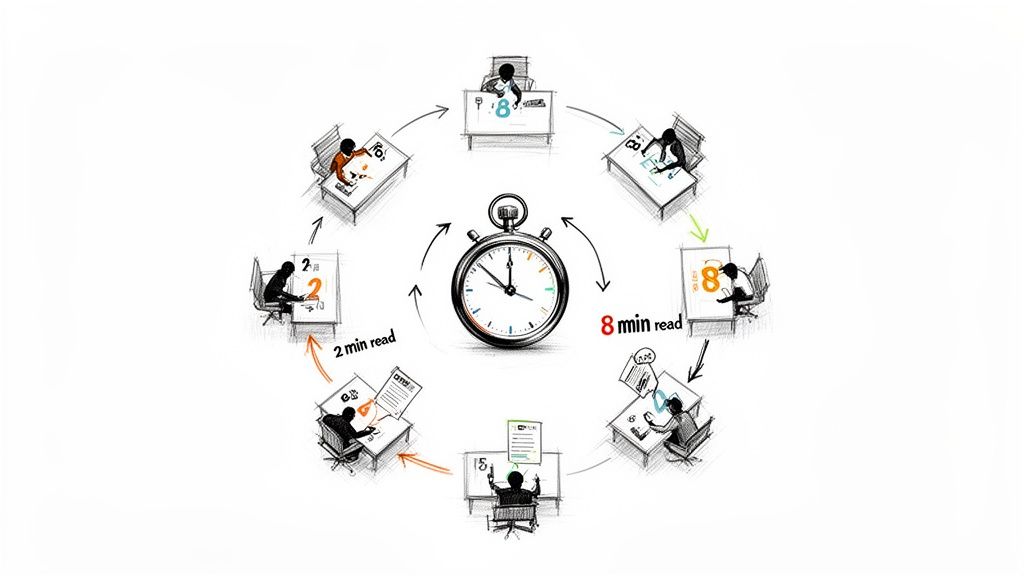
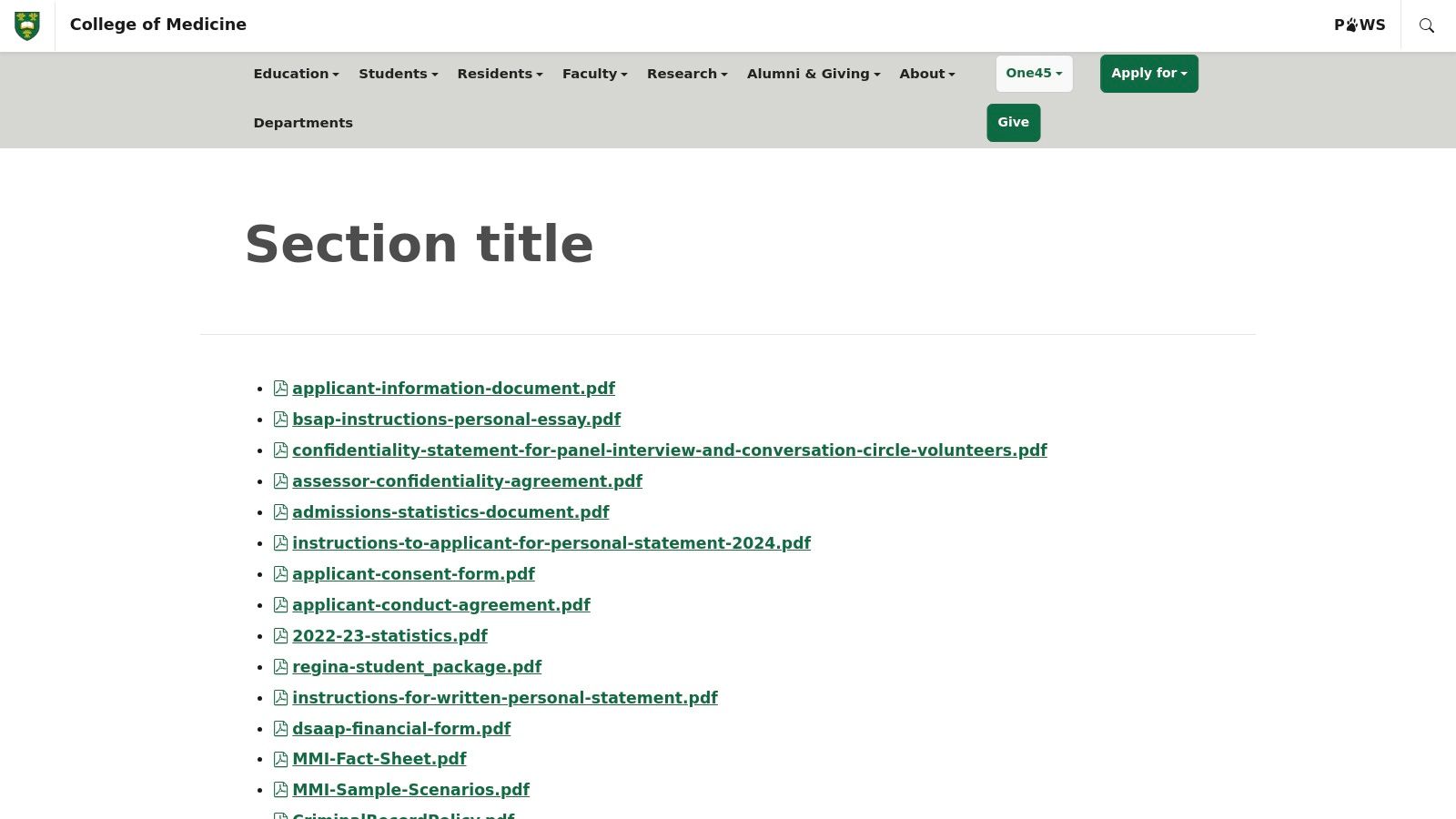
The Multiple Mini-Interview (MMI) has become a staple in medical school admissions, used by a majority of programs in North America, including institutions like UCSF, Duke, and the University of Toronto. Pioneered by McMaster University, this format moves candidates through a circuit of 5-10 independent stations, each lasting around 8-10 minutes. Before entering each room, you have approximately two minutes to read a prompt and formulate your response.

This structure is designed to evaluate core competencies beyond academic knowledge. It tests your critical thinking, ethical reasoning, communication skills, and empathy in a series of distinct, often unrelated scenarios. Unlike a traditional interview where one strong or weak answer can color the entire session, the MMI gives you a fresh start at every station.

How to Prepare for the MMI

Success in the MMI depends less on having "correct" answers and more on demonstrating a thoughtful, structured reasoning process. Here are actionable tips to excel:

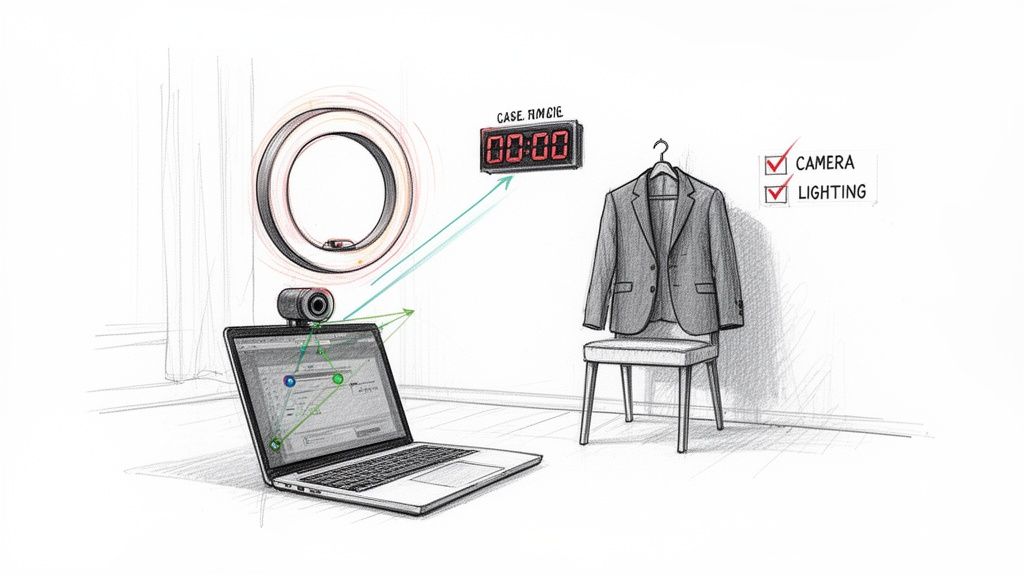
  • Practice Under Realistic Time Constraints: The most challenging aspect of the MMI is the relentless clock. Use a timer to practice reading a prompt for two minutes and then speaking for a full eight minutes. This builds mental stamina and helps you manage your time effectively during the real interview.
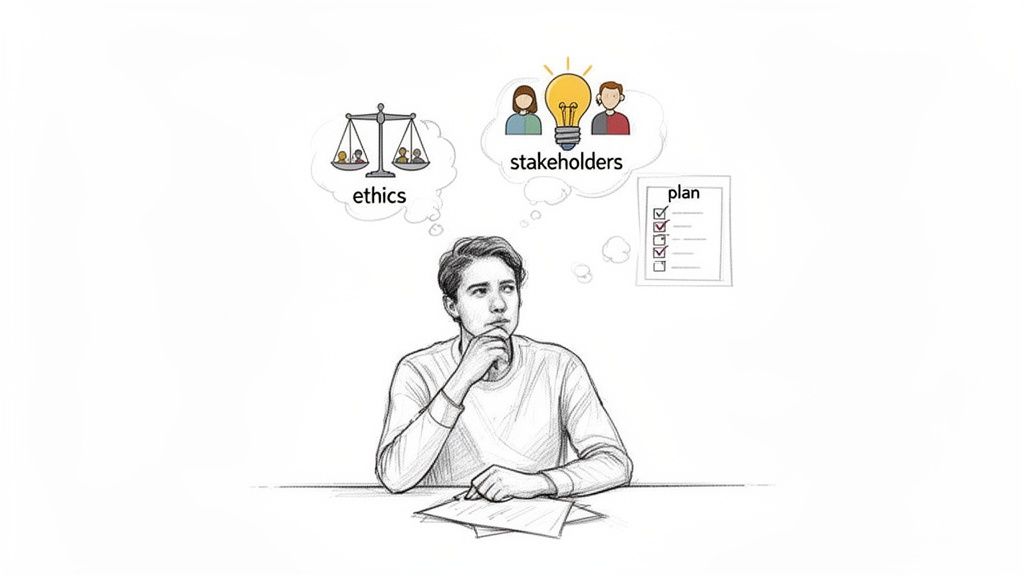
  • Develop a Structured Approach: Don't just jump into an answer. When you read the prompt, create a quick mental framework. For example, for an ethical dilemma, you might structure your response by:
    1. Identifying the core conflict and stakeholders.
    2. Discussing potential actions and their pros and cons.
    3. Acknowledging complexities and missing information.
    4. Stating your final decision and justifying it.
  • Focus on Your Thought Process: Interviewers are more interested in how you think than what you think. Vocalize your reasoning. Start with phrases like, "My initial thought is..." or "On one hand... but on the other hand..." This makes your critical thinking visible to the evaluator.
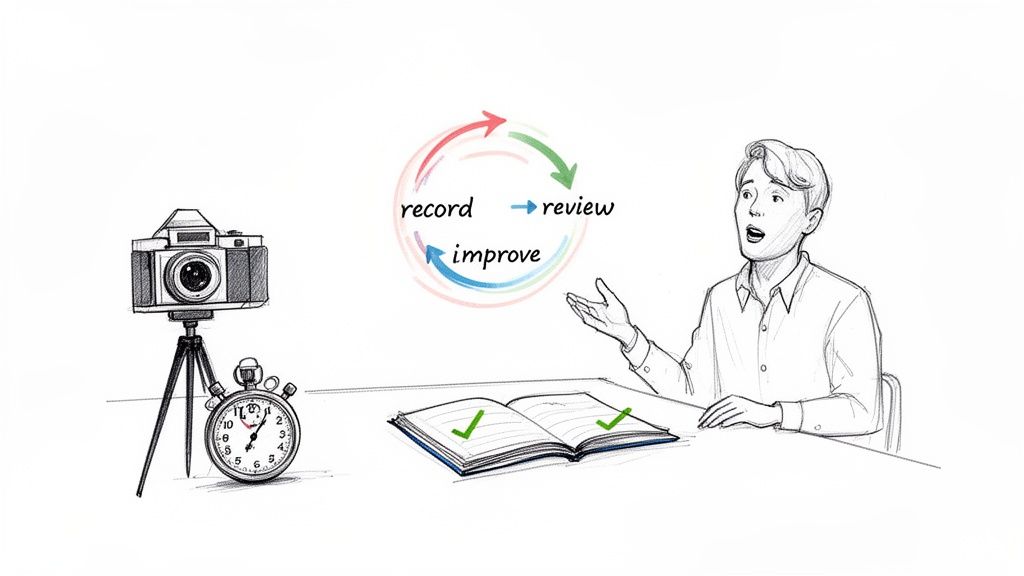
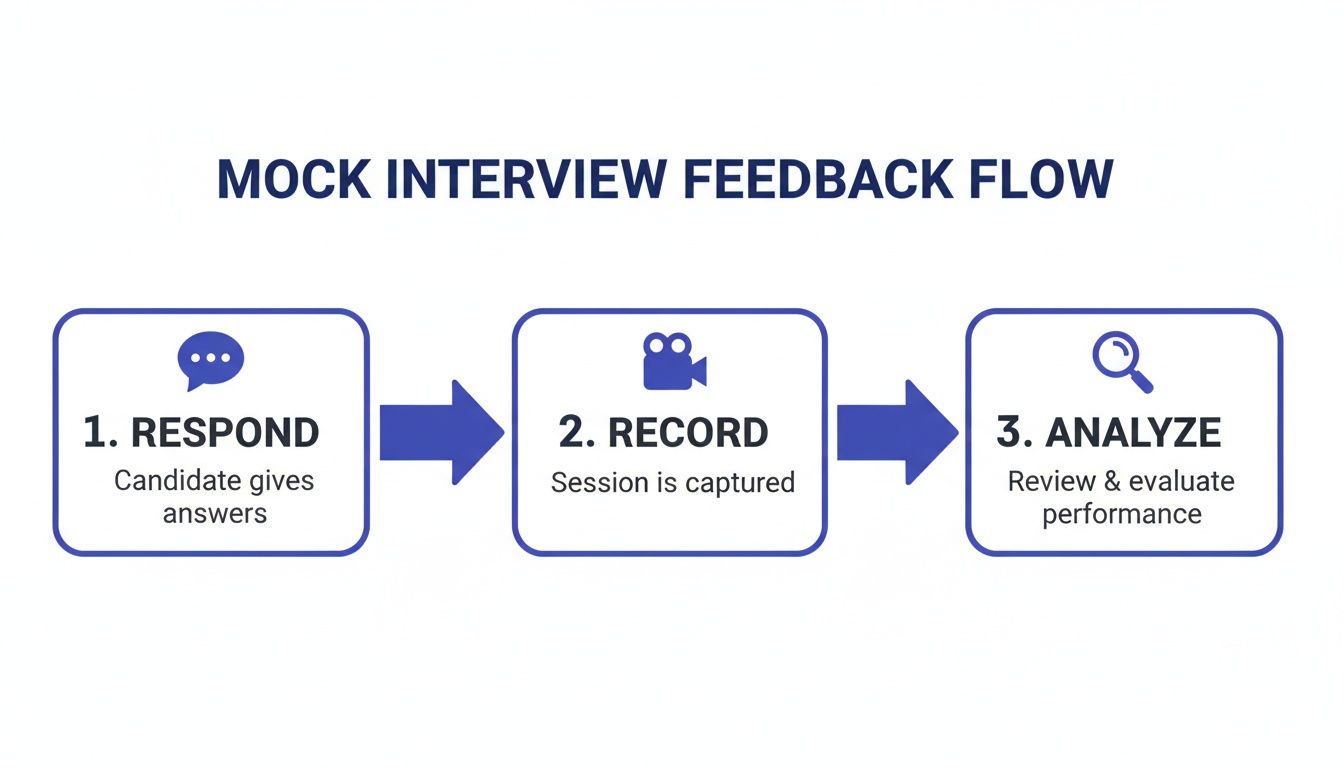
  • Record and Review Yourself: Record your practice sessions on video. When you watch them, look for verbal fillers ("um," "like," "you know"), check your pacing, and assess your body language. This self-assessment is one of the most powerful medical school interview tips for identifying and correcting small issues that can make a big impact.

Key Insight: The goal of each MMI station isn't to reach a perfect solution. It's to demonstrate that you can analyze a complex situation from multiple perspectives, communicate your thoughts clearly, and remain professional under pressure.

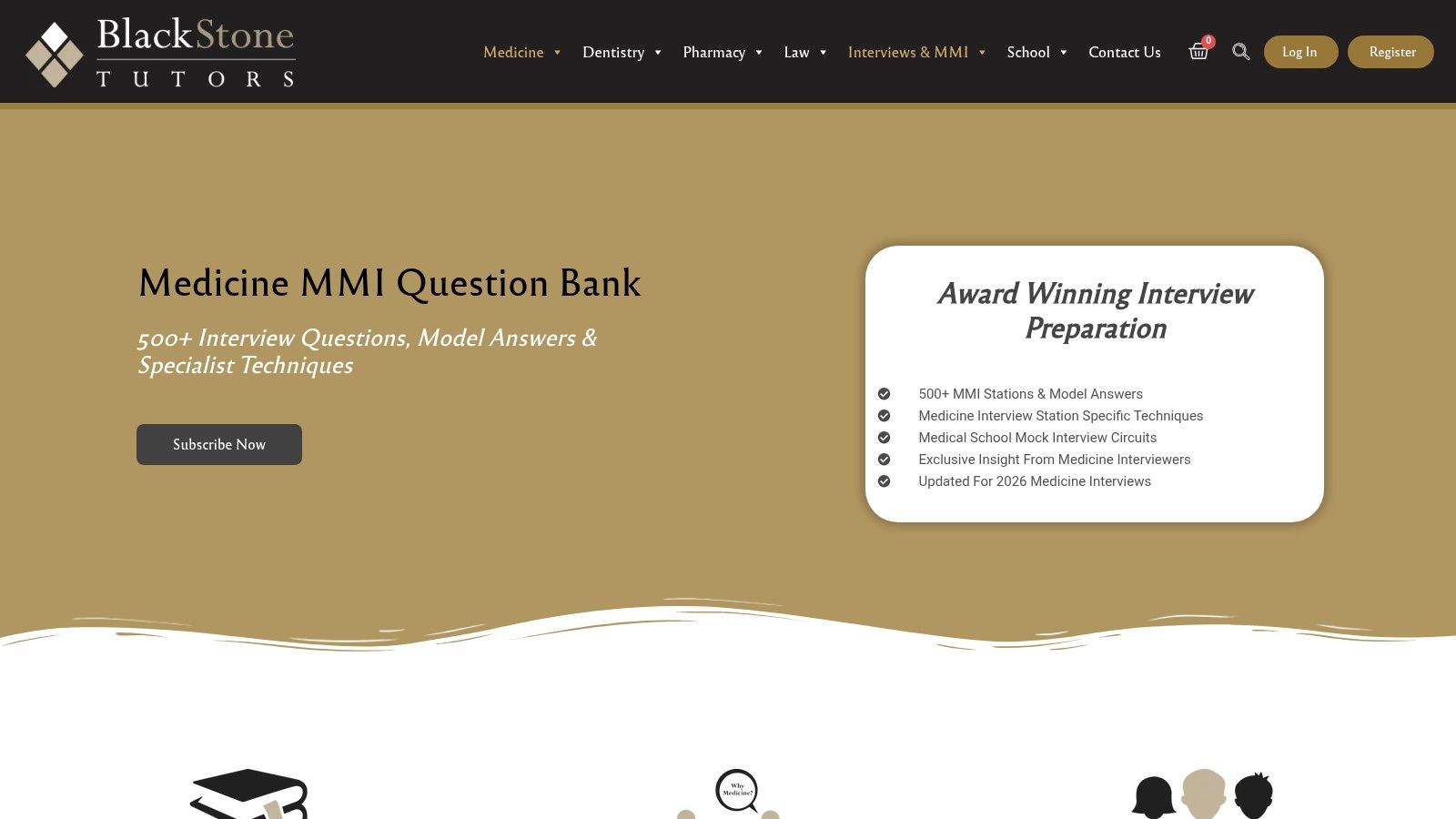
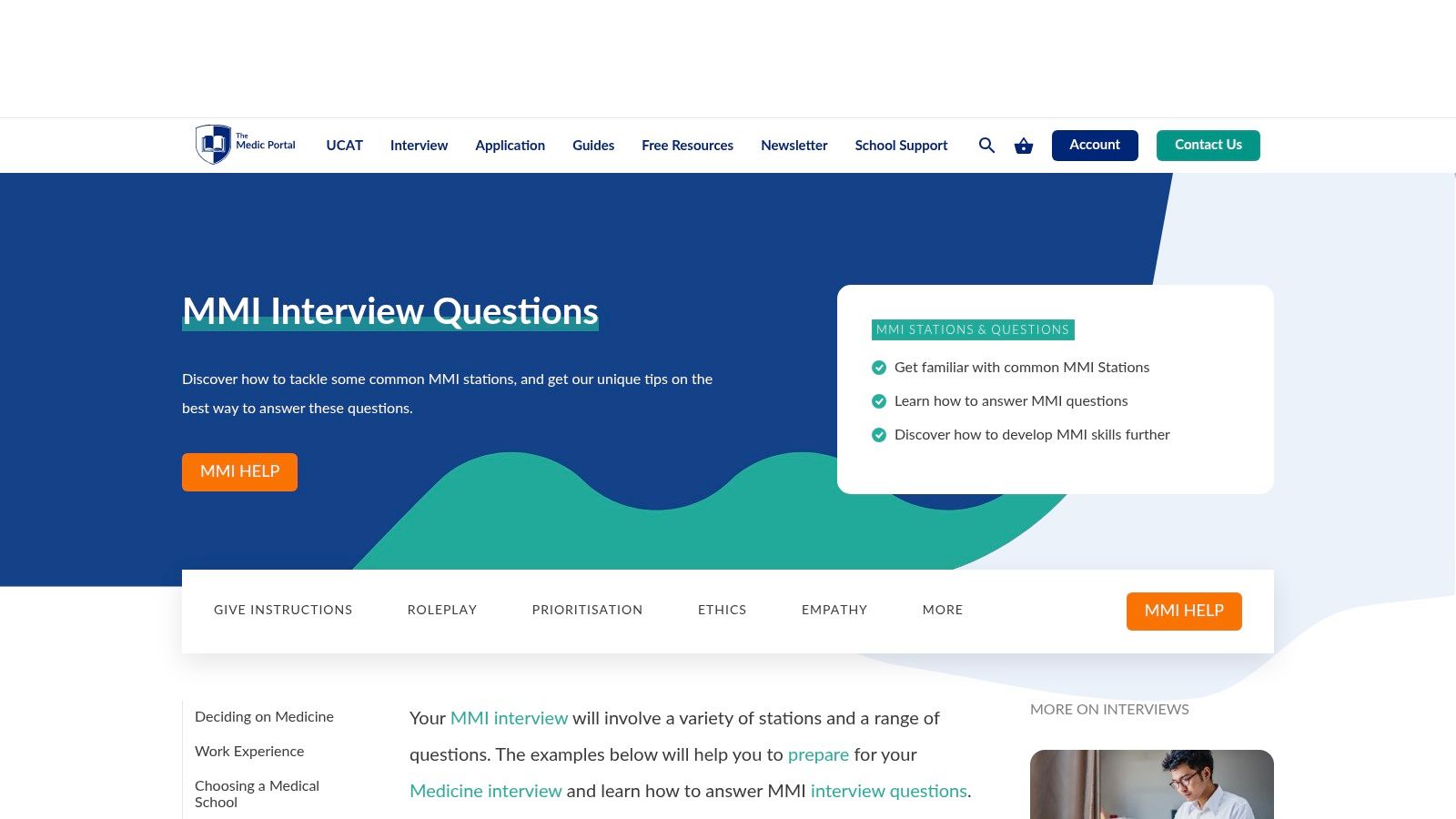
For a deeper dive into the types of scenarios you might face, explore these common MMI interview questions and practice developing your own frameworks.

2. Practice Ethical Reasoning and Value-Alignment Questions

Medical school interviews have evolved to assess more than just your academic record; they are a deep dive into your moral compass. Schools increasingly use ethical dilemmas and value-alignment scenarios to evaluate how you navigate complex situations where clear-cut answers are rare. They want to see your decision-making framework in action, focusing on your reasoning process rather than a specific "correct" outcome.

These questions probe your understanding of critical healthcare issues like resource allocation, patient confidentiality, end-of-life care, and systemic inequities. For instance, UCSF might ask about healthcare disparities in immigrant communities, while a UK medical school could present a scenario on respecting patient autonomy in end-of-life decisions. The goal is to see if your values align with the profession's and the specific institution's mission.

How to Prepare for Ethical Questions

Success with these questions hinges on demonstrating a structured, empathetic, and self-aware approach. Rather than memorizing answers, focus on developing a consistent framework for your reasoning. Here are actionable tips to help you prepare:

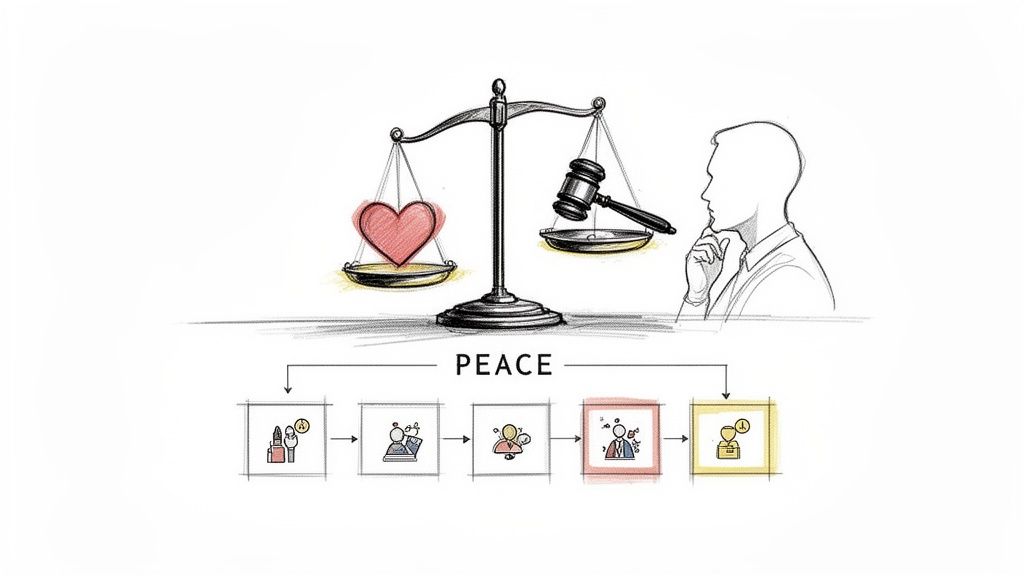
  • Develop a Personal Ethical Framework: Don't just list principles like autonomy or justice. Articulate how you would weigh them. For example, you might explain your thought process by:
    1. Clearly identifying the core ethical conflict and all involved stakeholders.
    2. Exploring multiple viewpoints without judgment.
    3. Weighing the potential consequences of different actions.
    4. Acknowledging any missing information that would be crucial for a real-life decision.
    5. Connecting your final, justified position back to core medical values.
  • Research School-Specific Values: A powerful strategy is to align your reasoning with the target school's mission. If a school emphasizes serving underserved populations, like many Caribbean medical schools do, frame your ethical discussions to reflect a genuine commitment to community health and equity.
  • Embrace Complexity and Nuance: It is perfectly acceptable, and often impressive, to say, "This is a genuinely complex situation with no easy answer." Forcing false certainty can seem naive. Instead, show that you can hold multiple competing ideas and appreciate the nuances of a difficult choice. This demonstrates maturity and intellectual humility.
  • Practice with Diverse Scenarios: The key to building confidence is consistent practice. Work through a wide range of scenarios, from clinical dilemmas to public health crises, to refine your analytical skills. Getting feedback on whether your reasoning comes across as empathetic and respectful is crucial.

Key Insight: Interviewers are not looking for a bioethicist. They are looking for a future physician who can think critically, act compassionately, and demonstrate the humility to navigate the profound ethical responsibilities of medicine.

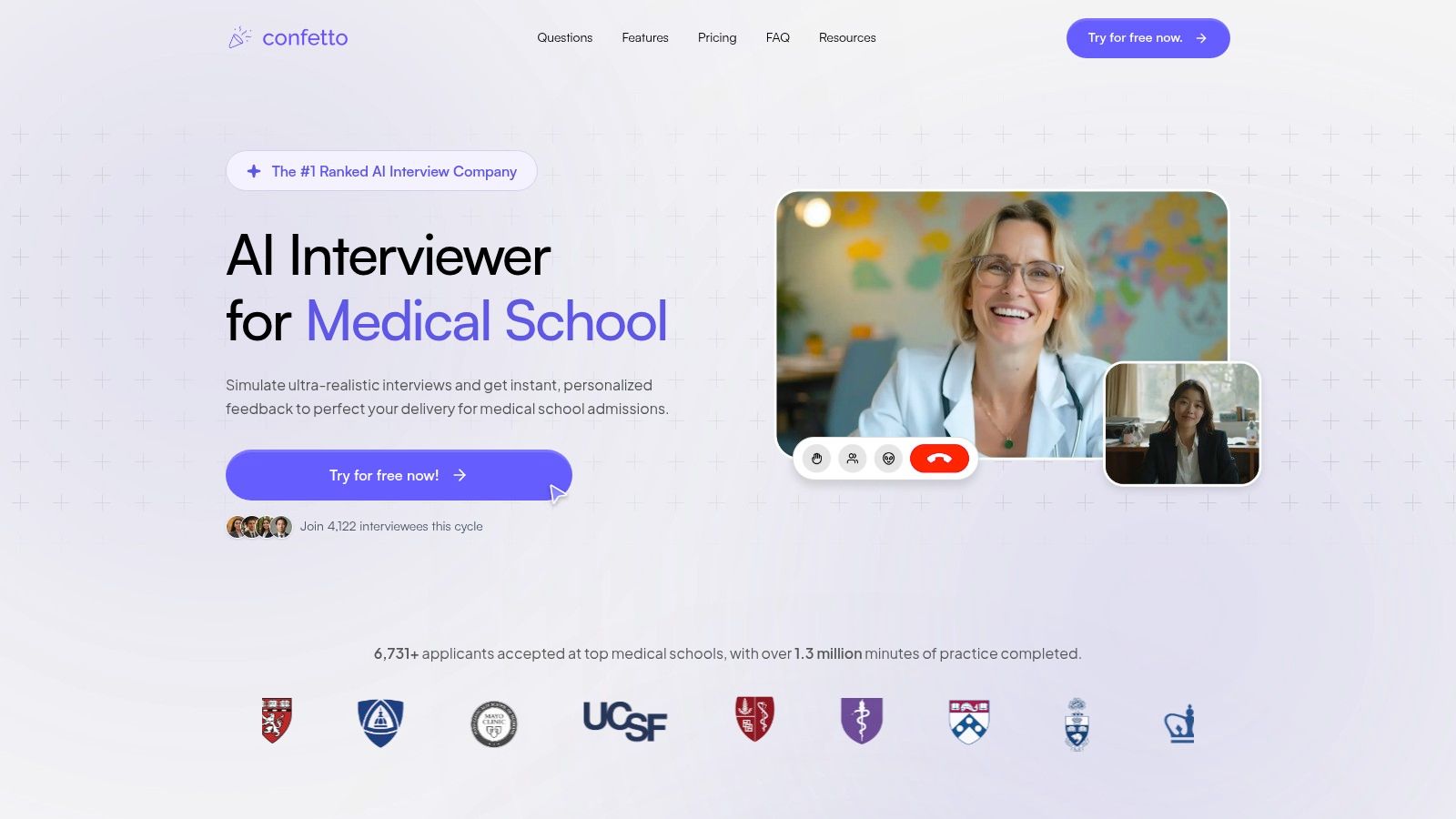
To build the mental muscle for these challenges, you can practice with a wide variety of prompts using Confetto's ethical dilemma question bank, which can help you develop consistency without memorizing scripts.

3. Develop and Deliver Authentic Personal Stories

Medical school interviews are fundamentally about you as a person, not just your grades or MCAT score. Admissions committees use questions like "Tell me about yourself" or "Describe a challenge you faced" to understand your motivations, character, and suitability for a career in medicine. This is where personal stories become your most powerful tool, transforming abstract qualities like resilience or empathy into memorable, tangible evidence.

Effective storytelling isn't about crafting a dramatic screenplay; it's about sharing genuine experiences that reveal who you are. The most compelling narratives often stem from moments of challenge, failure, or unexpected insight rather than straightforward successes. For instance, a story about navigating a family member's illness reveals more about your compassion and understanding of the patient experience than a simple list of your clinical volunteering hours.

How to Prepare Your Personal Stories

Authenticity is key. Your goal is to share a real part of yourself in a structured, impactful way. These practical medical school interview tips will help you prepare your core narratives without sounding robotic or rehearsed.

  • Identify 3-4 Core Narratives: You don't need dozens of stories. Focus on a few powerful experiences that showcase different facets of your character. For example, one story could highlight your leadership and teamwork skills, another could demonstrate your resilience in the face of failure, and a third could reveal the origins of your empathy.
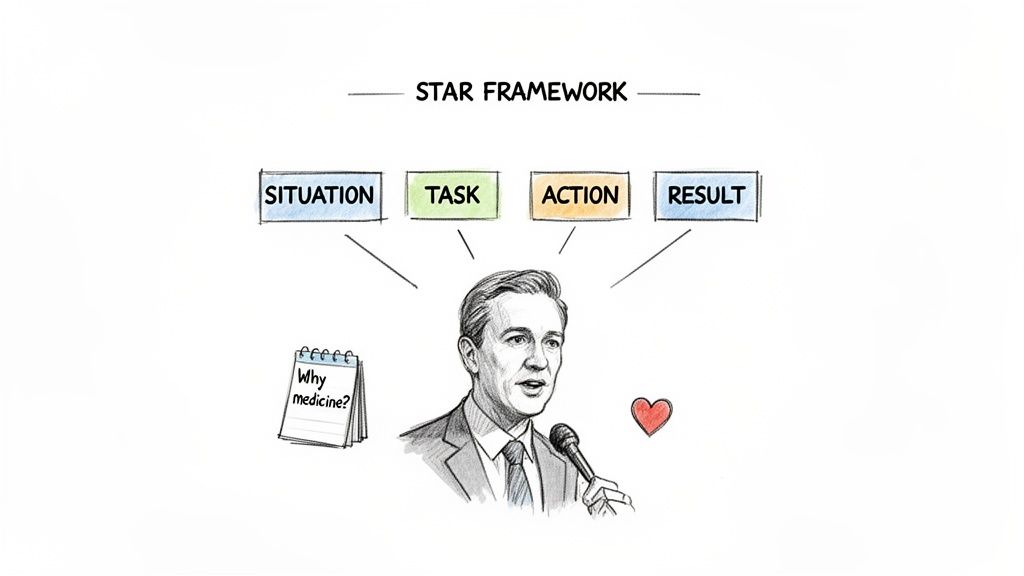
  • Adapt the STAR Method for Medicine: The STAR method (Situation, Task, Action, Result) is a great starting point, but for medical school, you must add a fifth element: Reflection. After describing the result, explicitly connect the experience to your future as a physician. Use phrases like, "This experience taught me the importance of..." or "It solidified my understanding of..." to show what you learned.
  • Practice Telling, Not Reciting: The goal is conversational delivery. Practice telling your stories to friends, family, or mentors. Record yourself to check for pacing, verbal fillers ("um," "like"), and tone. You want to sound like you're sharing a meaningful memory, not reading from a script.
  • Focus on Learning, Not Heroism: Avoid narratives that position you as a savior. Instead, frame your stories around personal growth and what you learned. An interviewer will be more impressed by your self-awareness in discussing a mistake and how you corrected it than by a story where you flawlessly saved the day.

Key Insight: Your personal stories are the human data that complements your academic record. They should demonstrate that you not only have the capabilities to become a physician but also the character, self-awareness, and motivation to become a compassionate one.

4. Master Communication Skills Under Pressure

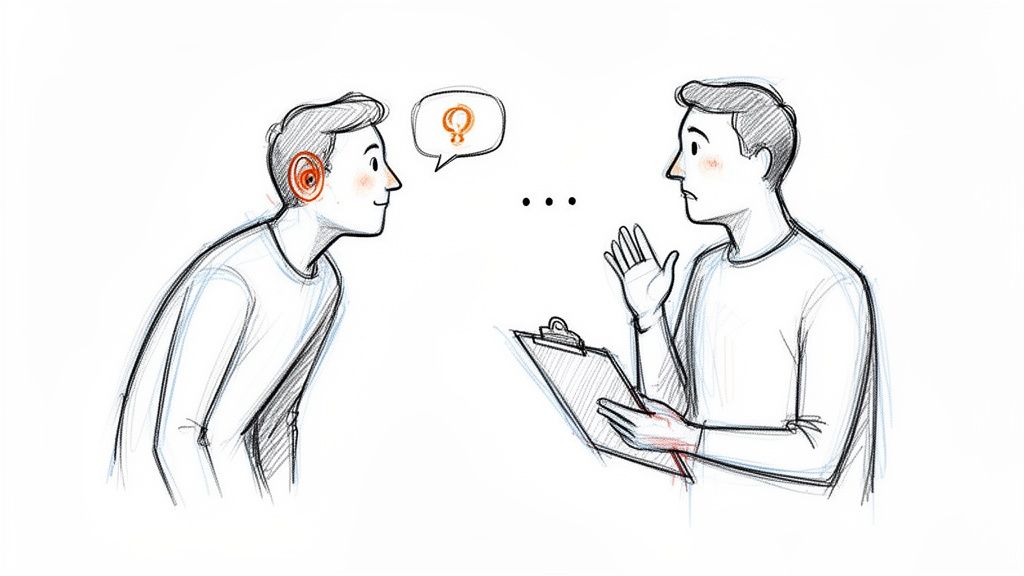
Medical school interviews are designed to assess how you think, act, and communicate under significant stress and time constraints. Interviewers evaluate not just the content of your answers but also your verbal clarity, active listening, and non-verbal cues. They are looking for candidates who can communicate effectively and empathetically with future patients, families, and colleagues.

Poor communication habits, such as using excessive filler words, speaking too quickly, or adopting a defensive tone, can overshadow even the most well-reasoned answers. Strong communication skills are a core competency for physicians and a key differentiator in the interview process.

Illustration of two faces and a stopwatch, symbolizing communication, timed responses, or interviews.

How to Improve Your Communication Under Pressure

Developing poised communication is a trainable skill. The key is deliberate practice and targeted feedback to identify and correct weak spots. Here are actionable tips to enhance your delivery:

  • Record and Analyze Your Responses: The single most effective way to improve is to record yourself during mock interviews. Watch the video to assess your body language, eye contact, and facial expressions. Listen to the audio specifically for verbal tics like "um," "uh," and "like," as well as for your pacing and tone.
  • Embrace Strategic Pauses: Nerves often cause candidates to rush their speech or fill silences with filler words. Instead, practice using deliberate pauses. A brief moment of silence allows you to gather your thoughts and adds weight to your words. It makes you appear more confident and thoughtful than rambling does.
  • Practice Explaining Complex Topics Simply: Ask a friend or family member with no medical background to listen as you explain a complex scientific concept. This exercise hones your ability to translate intricate information into understandable language, a crucial skill for patient communication.
  • Use Grounding Techniques for Anxiety: Interview anxiety directly impacts communication. Before your interview, practice grounding techniques like deep, slow breathing or pressing your feet firmly into the floor. These simple actions can calm your nervous system, allowing you to speak more clearly and confidently.

Key Insight: Interviewers are not trying to trip you up; they want to understand your thought process and see if you can remain composed. Clear, deliberate communication demonstrates professionalism and emotional maturity, qualities essential for a future physician.

To excel under pressure, mastering clear and confident speech is paramount. Explore practical tips on how to improve your verbal communication skills to build a strong foundation for your interview performance.

5. Research Target Schools Deeply and Demonstrate Genuine Interest

Nearly every medical school interview includes a variation of "Why our school?" Admissions committees use this question to gauge your genuine interest and see if you are a good fit for their specific mission, culture, and curriculum. A generic answer like, “Your school has a great reputation,” signals a lack of investment and can be a major red flag for interviewers.

Demonstrating genuine interest means going beyond surface-level facts and connecting specific, unique aspects of the program to your own experiences, values, and future goals. This shows you've done your homework and envision yourself as a contributing member of their community. A well-researched answer proves that you are making an informed choice, not just casting a wide net.

How to Prepare Your "Why This School?" Answer

A powerful response is built on a foundation of deep, specific research. It should seamlessly blend what the school offers with what you bring to the table.

  • Go Beyond the Homepage: Start with the school's mission and vision statements, as these are the institution's guiding principles. Then, dive deeper into the curriculum structure (e.g., PBL, traditional, longitudinal clerkships), specific research centers, and unique student-run clinics or community outreach programs.
  • Connect Your Experiences to Their Programs: The key is to create a link. For example, instead of just saying you're interested in their global health track, explain how your volunteer work in a local underserved clinic sparked your passion for health equity, which you hope to explore further through their specific program in rural Guatemala.
  • Research the Faculty: Identify two or three professors whose research or clinical work aligns with your interests. Mentioning a specific faculty member, like Dr. Jane Doe, and her recent publication on CAR-T cell therapy shows a level of engagement that few applicants demonstrate.
  • Prepare 2-3 Concrete Points: For each school you interview at, prepare two to three distinct, well-supported reasons for why you are a perfect fit. Frame these points by connecting a specific feature of the school to a specific aspect of your profile. For instance, link their focus on health policy to your experience in student government.

Key Insight: The best "Why this school?" answers are not about flattery; they are about fit. The goal is to articulate a compelling, evidence-based case for why your specific aspirations and the school's unique resources are mutually beneficial.

For an example of how this applies to a top-tier program, see this guide on preparing for the Harvard Medical School interview, where demonstrating fit is paramount.

6. Prepare Structured Responses to Behavioral and Competency-Based Questions

Behavioral interview questions, often starting with phrases like “Tell me about a time when…” or “Describe a situation where…”, are a cornerstone of modern medical school interviews. Unlike hypothetical questions, they assess your past behavior as the best predictor of your future performance. Schools use these to probe core competencies defined by the AAMC, including leadership, teamwork, resilience, and conflict resolution.

The key to answering these questions effectively is to move beyond a simple narrative and provide a structured, reflective response. This shows the interviewer not only that you have had relevant experiences but that you have learned from them. A well-prepared behavioral answer demonstrates self-awareness and a capacity for growth, which are critical traits for a future physician.

How to Prepare for Behavioral Questions

A strong behavioral answer is a compelling story with a clear point. The goal is to provide a concise yet comprehensive example that showcases a specific competency. Here’s a framework to build your responses:

  • Curate Your Core Stories: You don't need a unique story for every possible question. Instead, identify 5-7 significant experiences from your academic, clinical, research, or personal life. These stories should be versatile enough to illustrate different competencies. For example, a story about a challenging group project could highlight teamwork, conflict resolution, or leadership, depending on the question asked.
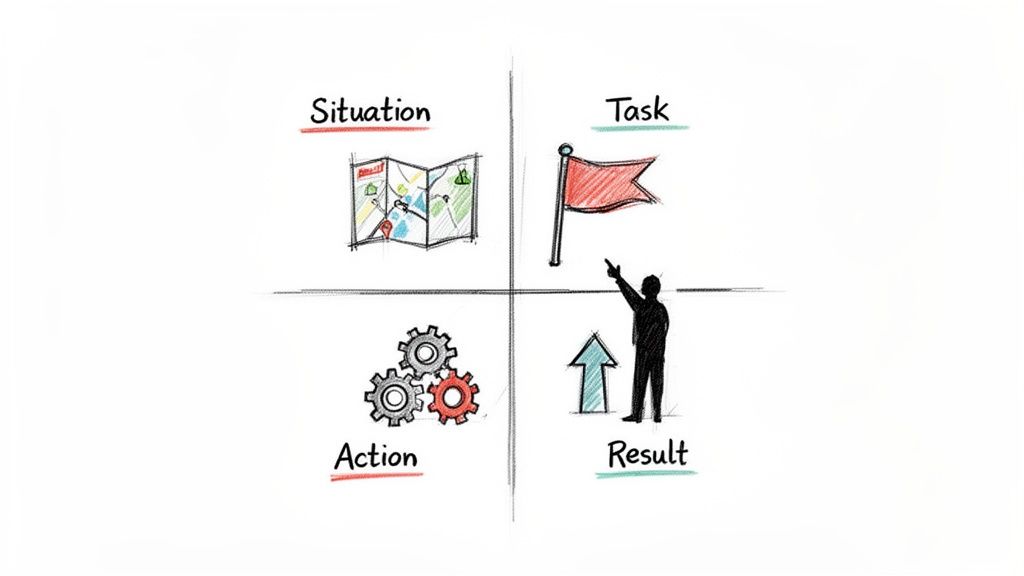
  • Master the STAR Framework: This is the gold standard for structuring your answers. It ensures your story is clear, logical, and impactful.
    1. Situation: Briefly describe the context. Where and when did this happen? (e.g., "During my junior year, I was a volunteer at a free clinic…")
    2. Task: Explain your specific role or goal. What was the challenge or objective? (e.g., "…and my task was to help streamline patient intake, which was inefficient.")
    3. Action: Detail the specific steps you took. Use "I" statements and focus on your individual contributions. (e.g., "I proposed a color-coded filing system and created a one-page intake summary sheet.")
    4. Result: Quantify the outcome and, most importantly, state what you learned. (e.g., "This reduced patient wait times by 15%, and it taught me the importance of proactive problem-solving in a clinical setting.")
  • Keep It Concise and Be Ready for Follow-ups: Aim to tell your initial story in 60-90 seconds. This prevents you from rambling and gives the interviewer space to ask follow-up questions like, “What would you do differently?” or “What was the most difficult part of that situation?” Your preparation should include thinking about these potential probes.
  • Embrace Vulnerability: The best stories often involve a challenge, a mistake, or even a failure. Describing how you overcame a setback demonstrates resilience and humility far more effectively than a story where everything went perfectly.

Key Insight: Behavioral questions are not just a test of your experiences but a test of your ability to reflect on them. The "Result" and the "learning" component of your STAR answer are often the most important parts, as they reveal your capacity for personal and professional growth.

7. Manage Stress and Anxiety to Perform at Your Best

Medical school interviews are inherently high-stakes events, and it's completely normal to feel nervous. However, unmanaged anxiety can impair cognitive function, muddle your communication, and negatively impact your decision-making abilities. Learning to control stress is not just a wellness tip; it's a critical performance-enhancing strategy that allows your preparation and true abilities to shine through.

This approach involves proactive techniques to regulate your physiological and psychological responses to pressure. Grounded in principles from sports psychology and mental health, these strategies help you reframe anxiety as excitement and build unshakable confidence. Candidates who effectively manage their stress are better able to think clearly, articulate their thoughts, and connect authentically with interviewers.

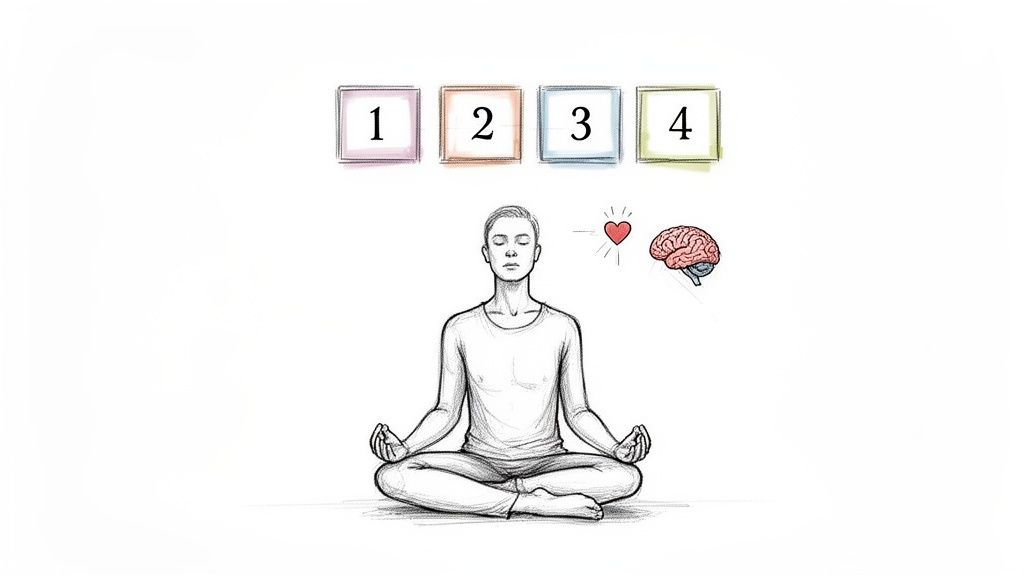
A person meditating in lotus position with numbered boxes, a heart, and a brain, symbolizing focus.

How to Prepare for Interview Day Stress

Integrating stress management into your practice is as important as rehearsing answers. The goal is to make these techniques second nature, so you can deploy them automatically when the pressure is on.

  • Practice Anxiety-Reduction Techniques: Don't wait until interview day to try and calm your nerves. Incorporate mindfulness and breathing exercises into your mock interview sessions. A simple and powerful method is box breathing:
    1. Inhale slowly through your nose for 4 seconds.
    2. Hold your breath for 4 seconds.
    3. Exhale slowly through your mouth for 4 seconds.
    4. Hold the empty breath for 4 seconds.
  • Reframe Your Mindset: The way you talk to yourself about stress matters. Instead of thinking, "I'm so nervous, I'm going to fail," try reframing it: "I feel this way because this opportunity is important to me, and I am prepared to do my best." This shifts the narrative from threat to challenge.
  • Build Confidence Through Repetition: The most effective antidote to anxiety is genuine confidence, which comes from extensive practice. Repeatedly facing interview scenarios in a low-stakes environment desensitizes you to the pressure. This process turns the unfamiliar into the familiar, significantly reducing "novelty anxiety" on the actual day.
  • Establish a Pre-Interview Routine: Develop a consistent warm-up ritual to perform on interview day. This could include a final review of your key talking points, one last practice question, a 5-minute breathing exercise, and a "power pose" to boost confidence. A routine creates a sense of control and predictability in a high-stress situation.

Key Insight: Your performance is a direct reflection of your preparation and your state of mind. By proactively managing anxiety, you ensure that your nervousness doesn't overshadow your competence, allowing the admissions committee to see the capable and composed future physician you are.

8. Seek Expert Feedback and Iterate Based on Actionable Guidance

While self-practice is foundational, your ability to accurately judge your own performance is inherently limited. Candidates often miss critical issues with their pacing, body language, verbal fillers, or even whether they truly answered the question asked. This is why seeking structured, external feedback is one of the most impactful medical school interview tips for meaningful growth.

This process involves moving beyond generic advice like "be more confident" and focusing on specific, measurable data. Whether from admissions advisors, peer practice groups, or AI-powered platforms, the goal is to identify precise areas for improvement. Effective preparation is a cycle: receive targeted feedback, implement a specific change, practice the new approach, and then re-evaluate to measure progress. This iterative loop turns practice from a simple rehearsal into a strategic training regimen.

How to Prepare with Expert Feedback

True improvement comes from using feedback as data to guide your practice, not as a final judgment. Here’s how to implement this effectively:

  • Use Standardized Rubrics: Practice with platforms that provide immediate, rubric-based feedback. For example, if a report scores your empathy at a 6/10, you can focus specifically on incorporating more empathetic language in your next mock interview and aim for a higher score. This transforms a subjective quality into a measurable skill.
  • Analyze Your Transcripts: Reviewing a transcript of your mock interview is invaluable. It allows you to see if you are answering "what" when the prompt asked "why." Identifying these mismatches helps you refine your listening skills and ensure your answers directly address the core of the question.
  • Focus on One or Two Changes at a Time: Trying to fix everything at once is a recipe for overwhelm. If feedback highlights rapid pacing and a lack of structure, focus on deliberate pausing for your next few practice runs. Once that feels more natural, you can integrate a structured response framework.
  • Track Your Progress: Keep a log of your feedback and performance metrics. Note your filler word count, speaking pace, or rubric scores over multiple sessions. Seeing tangible improvement, such as a decrease in "ums" or a consistent rise in your scores, builds confidence and confirms your strategies are working. For personalized insights and to refine your approach, consider working with a professional interview coach.

Key Insight: Actionable feedback is not about praise or criticism; it is data. Use it to diagnose specific weaknesses, develop a targeted plan for improvement, and systematically build the habits that will help you excel on interview day.

8-Point Medical Interview Tips Comparison

Strategy 🔄 Implementation complexity ⚡ Resource & time efficiency ⭐ Expected outcomes 📊 Results / impact 💡 Ideal use cases / Key advantages
Master the MMI (Multiple Mini-Interview) Format High — learn timed rotations & varied prompts Low — requires many timed simulations and realistic stations ⭐⭐⭐⭐ — strong situational assessment under time pressure 📊 Better standardized station scores; reduced single-station failure risk 💡 Essential for MMI-using schools; assesses breadth (communication, ethics, clinical reasoning)
Practice Ethical Reasoning and Value-Alignment Questions Medium — build frameworks and nuanced judgement Moderate — case reading and reflective practice ⭐⭐⭐⭐ — clearer articulation of values and decision process 📊 Stronger scores on ethics/value rubrics; demonstrates cultural competency 💡 Best for ethics prompts and schools valuing social accountability
Develop and Deliver Authentic Personal Stories Medium — craft, refine, and practice narratives Moderate — time to write, rehearse, and get feedback ⭐⭐⭐⭐⭐ — highly memorable and rapport-building when authentic 📊 Increased interviewer recall and perceived authenticity 💡 Ideal for motivation, resilience, leadership questions; differentiates candidates
Master Communication Skills Under Pressure Medium–High — refine verbal and nonverbal delivery Low efficiency initially — needs video/filler analysis and repeated practice ⭐⭐⭐⭐ — clearer, calmer delivery; improved clarity under stress 📊 Fewer filler words, better pacing, improved listener comprehension 💡 Critical for patient-facing scenarios, timed answers, and non-native speakers
Research Target Schools Deeply and Demonstrate Genuine Interest Medium — targeted information gathering and synthesis Time-intensive — deep school-specific research per program ⭐⭐⭐⭐ — persuasive, authentic school-fit answers 📊 Higher perceived fit; stronger responses to "why our school" prompts 💡 Use for school-specific interviews, secondaries, and demonstrating alignment with mission
Prepare Structured Responses to Behavioral/Competency Questions Low–Medium — select stories and practice STAR/SCAR format Efficient — one-time story prep, then reuse/adapt ⭐⭐⭐⭐ — predictable, credible demonstration of competencies 📊 Consistent behavioral scores; easier handling of follow-ups 💡 Best for leadership, teamwork, resilience probes; reduces anxiety with prep
Manage Stress and Anxiety to Perform at Your Best Medium — adopt and rehearse coping techniques Moderate — routine practice of breathing, routines, mock exposure ⭐⭐⭐⭐ — improved composure and cognitive performance 📊 Reduced anxiety symptoms; steadier interview performance across sessions 💡 Crucial for high-stakes interviews and candidates prone to nervousness
Seek Expert Feedback and Iterate Based on Actionable Guidance Medium — set up feedback loops and interpret data Resource-heavy — coaching or platform subscriptions preferred ⭐⭐⭐⭐⭐ — targeted, measurable improvement when iterative 📊 Objective metrics (filler counts, rubric scores) and tracked progress 💡 Most effective for closing blindspots; focus on 1–2 areas per iteration

From Preparation to Performance: Your Path to an Acceptance Letter

The medical school interview is the final, pivotal step in a journey defined by years of dedication, sacrifice, and rigorous academic work. It’s more than a simple Q&A session; it is your single best opportunity to translate the achievements on your application into a compelling, three-dimensional narrative of who you are and the physician you aspire to become. Throughout this guide, we've explored a comprehensive framework for success, moving far beyond generic advice to provide a strategic blueprint for mastering this high-stakes encounter.

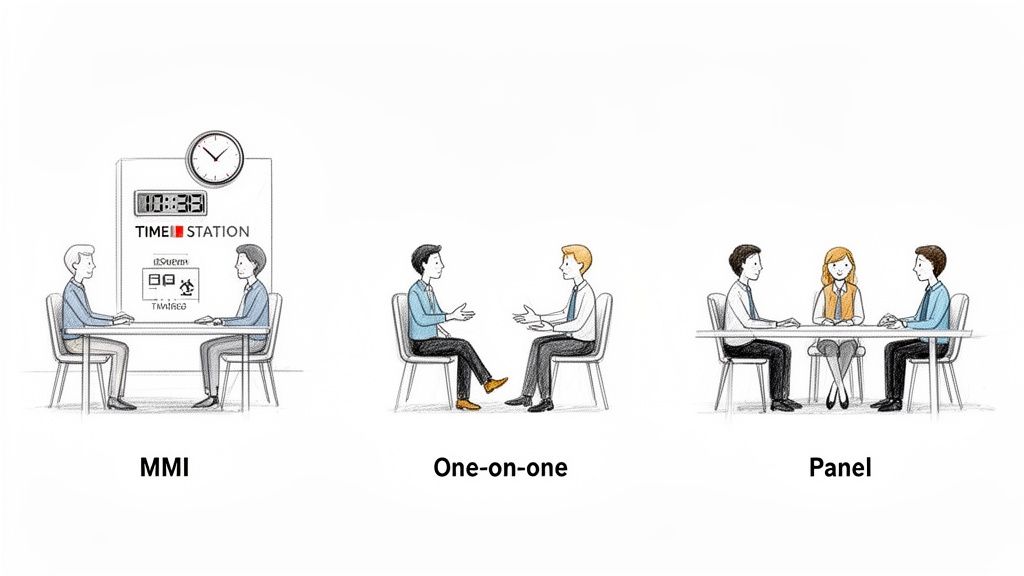
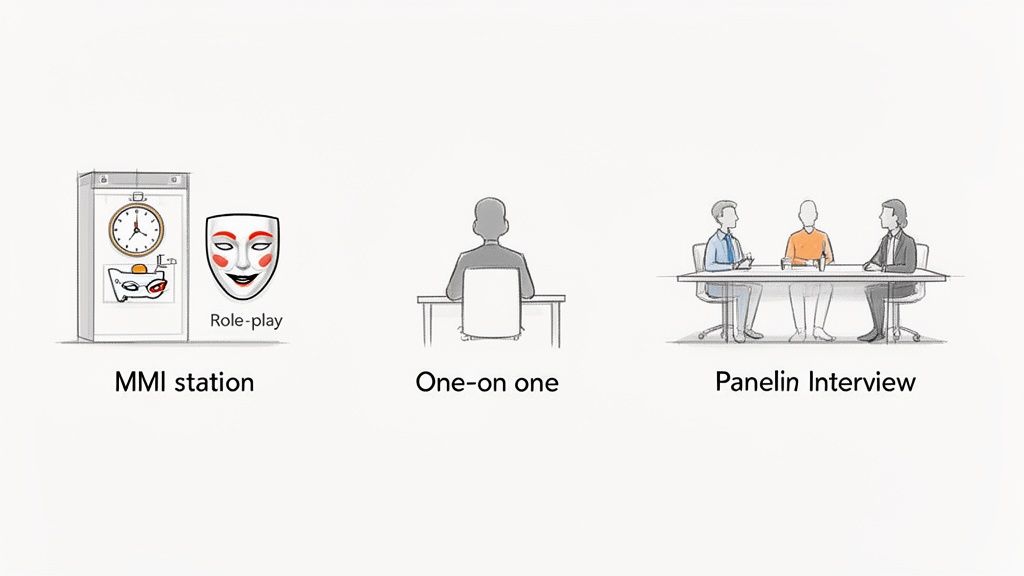
You've learned that preparation isn't about memorizing a script. Instead, it’s about building a versatile toolkit of skills and frameworks that you can adapt to any interview format, whether it's the rapid-fire scenarios of an MMI, the collaborative dynamic of a panel, or the introspective nature of a traditional one-on-one meeting.

Synthesizing Your Strategy: The Core Pillars of Interview Success

As you move from preparation to performance, remember that your ultimate goal is to demonstrate readiness for the immense responsibility of patient care. The most successful applicants consistently excel in four key areas, which serve as the foundation of all the tips we've discussed:

  1. Authenticity and Self-Reflection: Your power lies in your unique journey. We emphasized developing and delivering authentic personal stories not as a performance, but as a genuine reflection of your motivations, experiences, and growth. This is what admissions committees remember long after the interview concludes.
  2. Structured and Logical Communication: Excelling in ethical reasoning scenarios and behavioral questions requires more than just good intentions. It demands a structured approach. By practicing how to articulate your thought process clearly, you prove you can navigate complex, ambiguous situations with the clarity and composure expected of a future physician.
  3. Demonstrated Empathy and Interpersonal Skill: Beyond your academic qualifications, interviewers are assessing your capacity for connection. Mastering communication skills under pressure, from active listening to non-verbal cues, shows them you possess the emotional intelligence to build trust with patients and collaborate effectively with colleagues.
  4. Informed Enthusiasm and Alignment: Deeply researching your target schools is non-negotiable. Demonstrating genuine, specific interest proves you are not just looking for any medical school, but that you have thoughtfully chosen their institution as the ideal place to continue your journey.

From Anxious Applicant to Confident Candidate

The path to medical school is a marathon, and the interview is the final sprint. The anxiety that often accompanies this stage is entirely normal, but it doesn't have to control your performance. The most effective antidote to stress is diligent, targeted preparation. Every practice question you answer, every story you refine, and every mock interview you complete builds a reservoir of confidence.

Key Takeaway: True confidence is not the absence of fear; it is the product of meticulous preparation. It's the quiet assurance that comes from knowing you have done the work and are ready to showcase your best self.

Walk into that interview room not as an applicant hoping to impress, but as a future colleague ready to contribute. Let your preparation serve as the invisible scaffolding that supports your genuine passion for medicine. You have earned this opportunity. Now, go and show them why you belong.


Ready to transform these medical school interview tips from theory into practice? Confetto is your 24/7 AI-powered interview coach, providing unlimited MMI scenarios, ethical dilemmas, and behavioral questions with instant, personalized feedback. Stop practicing in front of a mirror and start preparing with a tool designed to build the exact skills admissions committees are looking for. Sign up for free today at Confetto and turn your preparation into a definitive advantage.