
Updated · Published · 14 min read
MMI Prep: How to Prepare and Which Help to Use
How to prepare for the MMI: a four-week plan, station tips, a mock interview setup, and how to choose between official resources, courses, tutors, peers and AI.
Why practice with Confetto
- Follow-up questions and feedback on every answer
- Over 750 medical school questions
- 3 free mocks with a free trial

Good MMI prep comes down to one habit: answer real prompts out loud, against a clock, and then review what you said. Reading about the MMI helps a little. Doing timed stations and fixing what you find helps a lot. This guide covers how to practice, a four-week plan, tips for the stations themselves, how to set up a mock interview, and how to choose your prep: free official resources, courses, tutors, peer practice or AI mock interviews.
Start with one station now. Our free MMI practice station gives you a fictional scenario with reading and response timers and a self-review checklist. No sign-up. It does not record or score you, so the review is yours to do. Takes about ten minutes.
Looking for questions rather than a plan? Go to MMI questions with example answers, which covers the question types, eight worked stations and the ten most common traditional questions. For the full bank and an AI interviewer that asks follow-ups, see the question bank, with a free trial.
What good MMI practice looks like
Strong applicants practice in a loop, not a pile of reading:
- Pick one question type (an ethical dilemma, a role-play, a policy question).
- Set the real timings. Many schools give about two minutes to read and five to eight to respond. Use your school's numbers. Our MMI timer is adjustable.
- Answer out loud, standing or sitting as you would on the day. Thinking an answer through silently is not practice.
- Record it on your phone, then listen back or read a transcript. Look at structure first, then delivery.
- Fix one thing and do a similar question the next day.
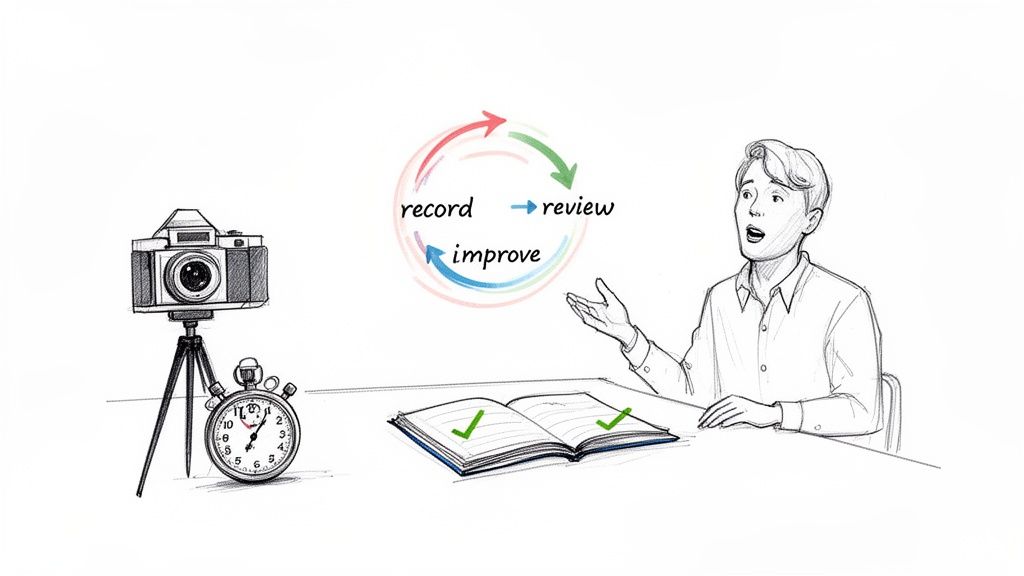
Do this with friends, a pre-health advisor, a mock circuit or an AI interviewer. The more your practice resembles the real thing (a clock, a stranger, a question you have not seen), the better it transfers.
What the MMI is testing
The MMI is a performance, not a knowledge test. A different interviewer scores each short station, usually against a rubric of competencies such as communication, ethical reasoning, empathy, teamwork, professionalism and self-awareness. US schools often align these with the AAMC premedical competencies. Many Canadian schools use the CanMEDS roles.
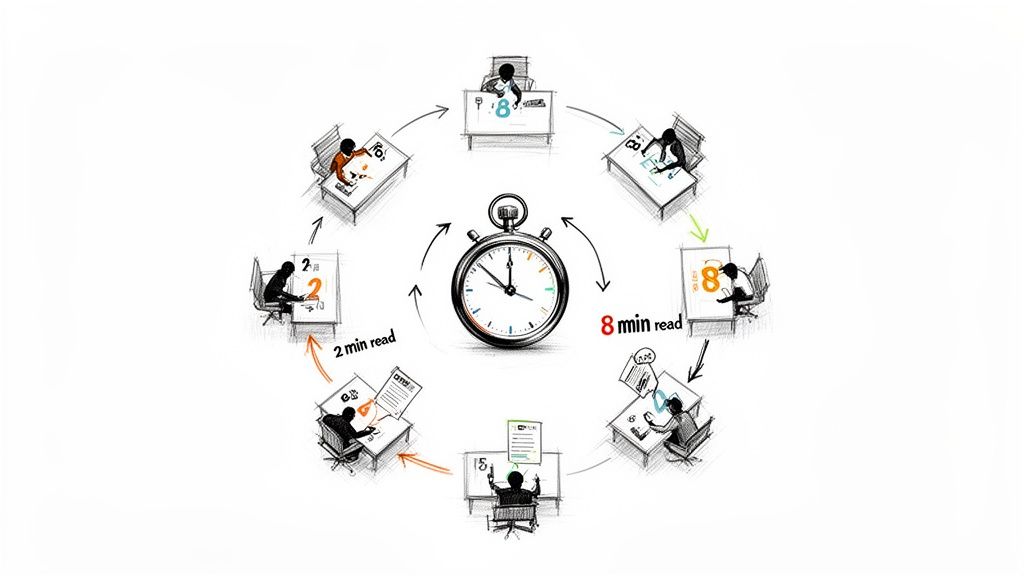
Stations come in a few flavors: a spoken scenario, a role-play with an actor, a group or paired task, a policy question, and a personal question. Our guide to MMI question types and examples shows an example of each. Many prompts mix two types, so a role-play with an upset relative is also testing ethics.
A four-week MMI practice plan
If you have four weeks, this schedule builds from format and frameworks to full timed circuits. Adjust the hours to your own timetable. Having something done every day matters more than long weekend sessions.
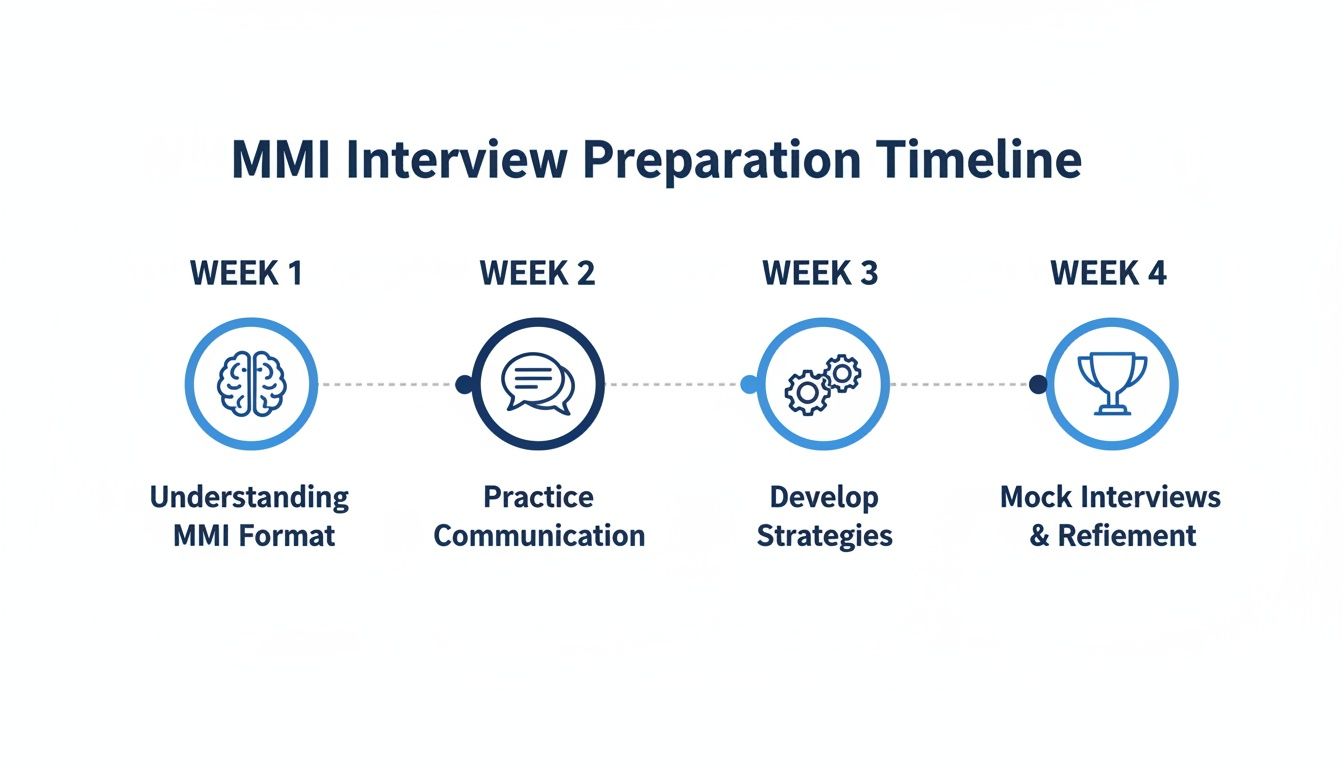
- Week 1, format and foundations (4 to 6 hours). Read your school's guide. Do one free untimed prompt a day. Write down four or five personal stories you could use: teamwork, a mistake, resilience, a time you helped someone.
- Week 2, frameworks and content (6 to 8 hours). Learn a structure for each type (ethics, role-play, policy, clinical). Review the basic ethical principles and two or three current health issues. Start timed practice, alone or with a partner. Give ethics extra time: in our analysis of 54,839 mock interviews, ethics answers missed a core point most often.
- Week 3, timed circuits and feedback (8 to 10 hours). Do at least two full timed circuits and record them. Sort what you find into content, structure, delivery and timing, and drill the weakest category.
- Week 4, polish and rest (4 to 5 hours). One final full circuit under realistic conditions. Prepare questions to ask interviewers. Settle logistics, then rest before the day.
If you only have a week
Spend day one on your school's format and the answering structure. Spend days two to five on one timed station a day, recorded and reviewed. Do a full circuit on day six. Rest on day seven. It is not ideal, but it is far better than reading alone.
MMI tips that make the difference
1. Use the station format and the clock
Treat the reading time as your planning time. In two minutes you can name the central conflict, list who is affected and choose your first action. Then speak for most of the time you are given. Our free timer lets you rehearse exactly this rhythm.

2. Reason through ethical questions with a structure
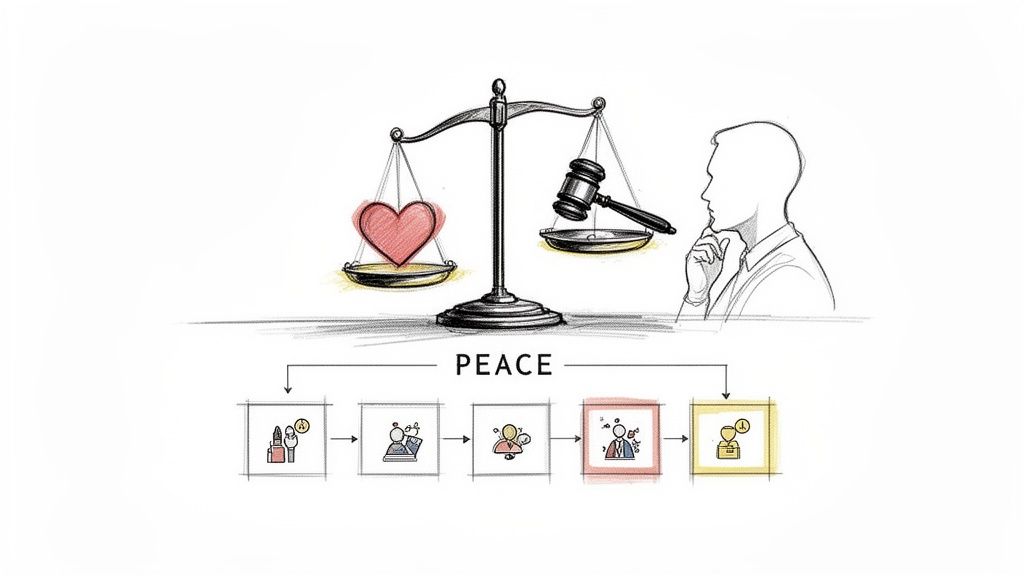
Name the conflict, list the stakeholders, weigh the options, decide and say what it costs. Autonomy, beneficence, non-maleficence and justice help you spot what is in tension. They are a lens, not a script.
3. Listen, especially in role-plays
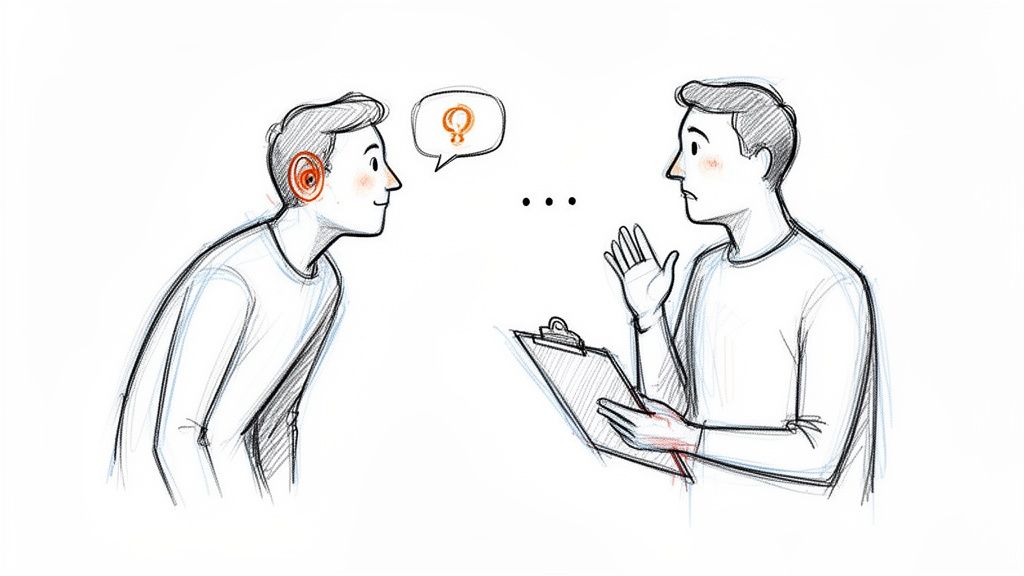
With an actor, how you make the other person feel counts for as much as what you decide. Let them finish, reflect back what you heard, and ask open questions. Silence is fine.
4. Use STAR for personal and behavioral questions
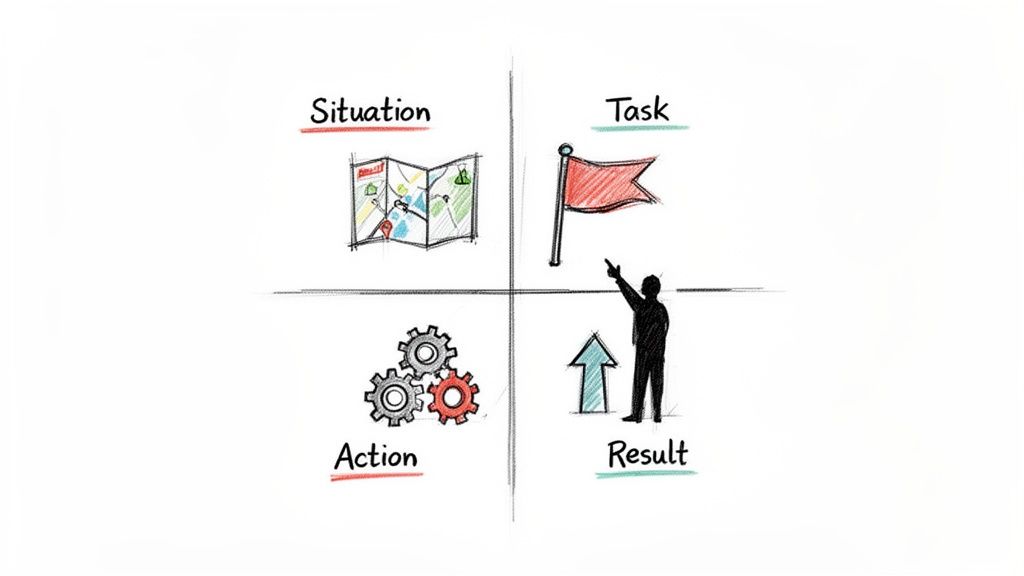
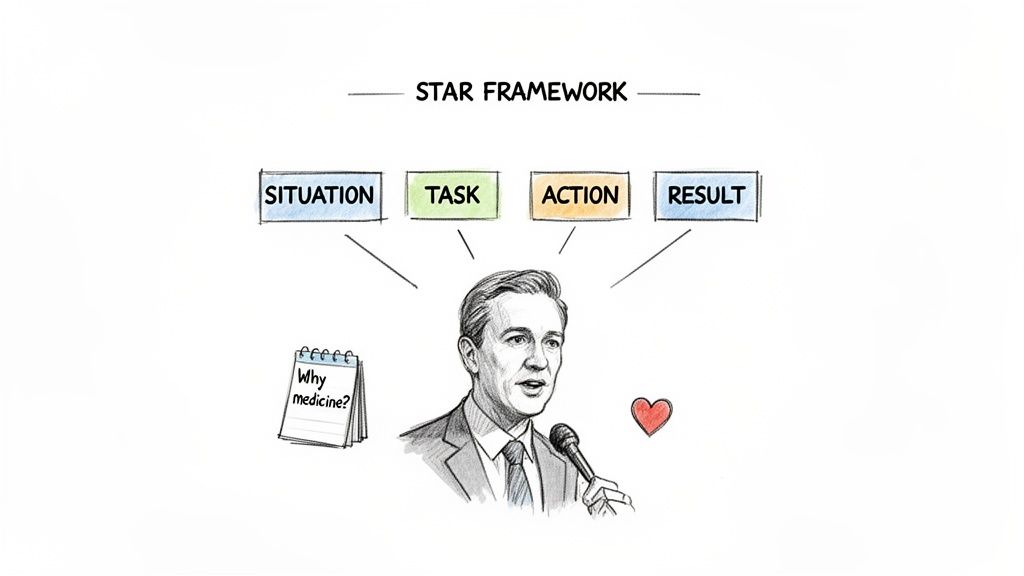
Situation, Task, Action, Result keeps stories short and concrete. Spend most of your time on the action and what you learned, not on the setup.
5. Know the school's values and format
Read the school's mission and how it describes its interview. A few examples drawn from its priorities (rural health, research, community care) make your answer to "why this school" credible. Schools differ in format, so read the guide for yours: see the list below.
6. Be honest about yourself
Self-awareness questions are about real limits and real change. Pick a true example, say what you did differently afterwards, and keep it short. Polished "weaknesses" read as dodging.

7. Manage nerves with practice, not tricks
Nerves shrink with repetition. Do timed stations until the format feels ordinary. On the day, slow your first sentence on purpose, breathe, and treat every station as a fresh start. A bad station is not carried into the next one.
8. Be yourself, with a plan
Interviewers can tell a recited answer from a real one. Know your structure and your stories, but speak in your own words.
9. Get feedback and iterate
Ask for specific feedback (structure, empathy, timing, filler words) from advisors, peers or an AI interviewer, and change one thing at a time. The drill table below turns feedback into a practice plan.
If you want to work on speaking clearly and confidently, see our guide to improving verbal communication for med school interviews.
Other interview formats: one-on-one and panel
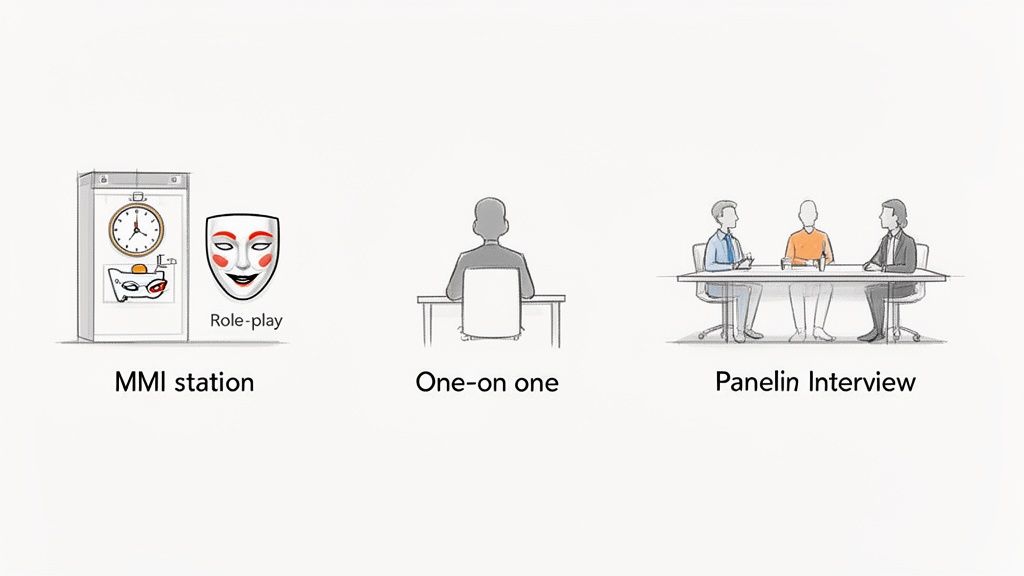
Not every school uses the MMI. Many use a one-on-one conversation with a faculty member, physician or admissions officer, often around 30 to 60 minutes. Others use a panel with several interviewers at once. You should still know your formats, because many schools mix them.
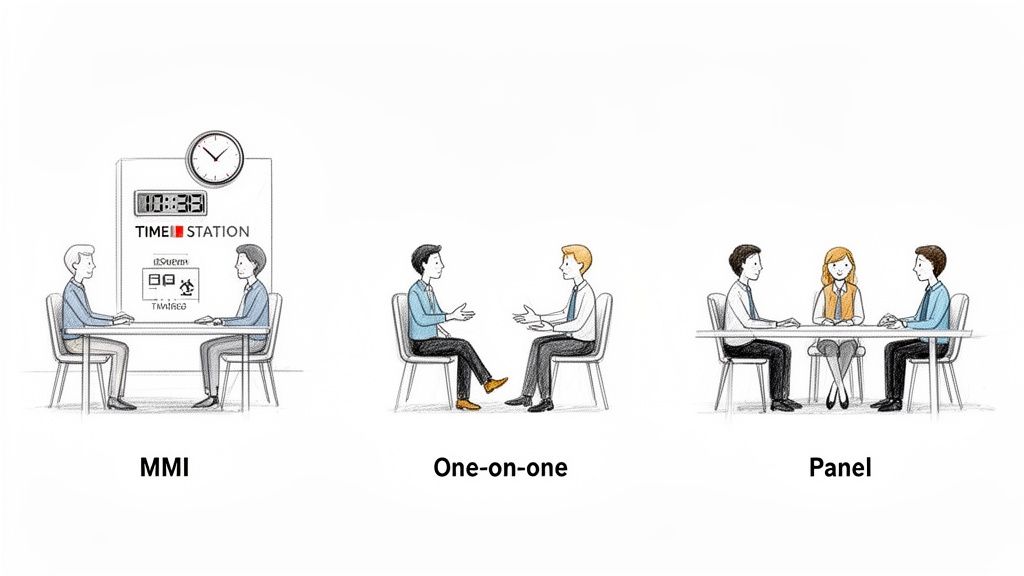
- MMI: fast, scenario-based, scored station by station. Practice structure and timing.
- One-on-one: a conversation about your story, motivation and fit. Practice a clear "why medicine", "why this school" and "tell me about yourself", in your own words.
- Panel: as one-on-one, with more people. Make eye contact with everyone, not just the person who asked.
For the ten traditional questions you should be able to answer, see the section on traditional questions in our MMI and medical school interview questions guide. For panels in other settings, read how to prepare for a panel interview.
How to run a good mock interview
A mock interview is a dress rehearsal. It forces you to answer out loud, on the clock, to someone who is not you. Run at least two before your interview, and the last one in your real interview setting.

Set up your virtual space
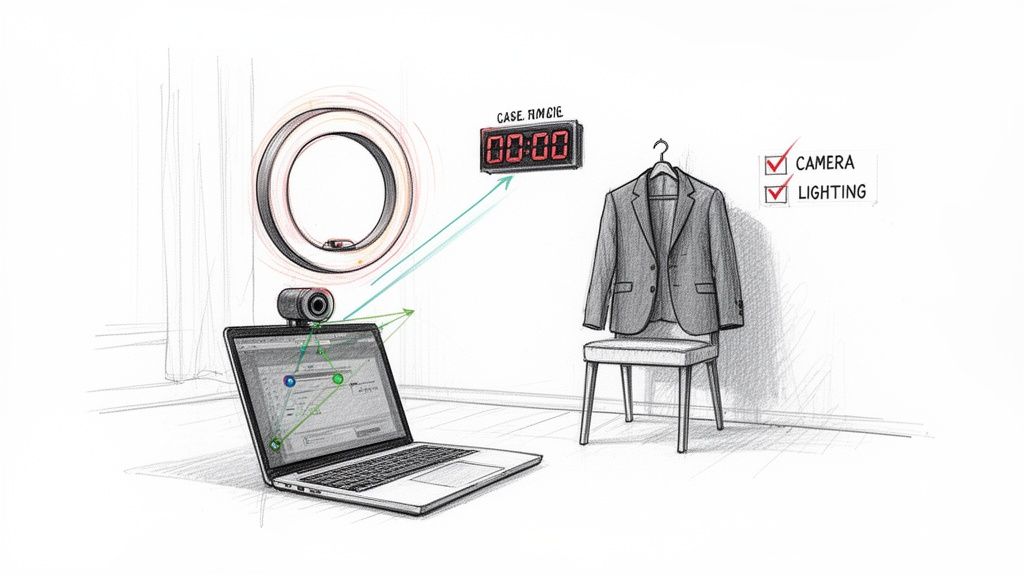
Many interviews are virtual, so your setup is part of your first impression.
- Camera at eye level. Stack books under a laptop if you need to.
- Light on your face from the front, such as a window or a lamp behind the screen. Avoid a bright window behind you.
- A plain, tidy background and a quiet room with the door closed.
- Clear audio. A wired headset is more reliable than a laptop microphone.
- Test the platform your school uses, with the same internet connection and device, a few days before.
Review: content, structure, delivery, timing
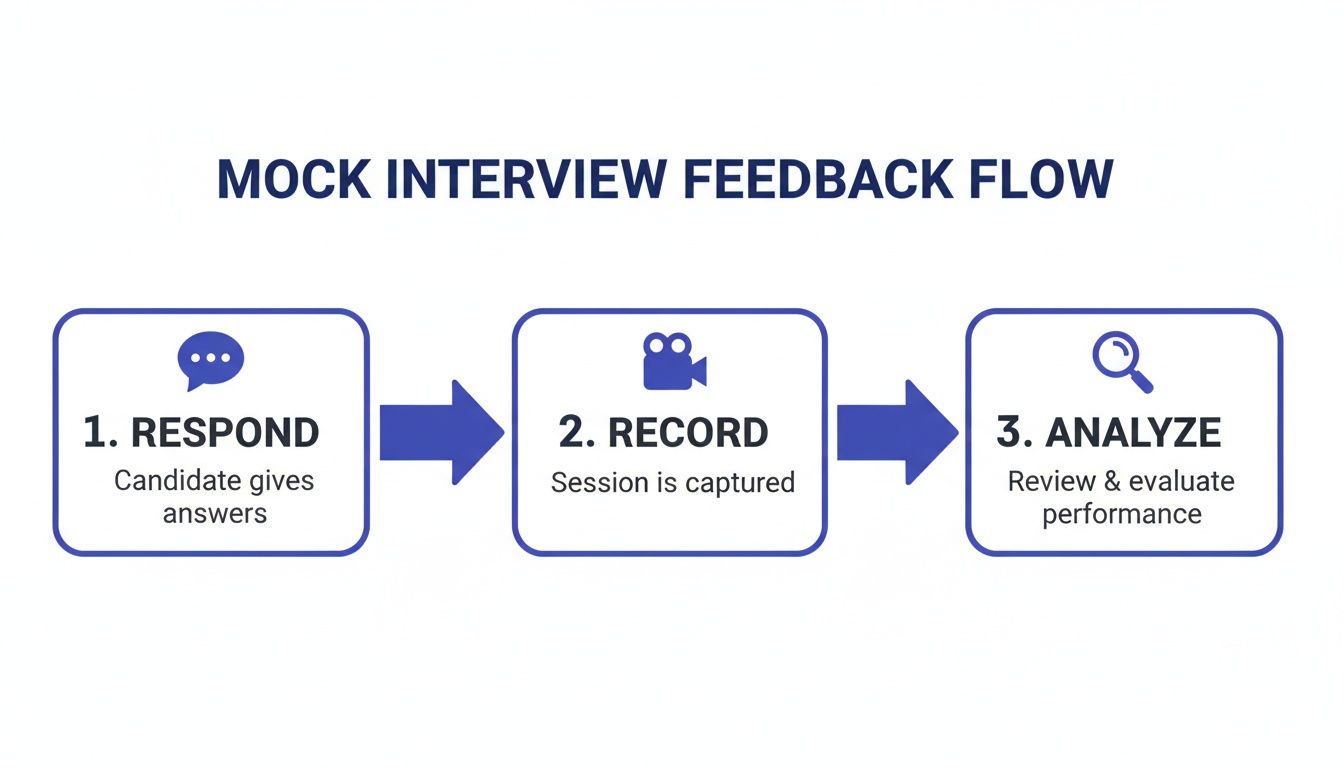
After each session, record or transcribe and sort what you notice into four buckets: content (what you said), structure (was it organized?), delivery (pace, filler words, eye contact) and timing (did you run out or finish early?). A friend can tell you how it felt. A recording or an AI report shows you the habits you do not notice.
Turn feedback into drills
- Rambling answers: answer three versions of "Why medicine?" in under 90 seconds each. Record and check that each has one story and one lesson.
- Running out of time in stations: run five stations in a row on a timer. Judge only whether you used the reading time and finished with a conclusion, not how good the answer was.
- Too many filler words: talk for one minute on a simple topic. Re-record and aim to halve the fillers. Repeat daily for a week.
- No decision in ethics stations: for five prompts, finish each with "My first step would be ... because ... and the cost of that is ..."
- Flat role-plays: practice only the first thirty seconds: greeting, naming the situation, one open question. Do this with a partner in ten different scenarios.
How many mock interviews? Two or three full circuits are a good target for most applicants, with more short drills in between.
Interview day checklist

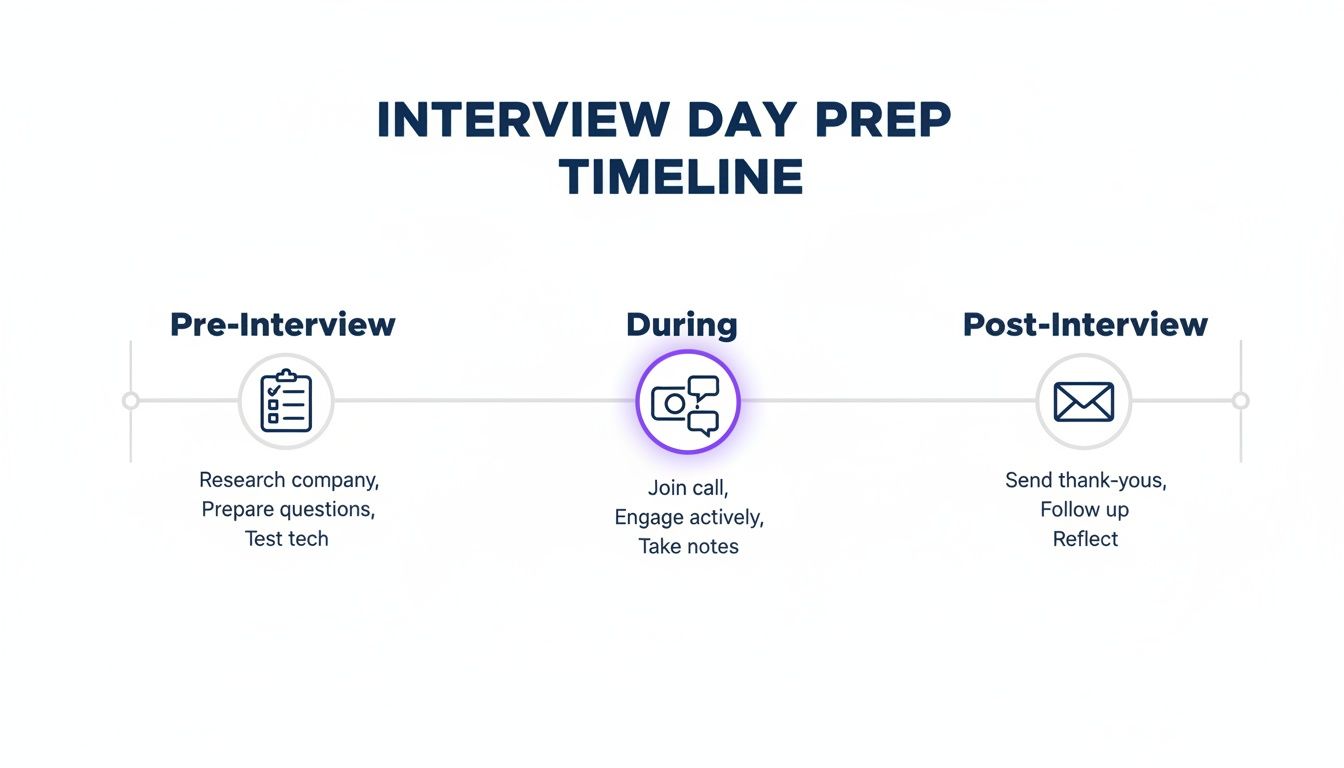
- Know the format, timing and rules in your invitation email, and your school's guide.
- Test your tech (virtual) or plan your travel and arrival time (in person).
- Dress as you would for a professional meeting. Comfortable shoes if you are walking a circuit.
- Bring water, ID, and anything the school asks for. Leave notes at home unless allowed.
- Eat, sleep and move the day before. Do not cram new material.
- Between stations, take a breath and reset. Do not replay the last one.
- Do not discuss the stations with other applicants if the school asks you not to.
- After the interview, follow the school's guidance on contact. Some schools welcome a short thank-you, others ask you not to send one.
How to choose your MMI prep
Good MMI prep gives you three things: realistic prompts, timed practice out loud, and honest feedback on what you said. Five kinds of help can give you those: free official resources, courses, tutors and coaches, peer practice, and AI mock interviews. Choose by how many weeks you have, what you can spend, and whether you have done an MMI before. Most applicants combine a free source with one way to get feedback.
Free official resources
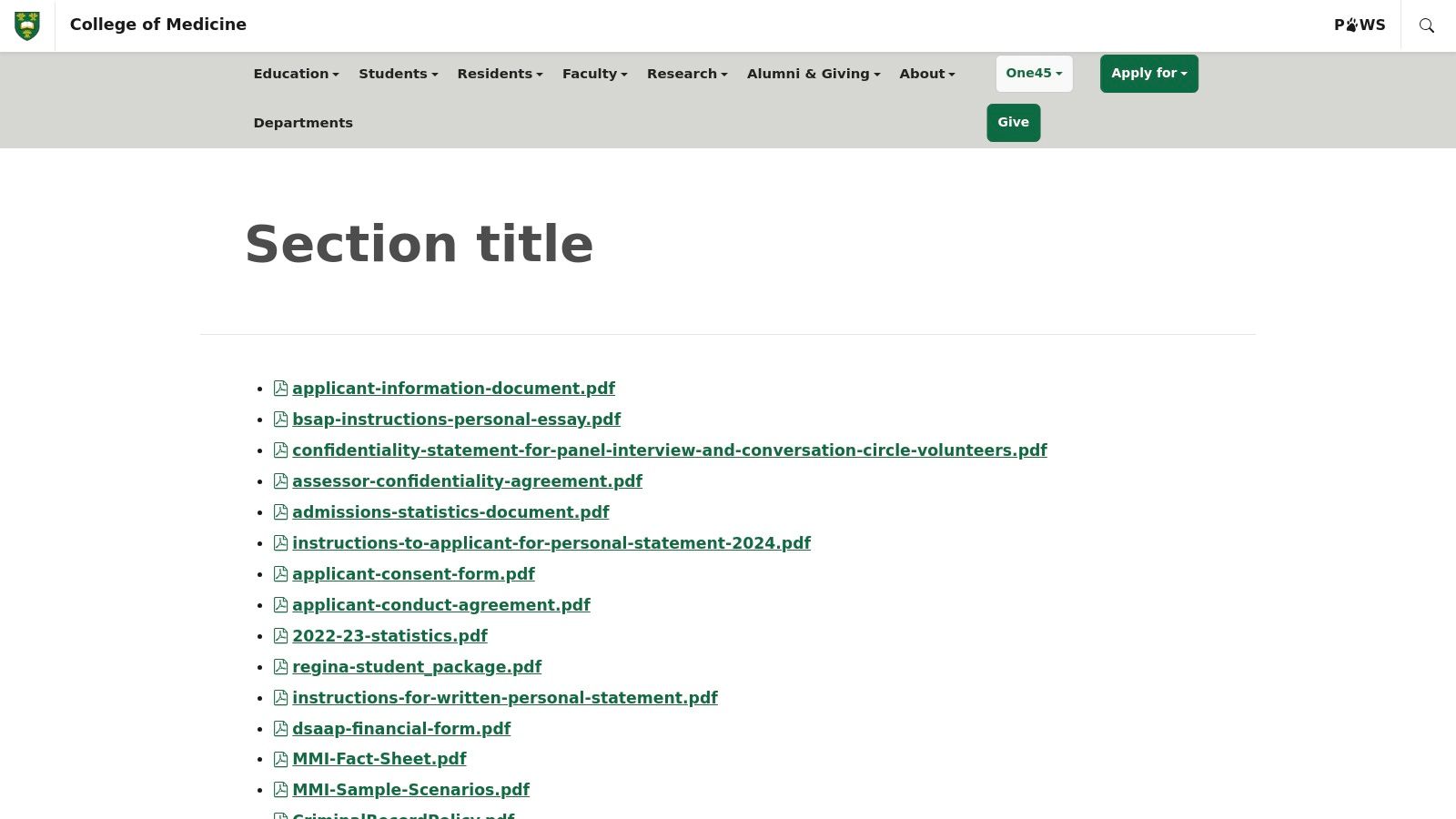
Start here, whatever else you use. Your school's interview page and your invitation email tell you the format, the timing and often the qualities each station scores. Some schools post sample stations, like the University of Saskatchewan (see our Saskatchewan MMI guide). In the US, the AAMC's interview resources for applicants include an interview preparation guide and a piece on what multiple mini interviews are like. In Canada, the AFMC's yearly Admission Requirements of Canadian Faculties of Medicine lists each school's requirements and interview dates.
- Pros: free, accurate for your school, and the closest thing to the real stations.
- Cons: they explain the format but give you no one to practice with and no feedback.
- Who it suits: everyone, first. Read your school's guidance before you pay for anything.
- Cost: free.
Courses
An MMI course teaches a method: how each station type works, a structure for ethics, role-play and policy stations, and model answers to compare yours with. Most are self-paced lessons with a question bank. Some add live sessions or mock circuits.
- Pros: a clear method quickly, worked examples, and enough questions to practice with.
- Cons: watching lessons is not practice. A course only pays off if you also answer out loud on a clock, and much of it repeats what a reapplicant already knows.
- Who it suits: first-time applicants with three weeks or more who want a structure laid out for them.
- Cost: a one-time fee or a subscription. Live parts cost more.
Tutors and coaches
A tutor or admissions coach runs stations with you one to one and tells you what to change. Look for someone who has interviewed applicants or prepared them for the MMI, and ask how they give feedback before you book.
- Pros: human judgment, follow-up questions aimed at you, and feedback on things a checklist misses, like how warm you sound in a role-play.
- Cons: quality varies a lot between people, and you only practice when a session is booked.
- Who it suits: applicants with one clear weakness to fix, or anyone who wants one or two full human mocks near the end.
- Cost: paid by the hour or in packages, the highest of the five per hour of practice.
Peer practice
Friends, classmates or a premed club take turns running stations for each other. Many pre-health advising offices also run mock interviews or can put you in touch with someone who will.
- Pros: free, real people, and a natural way to get used to answering someone you do not know well.
- Cons: feedback is only as good as your partner, friends tend to be kind rather than useful, and schedules get hard close to interview season.
- Who it suits: anyone on a tight budget, and as extra reps next to any other option. Give your partner a short rubric (structure, empathy, a clear decision, timing) so the feedback is specific.
- Cost: free.
AI mock interviews
An AI interviewer gives you a station, times you, asks follow-up questions and then gives you a report. You can practice at any hour, as often as you like.
For example, Confetto (that's us) runs MMI, panel and traditional mock interviews in your browser, with live timing and follow-up questions, from a bank of over 500 questions. After each one you get rubric scores, a transcript and feedback on delivery such as pace, filler words and eye contact. The MMI timer is free with no sign-up, and the full product has a free trial. See Confetto for medical school.
- Pros: as many timed reps as you want, follow-ups you cannot rehearse alone, and the same rubric every time, so you can see whether you are improving.
- Who it suits: anyone who needs a lot of timed practice, especially with only a week or two left or no one to practice with.
- Cost: usually a subscription. Many let you start free.
A simple way to choose
Ask yourself three things: how many weeks you have, what you can spend, and whether you have done an MMI before.
- Four weeks or more, first MMI: read your school's guidance, learn a method from a course or the free guides on this page, practice most days with a partner or an AI interviewer, and book one human mock near the end if you can.
- One or two weeks left: skip long courses. Do one timed station a day with feedback from a partner or an AI interviewer, and one full circuit before the day. The one-week plan above shows how.
- Little or no budget: official resources, peer practice and our free MMI timer cover the basics. Add a free trial when you want follow-up questions and scored feedback.
- Done an MMI before: skip the basics. Work out which stations went badly (some schools share feedback if you ask), then drill those types with a tutor or an AI interviewer.
- Nervous with real people: build volume alone or with AI, then do at least two mocks with a person before the day.
For what each option tends to cost, see our guide to what medical school interview prep costs. Whichever you pick, the principle is the same: timed, spoken answers, followed by review. A resource that makes you do that is worth more than one with a bigger library.
Prepare for your specific school
Timing, station types and question style differ from school to school. Read the guide for your school as well as this general one.
Canada: UBC, McGill, Queen's, Dalhousie, Calgary, Alberta, Saskatchewan, Manitoba, Memorial, Ottawa, Toronto
United States: Stanford, Harvard, UC Davis, Michigan, Minnesota, UMass Chan, NYU Grossman, Arizona Phoenix, Colorado, Rutgers RWJ
United Kingdom: Brighton and Sussex, Exeter, Sheffield, Hull York
Other programs: PA school, PA school mock interview, dental school, vet school, pharmacy school, CaRMS residency.
Frequently asked questions
How long should I prepare for the MMI?
Four weeks with regular practice is a solid plan, and more is better if you are new to the format. If you have less, focus on timed spoken practice and reviewing it.
Do I need an MMI prep course?
No. Many applicants do well with their school's official guidance, a structure from a free guide and plenty of timed practice with feedback. A course helps most if the MMI is new to you and you want a method laid out step by step. Whatever you choose, spend most of your time answering out loud.
Can I prepare alone?
Yes, at least for the first half. Record your answers and review them. Add a human or AI interviewer for follow-ups and feedback, because follow-up questions are the part you cannot rehearse alone.
Is an AI mock interview as good as a human one?
They do different jobs. An AI interviewer is available at any hour, never tires, and gives consistent scoring and delivery data, which makes it good for volume. A human adds judgment and the nerves of a real person. Many applicants use AI for most of their reps and one or two human mocks near the end.
What should I wear?
Professional and comfortable, as for any formal meeting. For virtual interviews, check how your top looks on camera.
What if my school does not use the MMI?
The same habits transfer: structured answers, real stories, timed practice, review. Practice the traditional questions in our interview questions guide.
Where can I try a station for free?
The Confetto MMI timer has a free practice station with no sign-up.
Can I practice for the MMI with ChatGPT?
For generating stations and getting written feedback on a draft, yes. For a live interviewer with follow-ups, consistent scoring and feedback on how you look and sound, a general chatbot is not built for it. Our guide on whether ChatGPT can replace mock interviews shows how to use both.
Ready to practice? Start with the free MMI station. When you want an AI interviewer that asks follow-ups and scores you against a rubric, start your free trial of Confetto.