
12 Crucial Topics for Public Speaking to Ace Your 2026 Healthcare Interview
Discover 12 powerful topics for public speaking designed to prepare you for medical school MMIs and panel interviews. Master empathy, ethics, and more.
Public speaking is more than just delivering a presentation from a podium; for healthcare program applicants, it's the core skill tested in every interview. The ability to articulate your thoughts clearly, convey empathy, and demonstrate resilience under pressure is what separates a good candidate from a great one. In the high-stakes environment of admissions, your interview responses are your performance, and each answer is a miniature speech that defines your potential as a future healthcare provider. This guide is designed to move your preparation beyond memorizing answers and into the realm of authentic, impactful communication.
We have compiled a comprehensive list of topics for public speaking framed specifically for the challenges of healthcare admissions. Forget generic advice; instead, you will find 12 actionable categories tailored for Multiple Mini-Interviews (MMIs), panel interviews, and ethical scenario questions. Each section provides a specific theme to practice, complete with sample angles, recommended speaking formats (persuasive, informative, or personal narrative), and strategic insights.
This resource will teach you how to structure complex thoughts on the spot, communicate with genuine confidence, and showcase the critical thinking skills that top programs demand. Whether you're preparing for medical, dental, nursing, or pharmacy school, these exercises are built to transform your interview performance from a test of knowledge into a demonstration of character. Let’s begin building the communication skills that will not only secure your acceptance but also serve you throughout your entire healthcare career.
1. Overcoming Interview Anxiety: Building Confidence Through Mock Practice
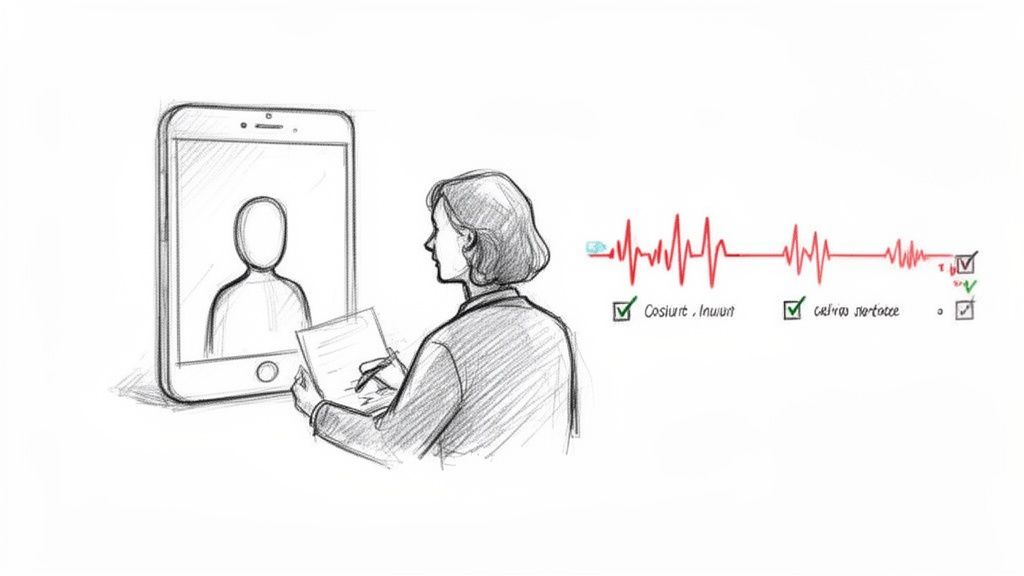
High-stakes interviews, especially for healthcare programs, are a unique form of public speaking where performance anxiety can hinder even the most qualified candidates. This topic explores the powerful role of structured mock interview practice in systematically reducing stress and building authentic confidence. The core idea is anxiety desensitization: by repeatedly facing a realistic, yet judgment-free, interview environment, you can manage common physical and mental symptoms like a trembling voice or racing thoughts.
Why This Topic Works
This is one of the most practical topics for public speaking because it directly addresses a universal fear with an actionable solution. It moves beyond generic advice and demonstrates a proven methodology. By explaining the psychological science behind deliberate practice, you provide your audience with both a "what" and a "why." For instance, medical school applicants often see a dramatic reduction in filler words after just a few mock sessions, while dental school candidates learn to maintain composure when faced with unexpected ethical questions.
How to Structure Your Speech
To effectively manage the stress of high-stakes interviews, exploring these public speaking anxiety tips can significantly boost your confidence and help you deliver impactful responses.
- Introduction: Start with a relatable story or statistic about interview anxiety's impact on performance.
- The Problem: Detail the specific symptoms and psychological effects of anxiety during interviews.
- The Solution: Introduce deliberate practice through mock interviews. Explain how platforms like Confetto use rubrics scoring empathy, communication, and critical thinking to provide objective feedback and track progress.
- Proof: Share testimonials or case studies, such as a candidate who mastered panel interview dynamics for a Canadian MMI after consistent practice. You can learn more about refining your approach with targeted mock interview strategies.
- Conclusion: End with an empowering message about taking control of your preparation and performance.
2. The Science of Empathy in Healthcare Interviews: Demonstrating Genuine Care
Empathy is no longer a soft skill in healthcare; it's a core competency measured rigorously in interviews. This topic delves into the science of demonstrating genuine empathy, moving beyond rehearsed phrases to show authentic emotional intelligence. The central idea is that admissions committees assess empathy through behavioral cues, word choice, and narrative framing. A speech on this topic teaches applicants how to convey compassionate communication in high-pressure scenarios, like those in MMI stations or panel interviews.
Why This Topic Works
This is one of the most vital topics for public speaking in a pre-health context because it addresses a key evaluation metric that often separates successful candidates from the rest. It provides a framework for understanding what interviewers are really looking for when they ask ethical or patient-centered questions. For instance, explaining how a simple pause and reflective language in a response can signal deep listening is a tangible skill. This topic gives the audience concrete tools to show, not just tell, their capacity for care, which is crucial for any aspiring healthcare professional.
How to Structure Your Speech
- Introduction: Begin with a compelling clinical scenario where a lack of empathy led to a poor patient outcome.
- The Problem: Explain the difference between performative sympathy ("I'm sorry you feel that way") and genuine empathy ("It sounds like this has been incredibly difficult for you").
- The Solution: Introduce techniques for communicating empathy authentically. This includes active listening language (validation, clarification), non-verbal cues like posture, and framing answers around the patient's perspective.
- Proof: Use anonymized transcript examples showing how candidates effectively navigated ethical dilemmas like end-of-life care or resource allocation by leading with empathy. Discuss how empathy connects to a candidate’s suitability for serving underserved communities.
- Conclusion: Conclude with an empowering message about how empathy is a learnable, demonstrable skill that forms the foundation of excellent patient care.
3. MMI Format Demystified: Strategies for Success in Multi-Mini Interview Stations
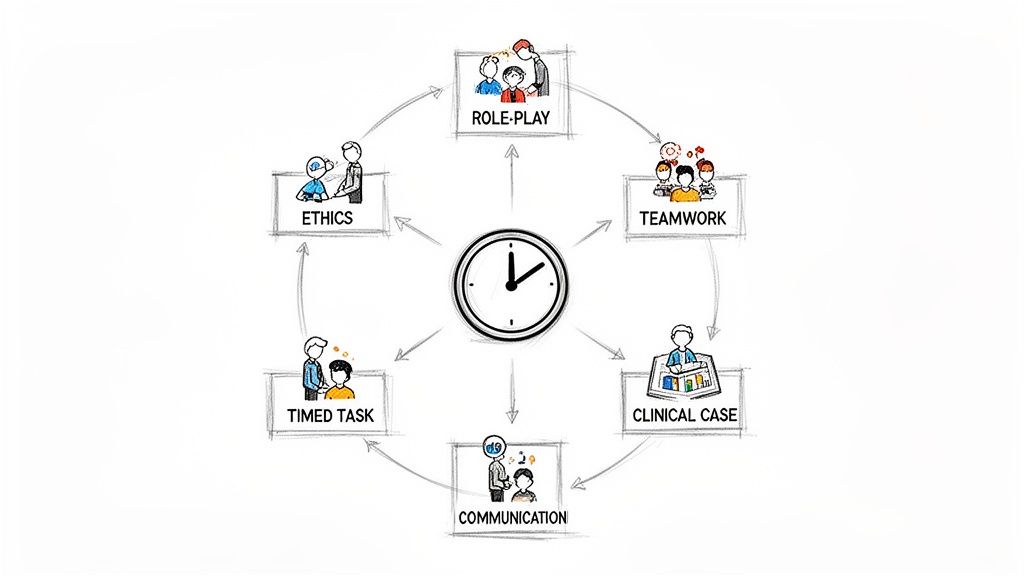
The Multiple Mini Interview (MMI) is a high-stakes, circuit-based interview format that shifts the focus from traditional questions to assessing non-cognitive skills like empathy, teamwork, and ethical reasoning. This topic explores how to deconstruct the MMI format, providing a strategic blueprint for success. The core idea is to master the unique rhythm and diverse demands of the MMI, where candidates rotate through a series of short, timed stations, each presenting a different scenario such as a role-play, ethical dilemma, or collaborative task.
Why This Topic Works
This is one of the most effective topics for public speaking in a pre-health context because it demystifies a format that causes significant anxiety for applicants. It offers a structured, replicable methodology for a complex challenge. By explaining the "why" behind the MMI’s design, such as its proven ability to reduce bias and predict clinical performance, you empower the audience with insider knowledge. For example, detailing how Canadian schools like the University of Toronto prioritize collaboration stations helps candidates prepare specific strategies for those challenges.
How to Structure Your Speech
- Introduction: Begin by comparing the MMI to a "decathlon of interviews," highlighting its unique structure and purpose.
- The Problem: Describe common pitfalls, such as poor time management within the 8-minute station cycle, failing to reset mentally between stations, or applying a one-size-fits-all approach to diverse scenarios.
- The Solution: Break down the primary MMI station types (e.g., ethical, role-play, policy). Introduce specific frameworks for each, like the STAR method for personal questions or a four-pillar ethics approach for dilemmas.
- Proof: Share examples of how different schools, from UCSF to UK programs, weigh competencies. Explain how AI-driven platforms simulate these varied scenarios, providing feedback on school-specific rubrics and helping users master transitions.
- Conclusion: Conclude with a powerful message that MMI success comes not from memorization, but from strategic preparation and adaptability.
4. Ethical Dilemmas in Healthcare: Navigating Values-Based Interview Questions
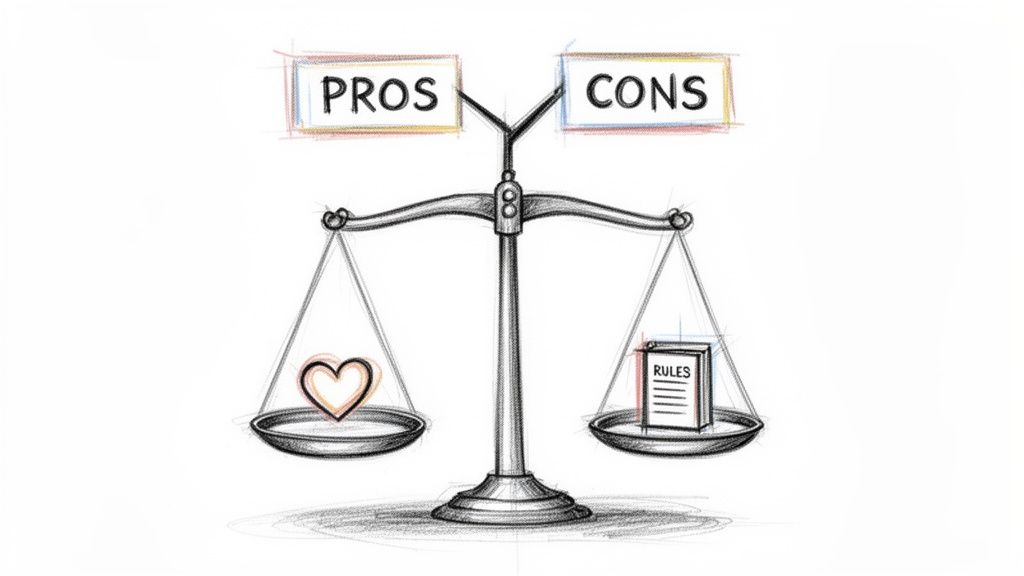
Discussing ethical dilemmas is a cornerstone of healthcare interviews, making it one of the most vital topics for public speaking in this context. This speech topic focuses on deconstructing complex ethical scenarios, demonstrating moral reasoning and critical thinking rather than simply providing a "correct" answer. Admissions committees are not looking for a single solution; they want to see your thought process, your ability to weigh competing values like autonomy and beneficence, and your capacity for empathy and sound judgment under pressure.
Why This Topic Works
This topic is essential because it directly mirrors high-stakes MMI stations and panel interview questions. It teaches a transferable skill: structured, articulate reasoning. By verbalizing frameworks like principlism (autonomy, beneficence, non-maleficence, justice), you show interviewers that you have a mature and professional approach to decision-making. For example, a dental applicant discussing the dilemma of offering expensive cosmetic treatment versus necessary care for an uninsured patient can demonstrate their understanding of both patient desires and professional obligations.
How to Structure Your Speech
Effectively communicating your ethical reasoning is key. Verbalizing your thought process, such as stating, "I'm weighing the patient's autonomy against the principle of non-maleficence here," shows a sophisticated approach.
- Introduction: Present a compelling, real-world ethical scenario, like organ transplant allocation or COVID-era triage protocols.
- The Problem: Explain why these questions are challenging and the common pitfalls to avoid, such as binary thinking or moralizing.
- The Solution: Introduce a structured framework for analysis. Explain how to identify stakeholders, weigh competing ethical principles, and consider different perspectives.
- Proof: Use anonymized examples. A pre-med student might discuss navigating patient confidentiality when a minor discloses risky behavior, showing how they balanced legal duties with the duty of care.
- Conclusion: Reiterate that the goal is not to find a perfect answer but to demonstrate a thoughtful, humane, and principled reasoning process.
5. Panel Interviews for Healthcare Admissions: Performing Under Multiple Eyes
The panel interview is a distinct and often intimidating form of public speaking where candidates face multiple evaluators simultaneously. This topic delves into the unique challenges of this format, such as managing split attention, reading a diverse room, and maintaining composure under the scrutiny of several personalities. It explores the strategies needed to project confidence and effectively communicate when interacting with a group, a format used by some medical, dental and PA programs.
Why This Topic Works
This is one of the more advanced topics for public speaking because it addresses a specific, high-pressure scenario that standard advice often overlooks. It provides immense value by teaching audiences how to manage group dynamics from the "hot seat." You can explain the strategic reasons schools use panels, such as assessing teamwork potential and ensuring evaluation consistency. By breaking down techniques like the "split-attention" eye contact method, you equip your audience with a concrete framework for a situation that can easily cause overwhelm.
How to Structure Your Speech
- Introduction: Begin with an anecdote illustrating the deer-in-the-headlights feeling of facing a panel for the first time.
- The Challenge: Detail the specific difficulties: answering one person while engaging others, handling rapid-fire follow-up questions, and adapting to conflicting non-verbal cues from different interviewers.
- The Strategy: Introduce specific techniques. Explain how to direct your initial answer to the questioner before briefly making eye contact with each other panelist. Discuss how to address follow-ups clearly by saying, "To answer your question..."
- Proof: Share examples of how a candidate for a PA program successfully managed a panel with friendly, skeptical, and administrative interviewers by tailoring their communication style to each one.
- Conclusion: Conclude by reframing the panel interview not as an interrogation but as an opportunity to demonstrate grace under pressure and strong interpersonal skills.
6. Communication Skills That Win: Clarity, Listening, and Authenticity in Interview Responses
Effective communication is the foundation of patient trust and a critical competency measured in healthcare interviews. This topic moves beyond simply "speaking well" to deconstruct the three pillars of winning communication: clarity, active listening, and authenticity. It explores how tangible verbal and non-verbal skills, like pacing, tone, and filler word reduction, can transform a good answer into a compelling one that demonstrates both intellectual rigor and empathy.
Why This Topic Works
This is one of the most fundamental topics for public speaking because it provides a measurable framework for a skill often seen as abstract. It connects directly to rubric-based scoring in MMIs and panel interviews, where assessors are trained to evaluate these exact traits. By focusing on quantifiable improvements, such as reducing filler words from eight per minute to two, you show your audience a clear path to mastery. For instance, dental applicants who learn to explain complex procedures without jargon demonstrate superior patient-facing skills, a key differentiator.
How to Structure Your Speech
You can find more detailed strategies and examples to improve your interview communication skills here, which can serve as excellent source material for your speech.
- Introduction: Begin with a powerful statistic on how communication errors impact patient outcomes or a story of an interview derailed by poor clarity.
- The Problem: Explain how nervousness undermines credibility through rapid pacing, excessive filler words (um, uh, like), and a scripted, inauthentic tone.
- The Solution: Introduce the three pillars. Define Clarity (concise language), Listening (reflecting the interviewer's question), and Authenticity (genuine, conversational delivery). Provide concrete metrics, like aiming for a 120-140 words-per-minute pace.
- Proof: Share before-and-after examples, such as transcript analyses showing a candidate's progress in reducing filler words. Mention how active listening phrases like, "That’s a thoughtful question, my perspective is..." build rapport.
- Conclusion: Summarize by reinforcing that great communication is a practiced skill, not an innate talent, and is essential for becoming a trusted healthcare professional.
7. School-Specific Interview Preparation: Tailoring Responses to Institutional Values
Failing to tailor your interview answers to a specific institution is a common mistake that signals a lack of genuine interest. This topic explores how to move beyond generic responses by deeply researching a school's unique mission, values, and culture. The core strategy is value alignment: demonstrating how your personal experiences and aspirations directly connect with the institution's specific priorities, whether it's UCSF's focus on health equity or the Mayo Clinic's emphasis on patient-centered teamwork.
Why This Topic Works
This is one of the most strategic topics for public speaking because it transforms a standard Q&A into a compelling case for cultural fit. It shows the audience how to demonstrate authentic enthusiasm and preparedness, a key differentiator in competitive admissions. By explaining how to decode a school’s strategic plan or faculty publications, you provide a clear framework for crafting resonant, memorable answers. For example, a dental school applicant can impress by aligning their volunteer work with the school’s specific mission for preventive community care.
How to Structure Your Speech
You can learn to craft compelling, school-specific narratives by understanding the core principles of storytelling in presentations.
- Introduction: Start with a hook about the "Why this school?" question and how many applicants fail it.
- The Problem: Explain how generic, one-size-fits-all answers make a candidate seem uninvested and forgettable.
- The Solution: Introduce a research framework for dissecting a school's identity: mission, curriculum, faculty research, and community initiatives. Explain how to map personal stories to these specific institutional values.
- Proof: Provide a side-by-side comparison of a generic versus a tailored response for a school like the University of Toronto, highlighting how mentioning specific programs or professors makes an answer more impactful. For more insight, you can explore MMI scenarios that test for these values.
- Conclusion: End by framing school-specific preparation not as a chore, but as an authentic exercise in finding the right professional home.
8. Managing Difficult Questions and Unexpected Follow-Ups: Staying Composed Under Pressure
High-stakes interviews are designed to test more than just knowledge; they evaluate a candidate's composure and critical thinking under pressure. This topic focuses on developing strategies for navigating difficult questions, unexpected follow-ups, and skeptical interviewer tones. The central skill is not having the perfect answer immediately but demonstrating a resilient, thoughtful process for arriving at a conclusion. It involves psychological regulation and structured response frameworks to maintain control when faced with challenging scenarios.
Why This Topic Works
This is one of the most vital topics for public speaking in an interview context because it directly prepares candidates for the moments that often cause the most anxiety. Instead of fearing curveballs, applicants learn to see them as opportunities to showcase resilience and authenticity. For instance, a dental school applicant faced with a follow-up that contradicts their initial statement can use this skill to thoughtfully reconcile the two points rather than panic. It teaches that the process of thinking is often more important than the final answer.
How to Structure Your Speech
You can find excellent resources to help you practice staying calm, such as these public speaking anxiety tips that offer practical advice for managing nerves.
- Introduction: Begin with a relatable scenario of an interview going sideways due to an unexpected question.
- The Problem: Detail the common reactions: freezing, rambling, or becoming defensive when challenged.
- The Solution: Introduce techniques like box breathing for physiological regulation and frameworks for thinking aloud. Explain how admitting uncertainty ("That's a great question I haven't considered, let me think through it…") can build more credibility than bluffing.
- Proof: Use case studies, such as a candidate successfully navigating a question about their biggest weakness by framing it as a growth area, or show how structured practice on challenging MMI scenarios builds confidence.
- Conclusion: Conclude by empowering the audience to view difficult questions not as traps but as invitations to demonstrate their genuine thought process.
9. Clinical Scenario Responses: Demonstrating Critical Thinking and Practical Reasoning
Navigating clinical scenarios is a specialized form of public speaking where the goal is to articulate a thought process under pressure. This topic focuses on deconstructing complex case-based questions, demonstrating not just what you know but how you think. The core skill is verbalizing a systematic approach, from gathering information and forming a differential diagnosis to prioritizing patient safety and demonstrating empathy, all while acknowledging the limits of your current knowledge.
Why This Topic Works
This is one of the most effective topics for public speaking in a pre-health context because it directly mirrors the high-stakes reasoning required in clinical practice and admissions interviews. It moves beyond rote memorization to showcase analytical maturity. Interviewers want to see how you handle ambiguity, not whether you have encyclopedic medical knowledge. For instance, successfully talking through a patient case with chest pain demonstrates your ability to prioritize life-threatening conditions first, while a dental scenario involving facial swelling shows you can think through infectious versus structural causes systematically.
How to Structure Your Speech
- Introduction: Begin with a compelling but brief clinical vignette to capture the audience's attention and establish the stakes.
- The Problem: Explain the common pitfalls, such as jumping to conclusions, failing to ask clarifying questions, or appearing arrogant about one's knowledge base.
- The Solution: Present a structured framework for thinking aloud. Teach phrases like, "My first priority would be to ensure patient safety by..." or "Before proceeding, I would want to know more about..." This verbalizes a safe, methodical approach.
- Proof: Share examples of strong vs. weak responses. Contrast a candidate who panics with one who calmly states, "This is beyond my current scope, but my initial steps would involve consulting a senior clinician and gathering these specific vital signs."
- Conclusion: Reinforce that the goal is to demonstrate a safe, curious, and patient-centered thought process, which is the foundation of a competent future healthcare professional.
10. Personal Statement Translation into Interview Narrative: Connecting Written to Spoken
Your personal statement is the cornerstone of your application, but it's often a static document. This topic focuses on the dynamic skill of translating that written narrative into compelling, conversational stories for a live interview. The core idea is to treat your statement not as a script to be memorized, but as a thematic guide from which to expand. By deconstructing your essay's key themes, you can develop a portfolio of authentic, detailed anecdotes that bring your written words to life, ensuring consistency while avoiding a rehearsed delivery.
Why This Topic Works
This is one of the most crucial topics for public speaking in an application context because it directly addresses the bridge between your paper file and your in-person impression. It demonstrates high-level communication skills and self-awareness. For example, a dental applicant can expand a single sentence about volunteering into a detailed story about patient empathy, while a pre-med student can transform a paragraph on research into a captivating discussion about scientific curiosity and problem-solving. This approach shows you can think on your feet while remaining true to your core motivations.
How to Structure Your Speech
As you translate your personal statement into a compelling interview narrative, understanding the art of mastering script creation can be invaluable for organizing your thoughts without sounding robotic.
- Introduction: Begin with the common applicant mistake: reciting the personal statement verbatim in an interview.
- The Problem: Explain how a robotic delivery undermines authenticity and fails to build a connection with the interviewer.
- The Solution: Introduce the concept of a "narrative audit." Demonstrate how to pull 3-5 core themes (e.g., commitment to rural health, a specific clinical experience) from the statement.
- Proof: Provide an example, such as a first-generation student using their statement's theme of resilience to craft a powerful story about overcoming a specific academic challenge, connecting it directly to their future success in a rigorous program.
- Conclusion: Conclude by emphasizing that the goal is narrative consistency, not memorization, empowering the audience to speak with genuine passion.
11. Nonverbal Communication and Body Language: What You Say Without Words
Beyond the words you choose, your nonverbal cues often communicate the most powerful messages during an interview. This topic delves into the science of body language, exploring how posture, eye contact, hand gestures, and facial expressions shape an interviewer's perception of your confidence, empathy, and professionalism. The central principle is that physical presence can either reinforce or contradict your spoken answers, making it a critical component of effective communication.
Why This Topic Works
This is one of the most impactful topics for public speaking because it reveals the "hidden transcript" of any high-stakes interaction. It’s highly practical, as audiences can immediately apply the lessons to their own self-presentation. For example, a pre-dental applicant can learn how maintaining steady eye contact in a panel interview demonstrates command, while a pre-med student can see how nodding attentively while listening conveys active engagement and empathy, a key trait for future physicians.
How to Structure Your Speech
Mastering your physical presence is a game-changer. For a deeper dive, you can explore these interview body language tips to refine your approach and ensure your nonverbal signals align with your message.
- Introduction: Start with a compelling, accurately sourced observation about nonverbal communication. Avoid the popular “7-38-55” claim, which comes from studies of ambiguous emotional messages and does not describe communication in general.
- The Core Components: Dedicate a section to each key nonverbal cue: posture (confidence vs. uncertainty), eye contact (connection vs. evasion), hand gestures (emphasis vs. distraction), and facial expressions (empathy vs. disconnect).
- The "How-To": Provide actionable drills. Suggest using video feedback to identify and reduce nervous habits like leg bouncing or pen clicking. Demonstrate purposeful gestures that clarify a point versus distracting fidgeting.
- Proof: Share before-and-after scenarios. For instance, describe a candidate who appeared slouchy and uncertain in early practice but projected authority with an upright posture in their actual interview.
- Conclusion: Summarize by reinforcing that authentic, controlled body language is not about acting; it's about allowing your inner confidence and compassion to be seen.
12. Putting It All Together: Mock Interview Roadmap
Effective interview preparation is not about isolated drills but an integrated strategy that builds skills sequentially. This topic frames interview readiness as a comprehensive roadmap, combining anxiety management, ethical reasoning, and communication polish into a cohesive, multi-week plan. It presents a capstone approach that synthesizes various skills, from MMI tactics to panel dynamics, into a single, actionable timeline. The core concept is scaffolded learning, where foundational skills are mastered before advancing to more complex scenarios.
Why This Topic Works
This is one of the most empowering topics for public speaking because it provides a clear, manageable structure for a daunting process. It transforms overwhelming preparation into a step-by-step journey, giving applicants a sense of control. By outlining a logical progression, such as focusing on anxiety reduction in weeks 1-3 before tackling MMI ethics in weeks 4-6, it prevents burnout and promotes sustainable skill development. It appeals to organized, goal-oriented individuals who thrive on structured plans and measurable progress.
How to Structure Your Speech
- Introduction: Begin with the analogy of building a house: you need a solid foundation (anxiety control) before putting up walls (content) and a roof (polish).
- The Problem: Describe the chaos of unstructured prep: randomly watching videos, practicing tough questions too early, and feeling directionless.
- The Solution: Present a sample 12-week roadmap. Detail how each phase builds on the last, from mastering filler words to navigating complex clinical scenarios and school-specific tailoring. Emphasize using metrics to track progress, like rubric scores for empathy or a reduction in rambling.
- Proof: Share a case study of a student who followed a roadmap, documenting their progress from initial nervousness to confident execution in their final, high-stakes interview.
- Conclusion: End with a call to action, encouraging the audience to create their own personalized roadmap for a structured, confident, and successful interview season.
12-Topic Public Speaking Comparison
| Topic | 🔄 Implementation Complexity | ⚡ Resource Requirements | ⭐ Expected Outcomes / 📊 Impact | 💡 Ideal Use Cases & Key Advantages |
|---|---|---|---|---|
| Overcoming Interview Anxiety: Building Confidence Through Mock Practice | Moderate — structured mock series + feedback loops | Time for repeated sessions; platform access (24/7) | ⭐⭐⭐⭐ Measurable anxiety reduction and sustained confidence (filler words, pacing) | Ideal for anxious, budget-conscious applicants; advantage: evidence-based exposure + 24/7 practice; tip: track symptoms & rubric progress. |
| The Science of Empathy in Healthcare Interviews: Demonstrating Genuine Care | Moderate — behavioral training and narrative framing | Video examples, rubric scoring, coaching for authenticity | ⭐⭐⭐⭐ Strong positive effect on empathy rubrics and interviewer rapport | Ideal for MMI/panel empathy stations and values-focused programs; advantage: teaches authentic empathy; tip: use reflective language and demo clips. |
| MMI Format Demystified: Strategies for Success in Multi-Mini Interview Stations | High — multiple station types, timing, reset strategies | Extensive prompt library, timed simulations, repetition | ⭐⭐⭐⭐ High format-specific gains (station performance, time management) | Ideal for applicants facing MMI-heavy schools and advisors; advantage: format-specific edge; tip: simulate timers and practice transitions. |
| Ethical Dilemmas in Healthcare: Navigating Values-Based Interview Questions | Moderate–High — mastering frameworks and nuance | Case prompts, ethics frameworks study, reflective practice | ⭐⭐⭐ Improves moral reasoning demonstration and structured responses | Ideal for ethics stations across professions; advantage: shows process over answers; tip: verbalize trade-offs and acknowledge limits. |
| Panel Interviews for Healthcare Admissions: Performing Under Multiple Eyes | High — managing multiple evaluators and follow-ups | Panel simulations, multi-person video feedback | ⭐⭐⭐ Better composure, adaptability, and multi-interviewer engagement | Ideal for applicants facing panel formats (international/NA schools); advantage: prepares multi-person dynamics; tip: split-attention eye contact & name clarifications. |
| Communication Skills That Win: Clarity, Listening, and Authenticity in Interview Responses | Moderate — habit change plus measurable metrics | Audio/video analysis, filler-word tracking tools | ⭐⭐⭐⭐ Clear, coachable improvements in clarity, credibility, and perceived authenticity | Ideal for all applicants, non-native speakers; advantage: measurable, high ROI; tip: target pacing and reduce filler words. |
| School-Specific Interview Preparation: Tailoring Responses to Institutional Values | Moderate — research + tailoring per school | Time for school research, rubric customization features | ⭐⭐⭐ Increased perceived fit and authentic answers; higher interview differentiation | Ideal for applicants targeting specific schools; advantage: authentic alignment & differentiation; tip: map 3–5 stories to school missions. |
| Managing Difficult Questions and Unexpected Follow-Ups: Staying Composed Under Pressure | Moderate — stress-regulation + response frameworks | Practice with curveballs, stress-management training | ⭐⭐⭐⭐ Improved resilience, recovery from missteps, and thinking-out-loud skills | Ideal for anxious/perfectionist applicants; advantage: teaches recovery and honesty under pressure; tip: use pause → clarify → think‑aloud framework. |
| Clinical Scenario Responses: Demonstrating Critical Thinking and Practical Reasoning | High — systematic clinical reasoning practice | Case libraries, baseline clinical knowledge, guided feedback | ⭐⭐⭐⭐ Demonstrates clinical thinking, safety-first reasoning, and decision-making quality | Ideal for MD/PA/DDS/DPT/nursing/pharmacy applicants; advantage: shows real-world reasoning; tip: rule out dangerous diagnoses first and ask clarifying Qs. |
| Personal Statement Translation into Interview Narrative: Connecting Written to Spoken | Low–Moderate — narrative extraction and rehearsal | Statement audit, story development, conversational practice | ⭐⭐⭐ Greater coherence between application and interview; smoother follow-ups on statement points | Ideal for applicants with polished statements; advantage: maximizes prior work; tip: develop 3–5 conversational stories and practice consistency. |
| Nonverbal Communication and Body Language: What You Say Without Words | Moderate — awareness, video review, cultural nuance | Video recording, mirror drills, culturally informed feedback | ⭐⭐⭐ Immediate perception gains in professionalism, empathy, and confidence | Ideal for video/in‑person interviews and international candidates; advantage: visible, improvable cues; tip: use purposeful gestures and grounding exercises. |
| Putting It All Together: Mock Interview Roadmap | High — integrates multiple domains into schedule and metrics | Consistent schedule, metric dashboard, varied mock types | ⭐⭐⭐⭐ Comprehensive readiness, measurable progress across competencies | Ideal for applicants planning multi-week prep and advisors; advantage: consolidated roadmap and tracking; tip: start 8–12 weeks out and rotate formats. |
Your Next Step: From Plan to Practice
This comprehensive list of topics for public speaking in the context of healthcare admissions interviews is more than just a collection of ideas. It is a strategic blueprint designed to move you from theoretical knowledge to practical mastery. We have dissected the core pillars of interview success, from navigating complex MMI ethical dilemmas and performing under the pressure of a panel to translating your personal statement into a compelling spoken narrative. Each topic represents a crucial skill set, a specific muscle to be trained and strengthened before you walk into the high-stakes environment of an admissions interview.
The journey to becoming a confident, articulate, and authentic speaker is not about finding one perfect topic; it is about developing the versatility to handle any topic thrown your way. It is about understanding that demonstrating empathy is as critical as showcasing your clinical reasoning, and that your nonverbal cues can speak just as loudly as your well-rehearsed answers. The true takeaway is that preparation is an active process, not a passive one. Simply reading about these strategies is not enough.
The Bridge Between Knowledge and Performance
The most significant gap that aspiring healthcare professionals face is the one between knowing what to do and actually doing it under pressure. You might understand the STAR method for answering behavioral questions, but can you deploy it seamlessly when an unexpected follow-up question catches you off guard? You might know the four pillars of medical ethics, but can you apply them thoughtfully, aloud, to a nuanced scenario you have never encountered before?
This is where deliberate practice becomes the non-negotiable next step. The goal is to transform this guidance from a checklist into an instinct.
- Active Recall: Instead of just rereading your notes, actively try to articulate a response to a prompt from each of the 12 sections we covered.
- Simulated Pressure: Practice with a timer. Record yourself. The simple act of being recorded adds a layer of pressure that mimics the real interview environment.
- Feedback Integration: Merely practicing is not enough. You must seek out and integrate feedback. Analyze your own recordings for filler words, pacing, and clarity. Ask a mentor or advisor to critique a mock response.
Turning Practice into Your Competitive Advantage
Mastering these diverse topics for public speaking is your key to standing out in a crowded field of highly qualified applicants. Admissions committees are not just looking for candidates with high GPAs and test scores. They are searching for future colleagues who possess the maturity, self-awareness, communication skills, and ethical grounding to become compassionate and effective healthcare providers.
Your ability to articulate your thoughts clearly, listen actively, and convey genuine empathy is what will leave a lasting, positive impression. Every mock interview you complete, every difficult question you wrestle with, and every piece of feedback you incorporate builds a foundation of confidence that cannot be faked. This dedicated preparation allows your true personality and passion for medicine to shine through, unhindered by anxiety or uncertainty. Your final, most powerful step is to commit to this process of active, iterative improvement.
Ready to turn theory into skill? Confetto is an AI-powered platform designed to provide unlimited, on-demand interview practice with instant, detailed feedback. Move beyond just reading about topics for public speaking and start mastering them through realistic MMI, panel, and traditional interview simulations at Confetto.