
Updated · 5 min read
University of Iowa Dental School Interview Guide
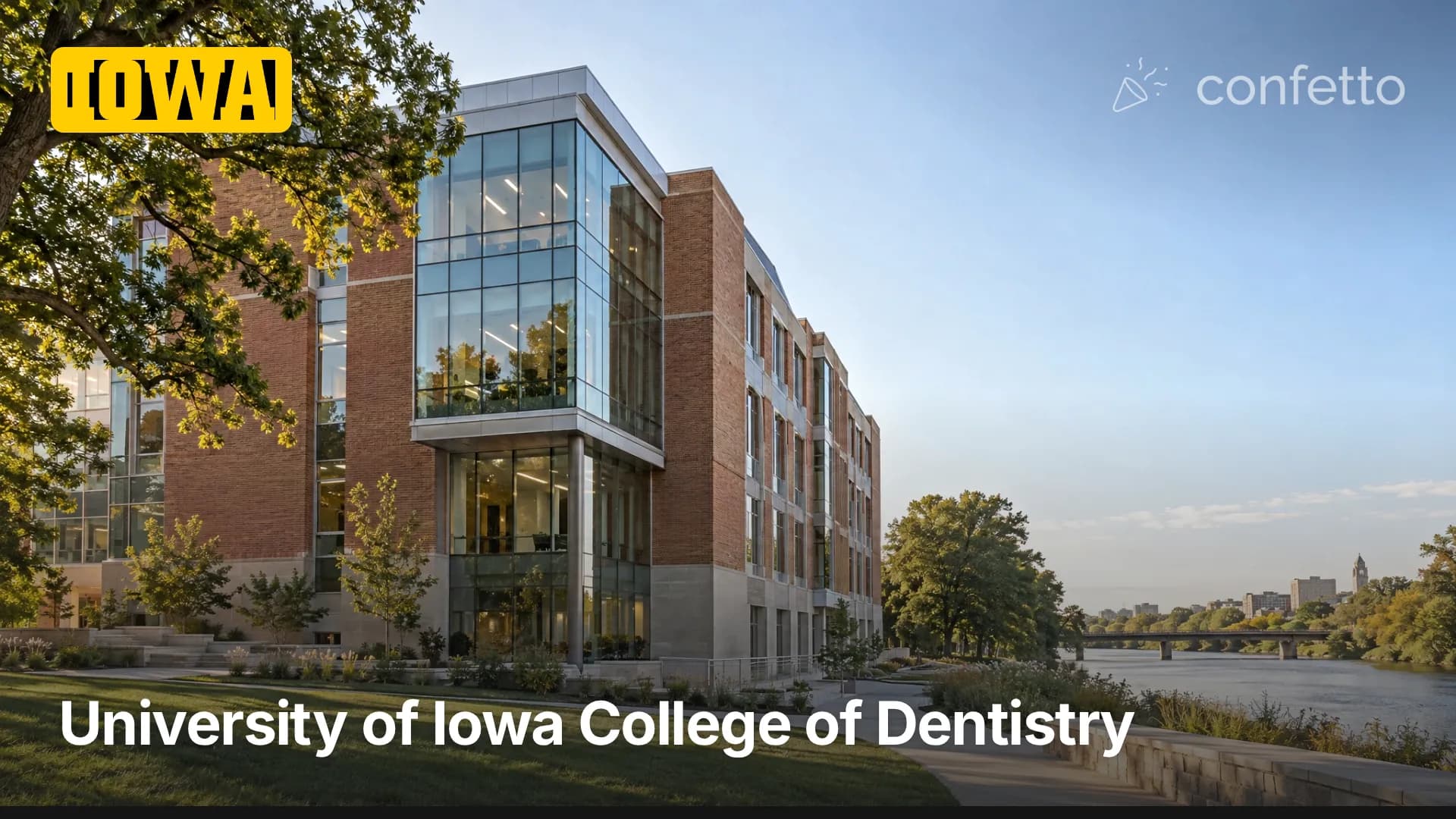
Key facts (2026-27)
- Format
- One-on-two interviews with situational and behavioral questions, repeated with a different pair of interviewers
- Where
- In-person interview process with one virtual interview day
- Stations
- Two timed interviews, then repeated with a different pair of interviewers
Dates for 2026-27
August - November (August 2026 to November 2026)
Interviews
December 15, 2026
Offers and decisions
Checked November 2026 against University of Iowa College of Dentistry - DDS Application Process and University of Iowa College of Dentistry - DDS Admissions Timeline. Confirm details in your invitation.
The University of Iowa College of Dentistry and Dental Clinics uses a timed one-on-two interview format where candidates complete two interviews with different pairs of interviewers, then repeat the process with a different pair of interviewers. According to the application process page, approximately 240 candidates participate in the in-person interview process between August and November each application cycle, and the school also offers one virtual interview day.
The University of Iowa dental school interview format
Each timed interview includes situational and behavioral questions, and interviewers may include members of the Admissions Committee, faculty and staff.
| Item | What Iowa says |
|---|---|
| Format | One-on-two: one candidate, two interviewers, timed |
| Question types | Situational and behavioral |
| Interviewers | Admissions Committee members, faculty and staff |
| Who is invited | By invitation only; about 240 candidates take part in the in-person interview process each cycle |
| Months | August through November (2026 timeline), in person, with one virtual interview day |
| Required | Yes: candidates are required to interview for further consideration |
Iowa's page says candidates complete two interviews, each with a different pair of interviewers, and then repeat the process with a different pair. That description is not clear about the total number of rounds, so rely on the schedule in your invitation.
What Iowa looks for
Iowa says it uses a whole-file review.
It says applicants who show a commitment to helping underserved communities and caring for others are given strong consideration.
The school also considers residents and nonresidents in two separate applicant pools, using the Iowa Board of Regents residency policy.
Published requirements
The published requirements are concrete:
- GPA. A minimum total and science GPA of 2.85.
- DAT. A minimum DAT Academic Average of 360.
- Shadowing. 40 hours of dental shadowing, completed at the time you submit the application.
- Letters. Either one committee letter or three individual letters, uploaded through AADSAS.
- Coursework. At least 90 semester hours of coursework by June of the year you enroll, including a minimum of 30 semester hours at a four-year college or university, and prerequisites with a C or better. Microbiology becomes a required prerequisite beginning with the 2027-2028 cycle.
- Volunteering. A minimum of 40 hours of volunteering is recommended.
- Supplemental fee and attestation. Applicants pay a non-refundable $60 U.S. or $100 international application fee directly to the University of Iowa and submit a required attestation in MyUI after AADSAS verification.
- Virtual information session. Prospective applicants can explore the program through a virtual information session, video tour, or campus visit before applying.
Meeting a minimum is not the same as being competitive, so read these as thresholds, not targets.
The 2026-27 timeline
- Interviews begin: August 2026.
- Application deadline: September 30, 2026 at 11:59 p.m. Eastern. All materials, including official DAT scores, must be received and verified. Incomplete applications are cancelled.
- Interviews end: November 2026.
- Decision notification: December 15, 2026.
Iowa recommends submitting as soon as possible after the cycle opens, so if you are planning for next cycle, aim to submit in the first part of the application season.
Interviewed applicants who are not offered immediate admission receive a notification of their status.
How to prepare for Iowa
- Prepare for two interviewers at once. Make eye contact with the person asking, but include the second.
- Use situational and behavioral frames. For behavioral questions, use a short story: situation, what you did, result, what you learned. For situational ones, say what you would do first and why.
- Prepare underserved-care examples. Iowa says it gives strong consideration to commitment to helping underserved communities.
- Know your shadowing. You must have 40 hours by the time you apply, so describe one case in detail and what it taught you.
- Prepare for the timing. Interviews are timed, so practice finishing an answer within about two minutes.
Iowa dental school practice questions (written by us, not Iowa)
These practice questions are written by our team, built from Iowa's situational and behavioral format.
Practice each aloud for about two minutes. For the situational and behavioral questions below, Confetto, an AI mock interviewer for medical school and other healthcare program interviews (MMI, traditional, panel), lets you practice dental school interviews out loud and see rubric-based feedback on each answer.
- Tell us about a time you cared for someone who was not like you. What did you learn?
- Situational: a patient arrives with severe pain and no appointment, and the schedule is full. What do you do?
- Behavioral: tell us about a time you disagreed with a supervisor.
- Situational: a parent refuses a recommended treatment for their child. How do you respond?
- What did you observe while shadowing that changed how you think about dentistry?
- Describe a time you worked toward a goal for a long time and almost gave up.
- Situational: you find out a colleague has been overbilling patients. What do you do?
- Tell us about a time you made a mistake with real consequences for someone.
- What would you do to expand access to dental care in a rural area?
- Why Iowa, and what do you hope to do after dental school?
For a wider set, see our dental school interview questions guide.
A drill for two interviewers
- Write six short stories: two behavioral, two underserved-care, one conflict, one mistake.
- Find two friends to interview you together. Ask them to alternate who asks the follow-up.
- Do five timed answers. Stop yourself at two and a half minutes.
- Ask the pair which answer was clearest and which wandered.
- Repeat two days later with new situations.
If you do not have partners, Confetto's dental school interview prep uses AI mock interviews that ask follow-up questions based on what you actually said and give rubric-based feedback afterward. Start your free week to practice out loud.
University of Iowa dental school interview FAQ
Is the Iowa dental interview an MMI?
No. Iowa describes a timed one-on-two format with situational and behavioral questions.
Is it in person?
Mostly. Iowa says about 240 candidates take part in its in-person process and it offers one virtual interview day.
Is shadowing required?
Yes. 40 hours of dental shadowing, completed when you submit your application.
What is the DAT minimum?
A minimum Academic Average of 360, per the requirements on Iowa's page.
When do I hear back?
Decision notifications for the 2026 cycle are December 15, 2026.
Applying elsewhere in the Midwest? See our guides to the UIC College of Dentistry and University of Michigan School of Dentistry interviews, or our dental school interview prep page.
Sources: University of Iowa College of Dentistry application process and admissions pages.
Confetto isn't affiliated with the University of Iowa. Everything here about the school comes from its public admissions pages, checked in October 2026.
Formats and dates can change between cycles, so go by your invitation email.
More on Iowa Dental
More dental school guides
Applying to more dental schools? These pages cover other schools’ interviews, numbers and the application: