
Updated · 6 min read
WMed Phone Interview and Virtual Interview Day: How to Prepare
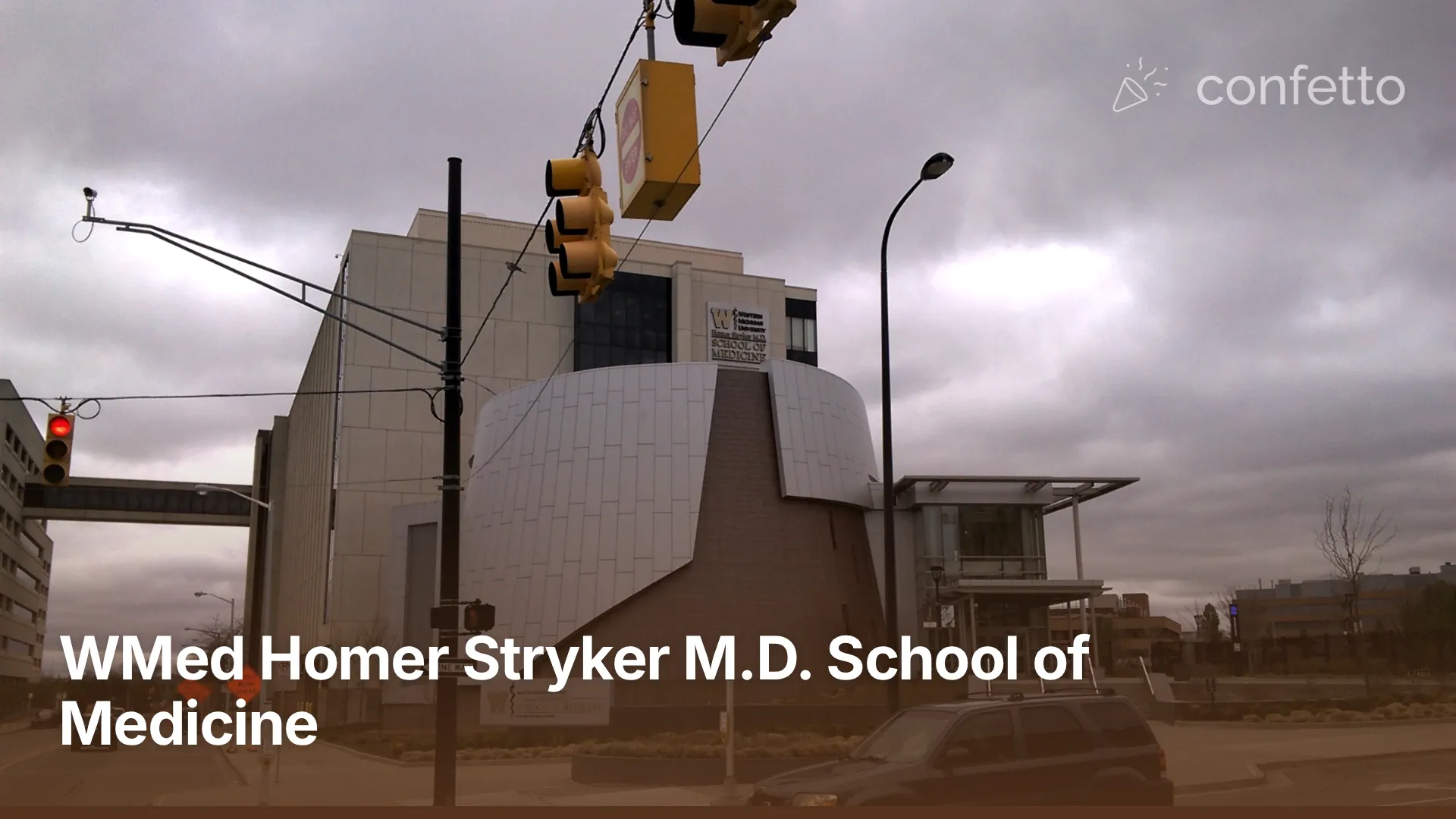
The WMed phone interview comes after the supplemental application (with its online assessment) and an experiences review, and before the Virtual Interview Day for about 450 applicants. WMed says it is designed to learn about your personal attributes and is "not an interview you can study for" or a test of medical or scientific knowledge. Prepare true, specific stories about teamwork, service, integrity and problem solving, and practice telling them by voice alone.
Key facts (2026-27)
About 450 applicants reach the Virtual Interview Day. Before it comes a phone interview WMed says is not one you can study for. Casper and PREview are not used.
- Format
- Phone interview, then a Virtual Interview Day
- Where
- Virtual
- Also required
- WMed online assessment (about 50 multiple-choice questions, in the supplemental), Phone interview
Dates for 2026-27
Late September 2026 to March 2027
Interviews
First offers October 15, 2026, then rolling. Initial decisions within four weeks of your interview
Offers and decisions
Sources: WMed: Application process and WMed: Admissions FAQs. Confirm details in your invitation.
WMed admissions in brief
WMed enrolls 86 students a year. Its Class of 2030 came from 6,242 applications, with 911 phone interviews, 495 virtual interviews, an average GPA of 3.81 and an average MCAT of 513. You need at least a 3.0 GPA and a 499 MCAT. WMed doesn't use Casper or PREview. AAMC data shows 5,897 applications for 2025-26. Deadlines are November 15, 2026 for AMCAS and January 8, 2027 for the supplemental.
The WMed interview process
The Western Michigan University Homer Stryker M.D. School of Medicine (WMed), in Kalamazoo, has one of the more unusual admissions sequences, and the interview comes late in it.
After a supplemental application that includes an online assessment, selected candidates have a phone interview, and a smaller group is invited to a Virtual Interview Day.
WMed's application process page lays out the steps:
- Supplemental application with essays and a short online assessment.
- Experiences review of your pre-medical experiences, essays and application materials.
- Phone interview. WMed says this stage "is designed to help us learn more about your personal attributes. This is not an interview you can study for and is not designed to test your medical or scientific knowledge."
- Virtual Interview Day. About 450 applicants are invited, and all interviews are virtual.
Virtual interviews begin in late September and continue through March 2027.
| Item | What WMed says |
|---|---|
| Online assessment | About 50 multiple-choice questions, about 30 seconds each, free, unique to WMed. No preparation is needed or recommended |
| Phone interview | A personal-attributes conversation, not a knowledge test |
| Virtual Interview Day | All interviews are virtual. Detailed instructions come by email |
| Invited to the day | About 450 applicants |
| Decision | Initial decisions within four weeks of completing the virtual interview |
| Casper and PREview | Not used, per WMed's FAQ |
As of October 2026, WMed's pages don't describe the format of the phone interview or the Virtual Interview Day, how long each lasts, or sample questions. Treat those as unknown until your invitations arrive.
WMed's timeline for 2026-27
- AMCAS: due November 15, 2026.
- Supplemental application, essays and online assessment: due January 8, 2027 on the application page (the FAQ says January 9, so confirm in your portal). The supplemental fee is $110, waived with AAMC Fee Assistance Program approval.
- Interviews: virtual interviews begin in late September 2026 and continue through March 2027.
- Offers: the first offers for the Class of 2031 are made October 15, 2026, then on a rolling basis.
- Minimums: WMed asks for a minimum 499 MCAT and a 3.0 GPA to receive the supplemental.
- Commitment letter. It uses a commitment letter, not a monetary deposit, to reserve your seat.
- Early decision. WMed also has an early decision program, WMedStart, for students at its preferred institutions.
What WMed says it is looking for
Attributes it names
WMed uses a mission-aligned review based on the AAMC's experiences, attributes, metrics and competencies model.
It says its program "focuses on teamwork" and that the selection process is designed to build cohorts with complementary experiences.
The attributes it names are being a team player, problem solving, compassion and empathy, commitment to serving others, strong oral and written communication, and integrity in decisions.
Its FAQ says candidate attributes are evaluated "at nearly every stage," including the online assessment, phone interview and virtual interview.
Curriculum and class
The FAQ describes a systems-based, integrated curriculum that blends basic and clinical sciences across all four years, using team-based learning, small and large group sessions, early clinical experiences and extensive simulation.
WMed enrolls 86 students a year, and 42% of the Class of 2030 was from Michigan. It has preferred relationships with Western Michigan University, Kalamazoo College, Grand Valley State University and Albion College.
The supplemental asks you to explain why you chose WMed and how you will use "the unique features of WMed's mission, vision, and curriculum." Expect the interviewer to follow up on that answer, so reread what you wrote.
How to prepare for the phone interview and Virtual Interview Day
- Don't over-prepare content for the phone interview. WMed says you can't study for it. Prepare to be yourself, clear and warm, and to give specific stories about teamwork and service.
- Practice on the phone, not just on video. Without a face to read, your voice carries everything. Practice pacing, tone and brief pauses.
- Prepare for teamwork questions. WMed hasn't described its interview day format. If the day includes a group task, practice the skills it would show: listening, building on others' ideas, including quieter people and staying on task.
- Reread your supplemental. Be consistent with what you wrote about mission fit.
- Use the pre-interview materials. WMed sends videos and links so you can ask specific questions. Arrive with two real questions.
WMed practice questions (written by us, not WMed)
WMed doesn't publish its questions. We wrote these around the attributes it names.
Keep each answer to about two minutes.
To practice answering by voice alone, as on the phone, Confetto's AI mock interviews run spoken practice with follow-up questions.
- Why WMed and its integrated, team-based curriculum?Practice this question now
- Tell me about a time you were part of a team that struggled. What was your role?Practice this question now
- What is the most compassionate thing you have seen someone do for a patient or a stranger?Practice this question now
- Tell me about a time you made a decision that cost you something because it was the right thing to do.Practice this question now
- Tell me about a time you explained something difficult to someone who didn't want to hear it.Practice this question now
- What does serving others mean to you, and what have you done about it?Practice this question now
- Tell me about a time you helped a group make a decision when members disagreed.Practice this question now
- What connection, if any, do you have to Southwest Michigan or a community like Kalamazoo?Practice this question now
- What is something about you that your application doesn't show?Practice this question now
- Your team has 15 minutes to plan a health fair for a Kalamazoo neighborhood on a small budget, and two members want opposite things. How do you help the group decide?Practice a question like this
- WMed builds each class of 86 from complementary experiences. What would you add to your class that others might not?Practice this question now
For a wider set, see our practice questions with answers guide.
A drill for the phone call and interview day
- Call a friend and have them ask three questions from the list. Answer by phone, with no notes and the screen off.
- Record the call. Listen for flat tone, filler words and answers that never get to a specific moment.
- Join a three- or four-person practice group and solve a short task, such as planning a health fair on a small budget. Aim to contribute, not to win.
- Ask the group afterward whether you listened, built on ideas and included everyone.
- Fix one habit, such as interrupting or going quiet, and run it again.
If you don't have a practice partner, Confetto's AI mock interviews ask follow-up questions based on what you actually said and give rubric-based feedback afterward.
The question bank has over 500 questions. Start your free week.
Applying to other Michigan schools too? See our guides to the Oakland University William Beaumont School of Medicine, University of Michigan Medical School and Michigan State University College of Human Medicine interviews, or our medical school interview prep page.
Sources: WMed: Application Process, Admissions FAQs, MD Program admissions.
Confetto isn't affiliated with Western Michigan University or WMed.
Everything here about the school comes from its public admissions pages.
Formats can change between cycles, so go by your invitation email.
WMed admissions: MCAT, GPA, prerequisites and deadlines
Every line below links its source: WMed's own pages and the AAMC's public FACTS tables. Confirm dates in the school's portal before you submit.
| What | Detail and source |
|---|---|
| Entering class | 86 students a year, including 86 in the Class of 2030. Source: WMed: Admissions FAQs, WMed: Class of 2030 profile |
| AAMC applications and new students | 5,897 applications and 86 new students for fall 2025 entry, about 1.5 new students per 100 applications. Source: AAMC FACTS Table A-1 (2025-2026) |
| Applications and interviews | Class of 2030: 6,242 applications, 911 phone interviews and 495 virtual interviews. For this cycle WMed expects to invite about 450 applicants to its Virtual Interview Day. Source: WMed: Class of 2030 profile, WMed: Application process |
| MCAT and GPA (Class of 2030) | Average MCAT 513 (range 497 to 524) and average GPA 3.81. Source: WMed: Class of 2030 profile |
| Minimums | An overall GPA of 3.0 and an MCAT of 499, both needed for a supplemental invitation. WMed will review applications with an upward trend and has no MCAT sub-score minimums. Source: WMed: Application process, WMed: Admissions FAQs |
| Prerequisites | None required. WMed recommends a broad base in the humanities, social sciences and sciences, including biochemistry, genetics, human anatomy, human physiology, immunology and statistics, and encourages upper-division science courses. Source: WMed: Application process |
6 more WMed admissions factsCasper and PREview, Deadlines (2027 entry), Supplemental, In-state preference, MCAT dates and letters, Who can apply
| What | Detail and source |
|---|---|
| Casper and PREview | WMed uses neither. Instead its supplemental includes a free WMed online assessment of about 50 multiple-choice questions, about 30 seconds each, with no preparation needed. Source: WMed: Admissions FAQs |
| Deadlines (2027 entry) | AMCAS November 15, 2026. Supplemental January 8, 2027 on the application process page, while the FAQ page says January 9. First offers October 15, 2026, then rolling. Source: WMed: Application process, WMed: Admissions FAQs |
| Supplemental | Sent by email after an initial review to applicants with a 3.0 GPA and 499 MCAT. Essays plus the online assessment. Fee $110, waived automatically with AAMC Fee Assistance. Source: WMed: Application process |
| In-state preference | None. WMed is private and the Class of 2030 is 42% from Michigan across 23 states. It has preferred relationships with WMU, Kalamazoo College, Grand Valley State and Albion College. Source: WMed: Admissions FAQs |
| MCAT dates and letters | MCAT dates January 1, 2024 to September 30, 2026 count for the 2027 cycle, and WMed uses your most recent score. Three or four letters through AMCAS, at least two ideally from faculty. Source: WMed: Application process |
| Who can apply | US citizens and permanent residents with, or about to earn, a bachelor's degree from an accredited US or Canadian school. No transfers. Source: WMed: Application process, WMed: Admissions FAQs |
Not published on WMed's site as of November 2026: acceptance rate or number of acceptances, median MCAT and GPA.
WMed secondary essay prompts (2027 entry)
WMed's supplemental has five essay questions: two required, one for WMed re-applicants and two optional. Each has a 2,000 character limit, and the essays aren't timed, so you can draft offline. Your supplemental isn't complete until you also finish the online assessment. The fee is $110 and everything is due January 8, 2027.
Two are required
- Please explain both of the following: 1) The specific reason(s) you have chosen to apply to WMed and 2) how you will utilize the unique features of WMed's mission, vision, and curriculum to achieve your career goals.
- What unique values, skills, talents, and/or life experiences will you bring to WMed and the practice of medicine?
one is only for WMed re-applicants (1 prompt)
- WMed Re-Applicants Only: Describe the changes to your application from previous cycles - include academics, experiences, and/or personal attributes.
two are optional (2 prompts)
- Optional: Please explain any connection you have to Southwest Michigan.
- Optional: Is there any additional information not included elsewhere in your application you would like the admissions committee to know?
How secondaries work and the common prompt types: medical school secondary essays. Real prompts from other schools with outlines: secondary essay examples. Confetto's Essay Coach reviews personal statements and secondaries and gives you a score and notes on your exact lines. Try Essay Coach.
What WMed says about the phone interview, and what it doesn't
WMed's Application Process page gives the phone interview two sentences: it is designed to help the school learn more about your personal attributes, and it is not an interview you can study for or a test of medical or scientific knowledge. The FAQ adds that candidate attributes are evaluated at nearly every stage, including the online assessment, the phone interview and the virtual interview.
As of November 2026, WMed's pages don't say how long the call lasts, how many questions it has, who calls you or whether the caller has read your file. Go by your invitation email for those details.
What applicants report (not WMed facts): applicants quoted in a 2018 Savvy Pre-Med guide describe a short, scripted call of about 15 to 30 minutes with seven set questions, an interviewer from an outside company who hadn't seen their application, and almost no reaction to their answers. One said the interviewer told them it was fine to ask for a question again or take a moment to think. These reports are several years old, so the format may have changed.
What WMed does say is which attributes it looks for: being a team player, problem solving, compassion and empathy, commitment to serving others, strong oral and written communication, and integrity in decisions. Those are the safest themes to prepare stories for.
- Have one short story ready for each attribute WMed names, from your own experiences.
- Answer in about two minutes, then stop. On the phone a long pause feels longer than it is.
- Take the call somewhere quiet with good reception, and keep a glass of water nearby.
- If you didn't hear a question clearly, ask for it again. That is normal on a phone call.
Tell me about a time you were on a team and someone wasn't pulling their weight. What did you do?
Last spring I was one of four volunteers running a weekly food pantry shift at my church. One volunteer, who I'll call Sam, started showing up late and leaving early, and the rest of us were covering the setup and cleanup.
I was frustrated, but I didn't know why it was happening, so I asked Sam to grab a coffee after a shift. It turned out he'd picked up an evening job to help his family and was trying not to quit on us. We moved him to the restocking slot in the middle of the shift, which he could actually make, and I asked our coordinator to recruit one more person for setup.
The shifts ran better after that, and Sam stayed on through the summer. What I took from it is that when someone seems not to care, it's worth asking before deciding. I try to have that conversation early now, before the rest of the team gets resentful.
Example answer written by Confetto. The applicant is invented.
Frequently asked questions
How long is the WMed phone interview?
As of November 2026, WMed's pages don't publish a length or a number of questions. Applicants quoted in a 2018 Savvy Pre-Med guide reported about 15 to 30 minutes and seven set questions, but WMed hasn't confirmed that, so go by your invitation.
Can I study for the WMed phone interview?
WMed says no: it is "not an interview you can study for" and is not designed to test your medical or scientific knowledge. Prepare true stories about the attributes WMed names, and practice telling them by voice.
What happens after the WMed phone interview?
Selected applicants are invited to the Virtual Interview Day. WMed expects to invite about 450 applicants, all interviews are virtual, and initial admissions decisions are sent within four weeks of completing the virtual interview.
Is the WMed interview an MMI?
As of November 2026, WMed's pages don't describe an MMI. They list a phone interview, then a Virtual Interview Day where all interviews are virtual.
Does WMed prefer Michigan residents?
WMed's FAQ says it enrolls students from across the US regardless of legal residence, and 42% of the Class of 2030 was from Michigan.
What is the WMed acceptance rate?
WMed doesn't publish an acceptance rate or number of acceptances as of October 2026. Its Class of 2030 profile lists 6,242 applications, 911 phone interviews, 495 virtual interviews and 86 students. AAMC data for 2025-26 shows 5,897 applications and 86 new students. The share offered a seat is higher, since some admitted applicants enroll elsewhere.
Does WMed require Casper?
No. WMed doesn't use Casper or PREview. It uses its own free online assessment, about 50 multiple-choice questions, as part of the supplemental.
What MCAT do you need for WMed?
At least 499, with no sub-score minimums, plus a 3.0 GPA. The Class of 2030 averaged 513. Tests from January 1, 2024 to September 30, 2026 count for the 2027 cycle.
How many secondary essays does WMed have?
Two required essays, one more for WMed re-applicants and two optional ones, each up to 2,000 characters. They're due with the online assessment by January 8, 2027.
Last checked November 2026 against WMed: Application Process, WMed: Admissions FAQs, Savvy Pre-Med: WMed phone interview (2018, applicant reports), WMed: Class of 2030 profile and AAMC FACTS Table A-1 (2025-2026).
More on WMed
Admissions numbers: WMed acceptance rate and stats