164 practice scenarios
Casper resilience questions: how to answer them
Resilience questions follow a setback: a season-ending injury, a lost election, months of work destroyed overnight. Raters look for someone who is honest about how it feels, takes a useful next step and learns from it without blaming others or pretending it did not hurt.
How to answer a Casper resilience question
- 1
Say how it actually feels
Disappointed, embarrassed, angry. A sentence of honesty reads as mature; skipping straight to "I would stay positive" does not.
- 2
Separate what you control from what you do not
You cannot undo the injury or the result. You can decide what you do this week.
- 3
Choose a concrete next step
Something small and real: ask the coach how you can still contribute, restart the cultures after you have slept.
- 4
Say what you would take from it
One thing you would do differently, and who you would lean on. Asking for help counts as resilience.
A worked example
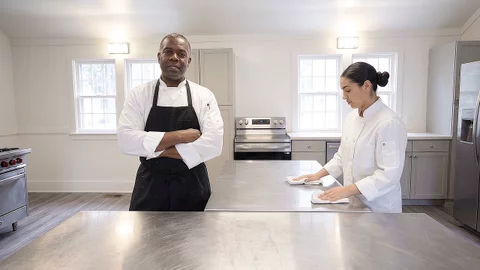
From Ten minutes or a month. You are a student in a professional cooking program. In today's practical exam you rushed, your sauce separated, and you failed the dish. In the teaching kitchen, Chef Okoro offers you a choice while your classmate Bianca is cleaning the next station.
What would you choose, and how would you decide?
Here is a typical first attempt, scored on the 1–9 scale raters use, and the changes that would raise it.
5.5
This answer scores 5.5 out of 9. With these 3 changes, about 7.5.
I’d take the retake in ten minutes because waiting a month would delay my placement, and I know the dish. I’d focus on staying calm and making the sauce carefully, since it’s important to show I can recover from a mistake.
- 1+1.0
Swap
I’d take the retake in ten minutes
forI’d take the retake today because waiting a month would delay my placement, but I’d first check whether I’m steady enough to do it well
Your original choice accounts for the placement delay but not Bianca’s observation that your hands are shaking. Checking your readiness shows self-awareness before committing.
- 2+0.5
Swap
focus on staying calm and making the sauce carefully
fortake slow breaths, and review where the sauce separated. Then I’d focus on controlling the heat and whisking carefully
“Staying calm” and “carefully” are broad intentions; this adds a short reset and connects the technique to the error you need to correct.
- 3+0.5
Swap
I know the dish
forIf my hands were still shaking and I couldn’t concentrate, I’d reconsider rather than risk repeating the same mistake
Knowing the dish does not by itself address whether you can perform it under current stress. A fallback shows that your choice depends on your actual readiness, not just familiarity or the deadline.
The first attempt is an example written by Confetto, not a real applicant's answer. The score and the changes are from Confetto's Casper coach. Not an official score.
Common mistakes
- Insisting you would be fine and feel nothing.
- Blaming the coach, the voters or bad luck and stopping there.
- Pushing on exhausted when a short pause would protect the work.
Practice resilience questions on the real timers
Answer on the clock and get each answer scored 1–9 the way raters score, with your own answer improved line by line.
Start my free trial