210 practice scenarios
Casper self-awareness questions: how to answer them
Self-awareness questions hold up a mirror: teammates say you rewrite their work, a joke you made landed badly, a supervisor calls you dismissive. Raters look for someone who can hear it without getting defensive, own their part and change something specific.
How to answer a Casper self-awareness question
- 1
Take the feedback in before answering it
Thank the person and ask for an example. Your first instinct to explain is usually the thing being described.
- 2
Own your part in plain words
"You are right, I have been redoing your sections" is stronger than "I am sorry if it came across that way".
- 3
Say why you think you do it
A line of honest reflection, such as worry about the grade or wanting control, shows real insight.
- 4
Name one change and how you will check it
A specific new habit and a time to ask the person whether it is better.
A worked example
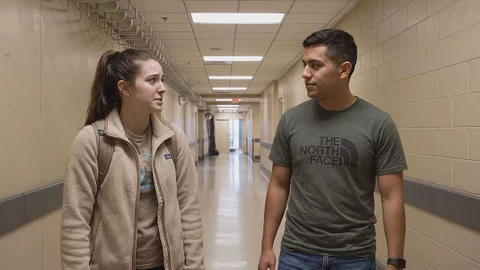
From Just a joke. You are a member of your university's hiking club. At the club's weekly meeting, you made a joke about Luca's small hometown and his accent, and everyone laughed. As you walk out afterwards, your friend Rachel catches up with you.
What would you do about Luca after what Rachel has told you?
Here is a typical first attempt, scored on the 1–9 scale raters use, and the changes that would raise it.
6.5
This answer scores 6.5 out of 9. With these 3 changes, about 8.0.
I’d message Luca and apologize for making his hometown and accent the subject of a joke. I’d tell him I meant it lightly, but I can see it may have embarrassed him, and I’d try not to make jokes like that again.
- 1+0.5
Swap
I’d tell him I meant it lightly
forI’d say I can see it may have embarrassed him, and that I shouldn’t have made him the target regardless of what I intended.
This replaces an explanation of your intent with accountability for the possible impact. It makes clear that a light intention does not excuse targeting Luca.
- 2+0.5
Swap
I’d message Luca and apologize
forI’d take Rachel’s observation seriously rather than assume Luca was fine because people laughed. I’d message him privately and apologize
This adds the judgment step your answer skipped: Rachel’s observation and the group’s laughter are not proof that Luca was comfortable. A private apology also avoids putting him on the spot.
- 3+0.5
Swap
and I’d try not to make jokes like that again
forI’d let him know he doesn’t have to reply, but I’m willing to listen if he wants to tell me how it felt. I’d also avoid jokes like that again and reflect on why I treated the group’s laughter as a sign it was okay.
This gives Luca space to respond or not, without asking him to reassure you, and makes your commitment more reflective. It explains how you will reconsider the judgment that led to the joke.
The first attempt is an example written by Confetto, not a real applicant's answer. The score and the changes are from Confetto's Casper coach. Not an official score.
Common mistakes
- Explaining why the feedback is unfair.
- Apologizing for how the other person feels, not for what you did.
- Promising to "be more aware" with no concrete change.
Practice self-awareness questions on the real timers
Answer on the clock and get each answer scored 1–9 the way raters score, with your own answer improved line by line.
Start my free trial